




Writer: Jordan Sprogis


Editor: Lillian Castro


Reviewer: Cristian Lopez

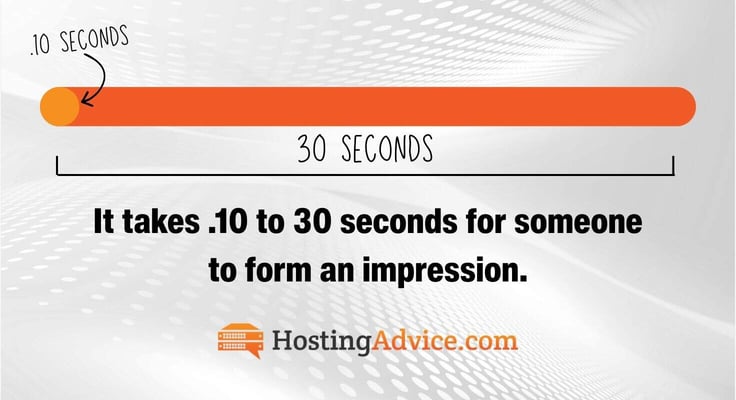
Humans are by nature wired to make instant judgments. On a first date, a first impression can be formed in as little as one-tenth of a second to 30 seconds.
And the funny thing is, we pretend it’s not even true. We are patient, citing good manners and not judging books by their covers. But with technology, that patience goes right out the window.
It’s the same reflex some people have when their Starbucks order is wrong. That patron at Starbucks exists as your hosting customer, it’s just easier to hit the ‘X’ button when that happens.
That’s why the decision to sign up now happens in a surprisingly small window. Sure, consumers make judgments on whether they’ll sign up within the first 30 seconds, but it’s the next 30 minutes that determine whether they made the right choice.
The First 30 Minutes
We can equate that 30-minute rule to the buyer’s journey pretty easily.
It’s made up of three parts: first is awareness of a brand, then consideration and research, and finally, a decision. If a user gets to the final stage, hopefully deciding to sign up. If they do, they’re already seeing that you may be able to solve any problem.
Sergey Markosyan, co-founder and CTO of AI website builder 10Web, believes that in 2026, customers are judging hosting providers on three things: how smooth the first 30 minutes feel, how well AI supports them after launch, and how trustworthy the platform appears when it comes to security and stability.
Social psychology calls this thin-slicing: the brain’s habit of forming meaningful judgments from minimal exposure.
For digital products, it works out the same way: Users decide how they feel about a platform before they know how it works.
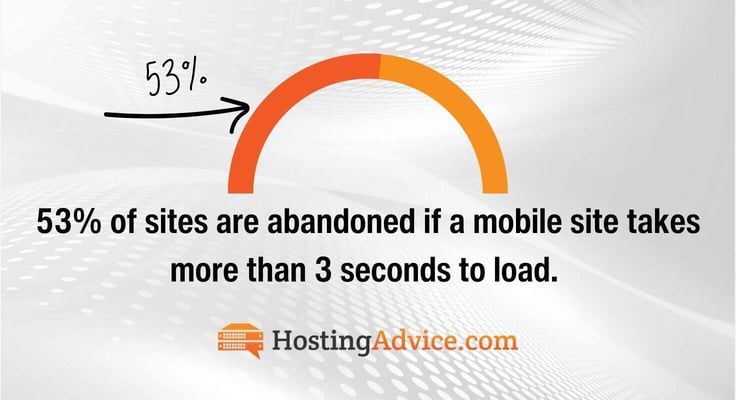
Still, most hosts won’t ever know the exact reason why a user left within those first 30 minutes. But what we do know is that if a website isn’t easy to use and interact with, most of the visitors will leave and never come back.
Trey Long, a software engineering director at Squarespace, isn’t surprised. He said it’s the new reality for web hosting, adding: “The bar for getting started dropped significantly. Customers now expect to see something tangible within minutes, not hours.”
Instant Gratification Killed Small Talk
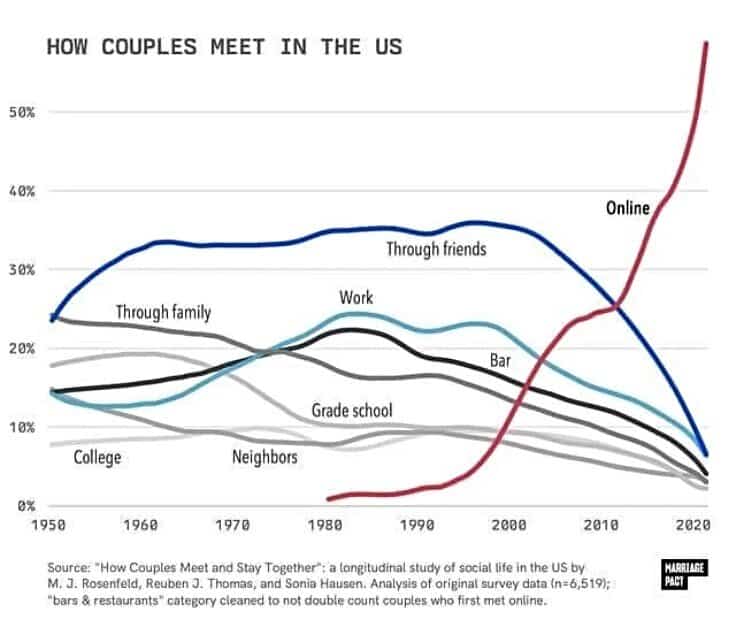
If you look at how people met in the 1950s versus the 2020s, the difference is pretty obvious. Online dating swallowed every other pathway to meet someone new — friends, work, school, even family setups. Once dating apps became commonplace, waiting around for the right introduction just couldn’t compete with instant gratification.
This tendency, of course, isn’t confined to dating. As Drew Wilde, the director of product management at GoDaddy, said, this level of impatience can be thanks to artificial intelligence. He said: “AI has accelerated the mindset of ‘How far can I take this on my own?’”
For the past couple of years, it’s all the industry’s witnessed. The average consumer has been conditioned by AI to the point where we’ve now entered an era of instant gratification. And that unfortunately leaves very little room for long explanations. Just look at Amazon Prime.
When it became widely used by the 2010s, the concept of online shopping was flipped on its head. Everyone said goodbye to several-day or even weeks-long shipping times and complicated checkouts that required filling out payment information. Just click and bam — your order’s on the way to the right address via the right payment method.
Now, everyone in tech is expected to deliver the same kind of instantness. ReliableSite CEO, Radic Davydov, says it’s what they look for the most.
“The terms shared hosting, VPS hosting, and dedicated servers are becoming less relevant. It’s now about the best infrastructure for applications that are coming online at a rapid pace,” said Davydov.
It’s also something Daniel Kanchev, director of product development at SiteGround, has noticed in his circle.
“Customers shifted from expecting more resources for less money to demanding less hassle and more business impact,” he said. “They’re asking, ‘What can I accomplish?’ rather than ‘How many CPUs do I get?’”
Vibe coding is a great example of how much consumer expectations have changed. But it’s definitely not perfect. Yes, it gets an app or website up fast, but many industry experts warn you still need human oversight and review the code.
It’s as Josh Jacobson from HackerOne told us before: “Just as GenAI democratizes tools for cybercriminals, sole reliance on AI to develop code puts applications at risk by enabling developers with little to no experience to generate code, without the training or best practices needed to secure it.”
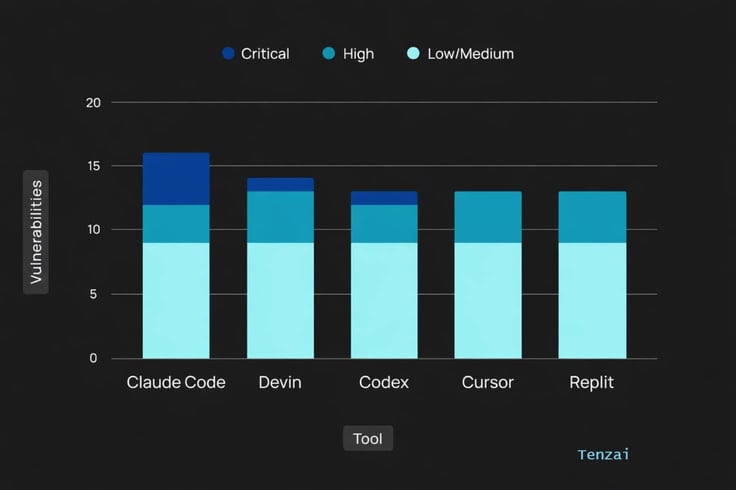
Small security firm Tenzai concluded in a study that AI coding is good at avoiding security flaws that can be generically solved, but struggles when it comes to determining safe from dangerous. Study findings revealed that nearly 1 in 3 vulnerabilities were high or critical.
“We’ve seen a great deal of vibe-coding and work efficiencies,” said Seb de Lemos, CEO of hosting.com. “But we have not so far seen this translate hugely into the websites people create.”
It may be why built-in tools are such an easy sell; users are more likely to stay on platforms that bundle functionality, after all. Users don’t have to decide what’s safe to use or what’s workable because their provider is doing the work for them.
So, if there’s anything we can agree on about the near-future of web hosting, it’s that today’s users are gut-driven, and it doesn’t take them long to figure that out.
