



Writer: Jordan Sprogis


Editor: Lillian Castro


Reviewer: Cristian Lopez

Key Takeaways
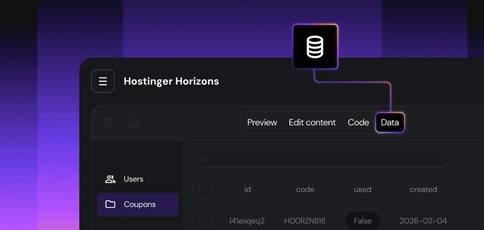
Hostinger’s AI no-code builder, Horizons, now includes a built-in backend that runs completely on Hostinger’s own infrastructure. That means there’s no need for third-party backend services.
In the announcement, Hostinger emphasized the stark difference between the frontend and backend for vibe coding and app building: While the frontend is consumer-facing with all the fun frills, the backend — databases, authentication, file storage, email — need somewhere to go.
Typically, this would be the point where things fall to managed backend platforms. And for years, the industry decentralized the stack in the name of flexibility, outsourcing to trusted partners like Firebase and Supabase.
The result is tool sprawl. The average organization now uses more than 100 SaaS applications.
But Horizons is a good example of what modern day hosting looks like if it wants to avoid the inevitable sprawl, by going back to the way we used to do things: centralized-style.
Kind of like saving money on rent by moving back into your parents’ house.
Back Under One Roof
And with that is also the bonus of better security.
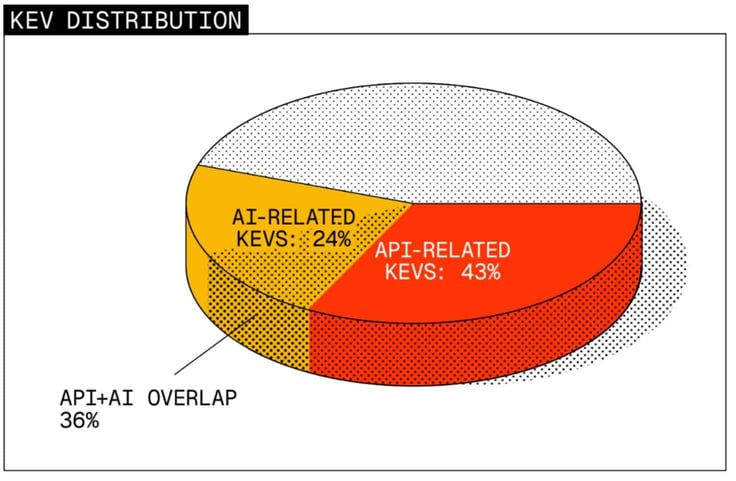
Wallarm’s 2026 API ThreatStats report found that APIs are responsible for nearly half of web application attacks, with 43% of exploited flaws being API-related. Keeping the database, authentication, storage, and email inside your own infrastructure reduces the number of external trust points.
But we shouldn’t pretend that this security bonus is just a happy accident. Rather than replacing shared hosting, Hostinger is building a Shopify- and Wix-style closed ecosystem on top of it.
Horizons’ backend update also includes single sign-on with providers like Google, Apple, Facebook, and Microsoft. Apps can request user consent and connect to external services, such as calendars, without requiring separate backend accounts.
Obviously, those connections still rely on APIs, but Horizons manages all the login details and permissions so end-users don’t have to.
As hosting providers are expected to sell contained, all-in-one environments, we’re in the middle of watching the internet get more managed, more packaged, and less dependent on technical literacy.
Whether that looks like an integrated builder platform or a tightly managed hosting stack, the direction is the same: less dependencies on external services and more control inside your own platform.
HostingAdvice.com is a free online resource that offers valuable content and comparison services to users. To keep this resource 100% free, we receive compensation from many of the offers listed on the site. Along with key review factors, this compensation may impact how and where products appear across the site (including, for example, the order in which they appear). HostingAdvice.com does not include the entire universe of available offers. Editorial opinions expressed on the site are strictly our own and are not provided, endorsed, or approved by advertisers.
Our site is committed to publishing independent, accurate content guided by strict editorial guidelines. Before articles and reviews are published on our site, they undergo a thorough review process performed by a team of independent editors and subject-matter experts to ensure the content’s accuracy, timeliness, and impartiality. Our editorial team is separate and independent of our site’s advertisers, and the opinions they express on our site are their own. To read more about our team members and their editorial backgrounds, please visit our site’s About page.
