




Writer: Jordan Sprogis


Editor: Lillian Castro


Reviewer: Cristian Lopez

Key Takeaways
Ah, what a beautiful time in America: The Scots are in Boston. The English are road-tripping from Dallas to New York. The Portuguese have turned Providence into their home base. And social media is going wild for it.
As the U.S. opens its arms to thousands of international visitors for the World Cup, it’s also reassessing its digital infrastructure for an audience that has already topped 20 million viewers for a single match.
So, yeah: It’s safe to say that content delivery networks (CDNs) and streaming providers are under major pressure this month. But there are a few lessons for what it takes to keep streams running across millions of devices.
World Cup Traffic Moves With the Fans
If you ask Scott Lerner — the SVP of Global Services at Akamai, one of the world’s largest content delivery networks — he says the issue isn’t only figuring out how to handle scale.
“Large sporting events don’t create one massive wave of global traffic all at once,” Lerner explains. “Instead, they trigger localized demand that shifts depending on who is playing and when.”
Think of it this way: When Scotland plays, traffic may surge in Boston and across the U.K. But when Brazil does, demand can spike in entirely different regions. Basically, as teams advance through the tournament, those viewing patterns change, too. (Good thing we have an exact schedule to go off of.)
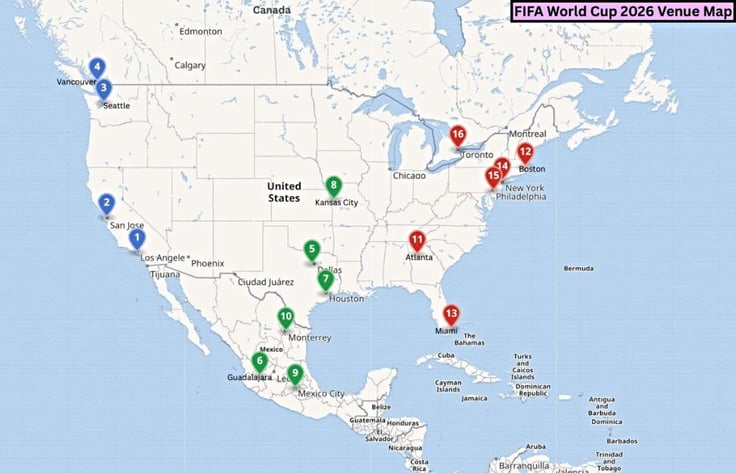
Lerner says this means infrastructure providers can’t rely on a single region or data center. They need enough capacity across multiple regions. They also need to prioritize live video traffic so it doesn’t compete with things that aren’t pressing — like app updates or background analytics.
Preparation plays a major role as well, he says: “Testing individual components on their own isn’t enough. You need to test the entire system together.”
So, in order to find weak points before kickoff, Akamai simulates large traffic spikes. The goal here, Lerner explains, is to double-check for any bottlenecks, make sure backup plans are in place (and working), and that everything from security layers to third-party integrations are prepared to handle the surge.
Capacity, Visibility, Defenses, Oh My!
Delivering a consistent streaming experience is only one piece of the puzzle. Behind the scenes, organizations also need visibility into the thousands of devices, servers, and systems supporting the event.
This is where Ashish Kuthiala, CMO of Fleet Device Management, says organizations often run into trouble: “At this scale, the hardest problem isn’t a dramatic outage. It’s visibility.”
We know the World Cup relies on thousands of interconnected systems operating across dozens of countries, venues, and platforms. And yet, from Kuthiala’s perspective, many organizations struggle to answer a basic question: What systems are they running, and what condition are they in?
“The lesson for infrastructure teams is that you can’t secure or operate what you can’t see, so get continuous visibility first, then manage configuration as code so consistency scales.” — Ashish Kuthiala
“Most teams can’t say with confidence what systems they have or what state each one is in right now,” he says. “The lesson for infrastructure teams is that you can’t secure or operate what you can’t see, so get continuous visibility first, then manage configuration as code so consistency scales.”
Surprising to absolutely nobody, visibility gets…questionable when cyber threats enter the picture for big streaming events.
“High-profile events draw attackers and the window to act has collapsed. A few years ago you had months between a vulnerability going public and it being exploited. Now it’s often under two days,” Kuthiala explains.
The 2024 Paris Olympics saw more than 140 cyber attacks during its event, and Canada’s cyber intelligence agency warned that orgs connected to the 2026 World Cup will “very likely attempt to extort organizations associated with or supporting the event through disruptive attacks, including ransomware.“
And trust us: The last thing a provider needs is to be handed the blame for buffering in the middle of a match.
Always Assume the Worst Is Going to Happen
By the time the first match kicks off, infrastructure teams have already spent weeks — and sometimes months — testing, monitoring, and preparing for what could go wrong.
But be careful. Kuthiala says that organizations should try to avoid making any last-minute changes during major events like these. Instead, infrastructure should be automated, tested, and documented ahead of time.
“Everyone focuses on capacity, the load balancers, and the extra servers. That matters, but the practices that decide whether a peak goes smoothly happen long before the spike,” he says.
Things like maintaining visibility across systems, automating routine tasks, and rehearsing failure scenarios before they happen. Lerner says the same thing applies for streaming infrastructure.
“Live monitoring helps spot performance issues as they happen, allowing operations teams to step in and fix risks before they disrupt the fan experience. AI has been a huge help in moving our ability to quickly detect issues allowing faster mitigation.” — Scott Lerner
“Live monitoring helps spot performance issues as they happen, allowing operations teams to step in and fix risks before they disrupt the fan experience. AI has been a huge help in moving our ability to quickly detect issues allowing faster mitigation,” he adds.
So far, so good. There have been very few, if any, reported outages across the dozens of streaming networks since the start of the World Cup.
And over the next few weeks, millions of fans will continue obsessing over every pass, save, and controversial call — hopefully without interruption. In the meantime, countless infrastructure teams will be focused on making sure nobody notices their work at all.
