




Writer: Jordan Sprogis


Editor: Lillian Castro


Reviewer: Cristian Lopez

Key Takeaways
- In our 2025 retrospective piece, we talked about how web hosting providers got pulled deeper into the frontend and backend stacks, expecting to deliver a full site experience.
- This piece picks up from there – and if there’s one thing we keep hearing, it’s that in 2026, most people won’t really pick a host at all. Trust still matters, but it just won’t do the whole job anymore.
If you read our previous companion piece, then you already know the pressure points that defined hosting in 2025. If you didn’t, here’s the TL; DR: Hosting got bigger and way more complicated than anyone anticipated. And now, 2026 is when we see where the chips will fall.
OK, yes: The calendar year itself is just a Gregorian construct and just because it’s a new year doesn’t magically flip a switch. But for companies and the people using their products, it still represents a fresh start. For hosting, that’s looking at what’s changed and what now has to work.
Last month — December 2025 — we asked the same providers we’ve been talking to all year about what they foresee in the new year. Unsurprisingly, four patterns kept showing up, and they all revolved around what the end user will expect from their providers going forward.
#1: Where Hosting Decisions Are Actually Happening
For a long time, the way customers chose a hosting provider came down to a couple of familiar paths. If a host was visible in Google SERPs or “Top 10” lists, they were in the running.
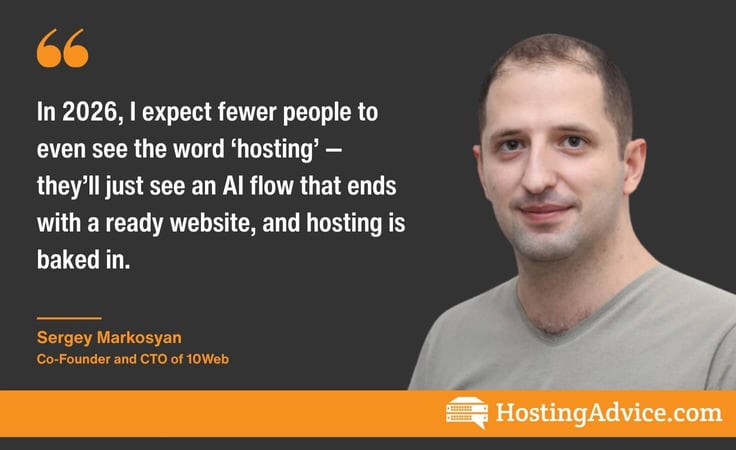
“In 2026, I expect fewer people to even see the word ‘hosting’ — they’ll just see an AI flow that ends with a ready website, and hosting is baked in,” said Sergey Markosyan, co-founder and CTO of 10Web.
But we’ve been warned that’s not where the decision starts anymore. In some cases, there isn’t a decision at all.
In 2026, customers will likely encounter hosting indirectly — usually inside AI website builders, automated workflows, and assistants that promise that launching a website is easier than ever before.
Ask Wix, a leading player in the era of AI and website building, and it’ll tell you what it thinks this means: Conversational AI agents turn into the go-to tool so people describe what they want in chat while the system does all the work.
It’s exactly what Daniel Kanchev, SiteGround’s director of product development, is seeing, too.
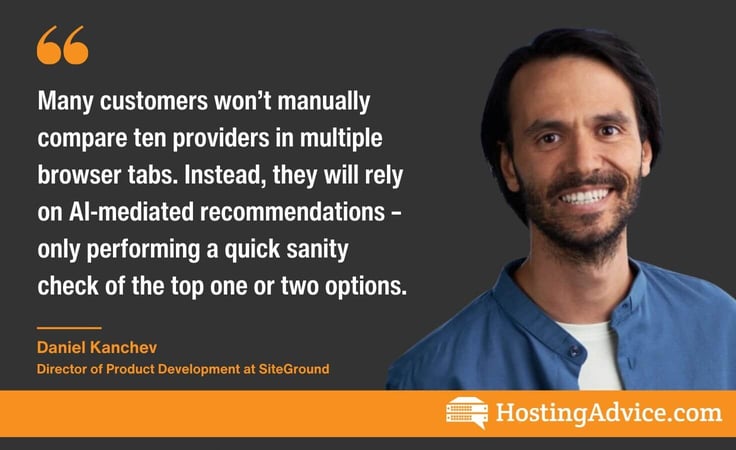
“[Customers] will rely on AI-mediated recommendations — only performing a quick sanity check of the top one or two options,” said Kanchev. “That means a new competitive battleground is emerging: how well you are represented and recommended inside AI systems.”
So instead of worrying about where they land on a results page, hosts are starting to worry about whether they land anywhere at all.
We saw this throughout 2025, when site owners thought they’d found an audience only to later realize it was mostly automated agents and crawlers. And that problem isn’t going away when bots now make up more than half of global internet traffic.
But it’s not all bad news. With agentic AI, it’s just changing the way sites are found. Ramadass Prabhakar, CTO at WP Engine, said AI-driven discovery is the main thing that’s changing how users arrive at websites.
“The impact of non-human traffic on global performance, security, and cost divides is growing, creating a clear separation between web experiences that are competitive and those that are being left behind,” he said.
This is also where GEO (generative engine optimization) keeps popping up in the broader marketing world, which is, more or less, the idea that AI systems don’t just index pages but that they actively summarize and recommend to end users.
#2: Getting Online Is the Easy Part
Once hosting moved into builders and AI workflows, people started expecting more. Because getting a site online was the easy part — the harder part was keeping it running, useful, and discoverable. What’s the point of a site built in minutes if nobody ever finds it?
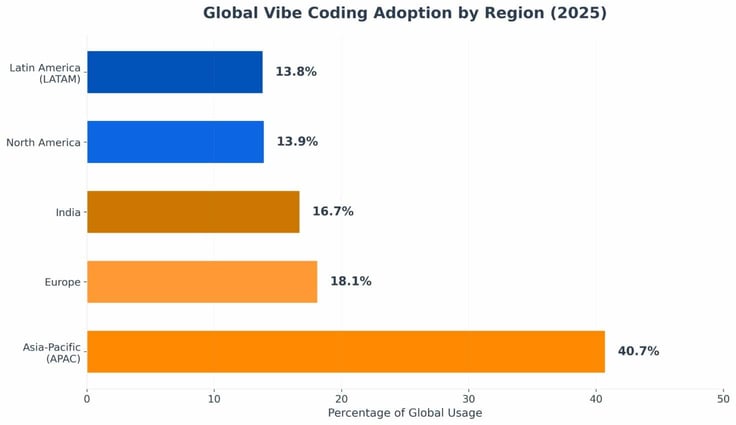
We have to thank “vibe coding” — that is, affordable no-code and AI-assisted tools — for pushing a new wave of entrepreneurs and SMBs online in droves. While more than 40% of vibe coding adoption came from the APAC region, the daily usage rate in the U.S. alone is 92%.
It’s come up several times in 2025 — where time-to-launch shrank dramatically, but follow-up questions about performance, cost control, SEO, and maintenance spiked pretty much just as quickly. Several providers told us privately that support tickets rose after AI launches.
And it’s not because sites failed outright, said Trey Long, software engineering director at Squarespace.
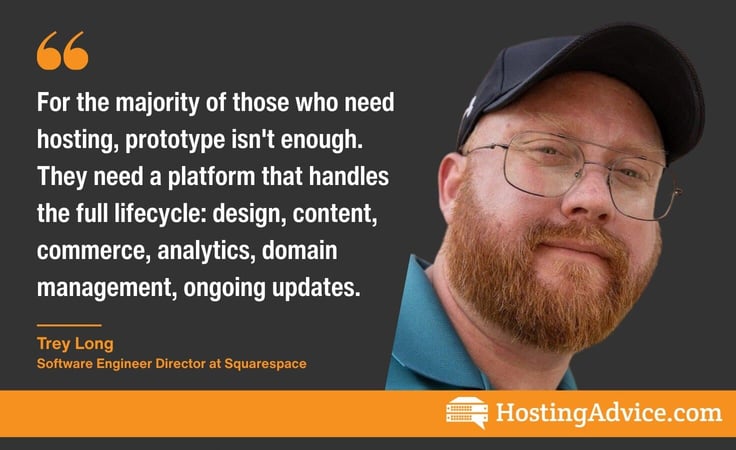
“For the majority of those who need hosting — small business owners, entrepreneurs, and others — a prototype isn’t enough,” Long explained to us. “They need a platform that handles the full lifecycle: design, content, commerce, analytics, domain management, ongoing updates.”
But as mentioned in the retrospective, Seb de Lemos argued that the basics of hosting still matter the most. And he’s not wrong; reliability never went out of style. But what did change is how fast customers now hit the point where they expect things to work perfectly.
Saulius Lazaravičius, Hostinger’s VP of product, has seen this himself, noting that many users have burned through the novelty of AI features.
“People stopped chasing AI features and started looking for hosting that helps them ship something real,” he said. “Value became less about novelty itself and more about outcomes: performance, cost efficiency, smart integrations, and tools that actually support the way they work.”
AI gave everyone the instant gratification they were looking for. But that’s the thing about instant gratification: It always wants more. It’s a dangerous game to play, but it’s one hosting providers are in the middle of.
And Anthony Eden, founder and CEO of DNSimple, said AI-driven site generation is already bleeding into other parts of internet infrastructure, including domains and management tools.
“In the domain industry, the uptake on AI generated domain names has also started to occur, but not at the same rate as the hosting industry,” he said. “I expect we will see more generative AI making its way into all kinds of internet infrastructure tooling in 2026.”
#3: How AI Is Forcing Infrastructure Tradeoffs
Ah, 2025. The unofficial year of AI, where site builders, support tools, agents, analytics, search, and even traffic itself all hopped on the automation bandwagon.
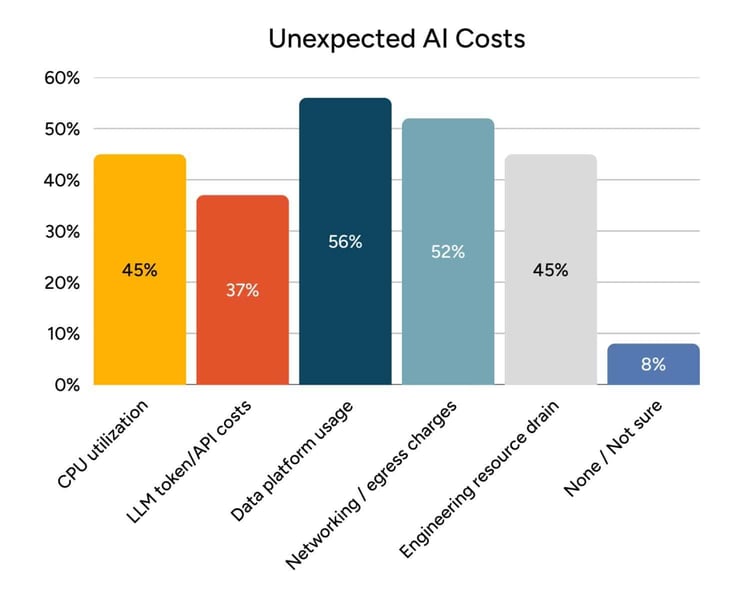
The issue is that inference — answering queries — just consumes, consumes, consumes. It also introduces a lot of issues where costs may spike and traffic patterns are harder to predict.
By mid-2025, infrastructure teams were already feeling it, with industry estimates showing that more than 80% of enterprises underestimated their AI infrastructure costs.
Hana Jeddy from cloud computing company Akamai told us earlier that organizations are thinking more purposely about where AI workloads fit the best. The answer isn’t always the cloud.
“[There is] growing interest in smaller, faster-starting compute models, especially for AI inference and event-driven workloads,” she said. “There’s been so much focus on large-scale training that it sometimes obscures how important efficiency and startup time become once models are actually deployed.”
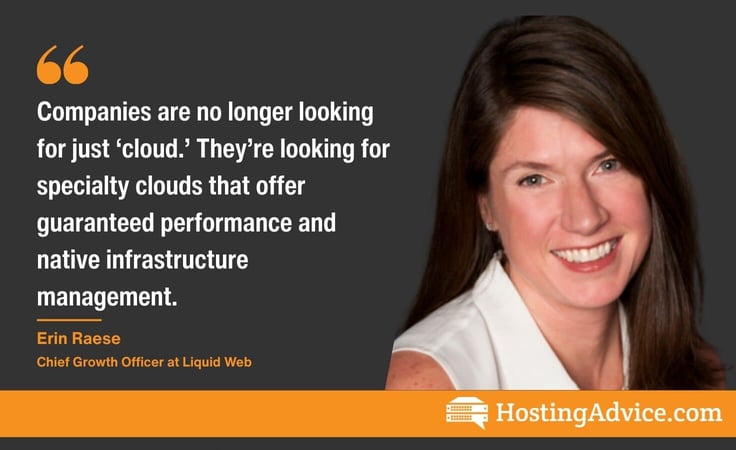
Erin Raese, chief growth officer at Liquid Web, has been seeing something similar.
“Companies are no longer looking for just ‘cloud,’” she said. “They’re looking for specialty clouds that offer guaranteed performance and native infrastructure management.”
This is also why GEO — generative engine optimization — keeps popping up. These AI tools aren’t just indexing pages, but answering questions and making choices on the user’s behalf.
So, ask a chatbot for “the cheapest web host” or “a massage therapist nearby,” and you’ll notice it doesn’t hand back 10 options. It hands back one answer it “feels” most confident about. So hosts have to remember that getting their clients’ sites seen means being understood by machines.
This means that a website has to be able to handle constant machine access without messing with the resources to the point where they end up with a $5,000 bandwidth bill like this repair site did.
It also changes how those sites are found. A user can create a site with the best AI builder and still never see traffic if agents can’t interpret it.
“For customers and agencies, it’s about structure: schema, clean metadata, and APIs, so AI agents can actually understand what’s on our site,” said WP Engine’s Prabhakar. “It’s about building a site that’s fast and relevant for humans, and structured enough for machines to understand.”
10Web’s Markosyan added: “If not, you slowly disappear from the future ‘front page’ — which is not a website, but an assistant’s answer.”
#4: What Trust Has to Mean in an Automated Web
Prabhakar — WP Engine’s CTO — said managed hosting providers are already being forced to treat agent-driven traffic as a first-class architectural concern.
He’s not wrong: Imperva found that 51% of internet traffic now comes from bots. About a third of that is bad bots.
In 2025, much of the traffic hitting sites came directly from bots, including AI crawlers, agents, and automated tools, all of which repeatedly fetch pages, parse through content, trigger backend processes, over and over again.
“By 2026, customers will choose hosting providers based on whether they are ready for an AI-mediated digital experience. Performance and reliability will remain table stakes, but no longer defining factors,” Prabhakar said.
Of course, that opens a whole new can of worms: In the age of agentic and generative AI, what is “secure” even supposed to look like?
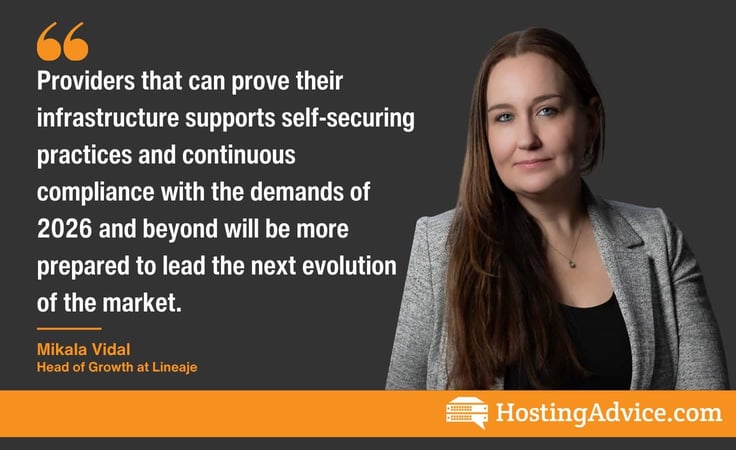
Mikala Vidal from Lineaje, a software supply chain security company, said the industry is only beginning to grapple with what it means to secure AI systems by default.
“Providers that can prove their infrastructure supports self-securing practices and continuous compliance with the demands of 2026 and beyond will be more prepared to lead the next evolution of the market,” said Vidal.
And as attack automation increases, HackerOne has been putting numbers on what defenders are seeing. HackerOne reported a 540% jump in valid prompt injection cases as a fast-growing AI-related threat category.
It also found that autonomous hackbots submitted 560 valid vulnerabilities in 2025 alone. That’s a pretty good preview of what happens when automated bots move faster than human security teams can respond.
It’s why Kara Sprague, HackerOne’s CEO, says 2026 will redefine resilience — and it all comes down to Continuous Threat Exposure Management (CTEM).
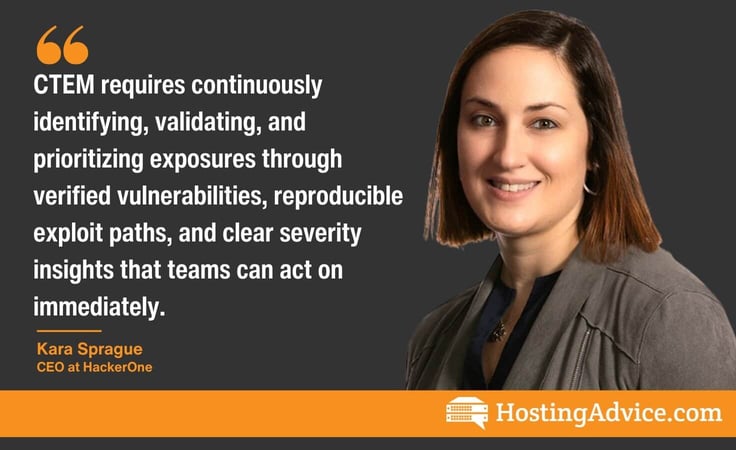
“This requires continuously identifying, validating, and prioritizing exposures through verified vulnerabilities, reproducible exploit paths, and clear severity insights that teams can act on immediately,” Sprague explained.
In other words, security can’t just be something hosts audit every so often; it has to be something that’s constantly running in the background. And that’s really the backdrop of what we’re going to see this year.
2025 introduced everything that 2026 is about to deal with head-on. We should expect sites built for LLMs, automated security that prevents bad bots, and a move away from cloud-only workloads, especially amid AI inferences. The question is how to stay afloat in a market that demands something new every quarter.
HostingAdvice.com is a free online resource that offers valuable content and comparison services to users. To keep this resource 100% free, we receive compensation from many of the offers listed on the site. Along with key review factors, this compensation may impact how and where products appear across the site (including, for example, the order in which they appear). HostingAdvice.com does not include the entire universe of available offers. Editorial opinions expressed on the site are strictly our own and are not provided, endorsed, or approved by advertisers.
Our site is committed to publishing independent, accurate content guided by strict editorial guidelines. Before articles and reviews are published on our site, they undergo a thorough review process performed by a team of independent editors and subject-matter experts to ensure the content’s accuracy, timeliness, and impartiality. Our editorial team is separate and independent of our site’s advertisers, and the opinions they express on our site are their own. To read more about our team members and their editorial backgrounds, please visit our site’s About page.
