




Writer: Jordan Sprogis


Editor: Lillian Castro


Reviewer: Cristian Lopez

Key Takeaways
- Web hosts like Cloudways, Bluehost, and Hostinger are rolling out agency-focused programs with white-labeling, CRM tools, and client dashboards.
- The motive? Indie agencies and smaller businesses are struggling to stay afloat as expectations around scaling, tools, and support increase.
- It's a worthwhile investment to consider: Agency clients bring in more domains, longer-term contracts, and additional services.
An influx of hosting giants have eagerly been releasing dedicated agency programs as of late that are a step up from traditional reseller packages, offering white-label portals, CRM integrations, and marketing support.
Of course, hosts aren’t doing this just out of the kindness of their hearts. With agency-in-a-box services, providers are getting low-churn, high-value users with dozens of clients added to their monthly revenues.
Recent moves in the hosting space include:
- GoDaddy Agency: Connects SMBs with business leads, offers commissions, premium WordPress tools, technical support, and co-branded marketing
- Cloudways Agency Partner Program: Priority technical support, dedicated success managers, co-marketing opportunities, learning resources, custom onboarding, referral commissions
- Bluehost Agency Partner Program: Referral commissions, host discounts, access to webinars and learning resources, priority customer support, sandbox environment (WordPress only)
- Hostinger Agency Hosting: Isolated websites, 24/7 priority support, staging tools, performance dashboards, and auto-updates (WordPress only with PHP and Node.js coming)
While web hosts have long supported agencies, these programs go further than before: Now, they’re providing infrastructure and integrated business tools rather than just cPanel access.
This is a tune that’s been sung. DIY platforms are increasingly taking business from entry-level clients, and larger clients are expecting full-stack delivery with hosting, support, analytics, and scaling all wrapped neatly in a bow.
It’s yet another example of how web hosts are no longer just infrastructure providers.
They’re literally becoming full-fledged platforms with customizable ecosystems, adaptable for entry-level for aspiring entrepreneurs while staying sophisticated enough for enterprise legacy systems and developers.
It’s a Win-Win — Until It’s Not
It’s truly a genius move to adopt small, indie, or startup businesses into a larger brand’s umbrella: These hosts are going to make millions.
It’s not something they should hide; it’s the game of business. But it’s also hard to deny that, as of late, the indie business landscape — including smaller hosts — is getting more and more competitive.
Indie hosts are not surviving and thriving as they used to. Bootstrapped startups are few and far between, especially as many get absorbed by venture capitalists. It’s the big names in the space that we all hear about each day, with news trailing about who’s closing their doors.
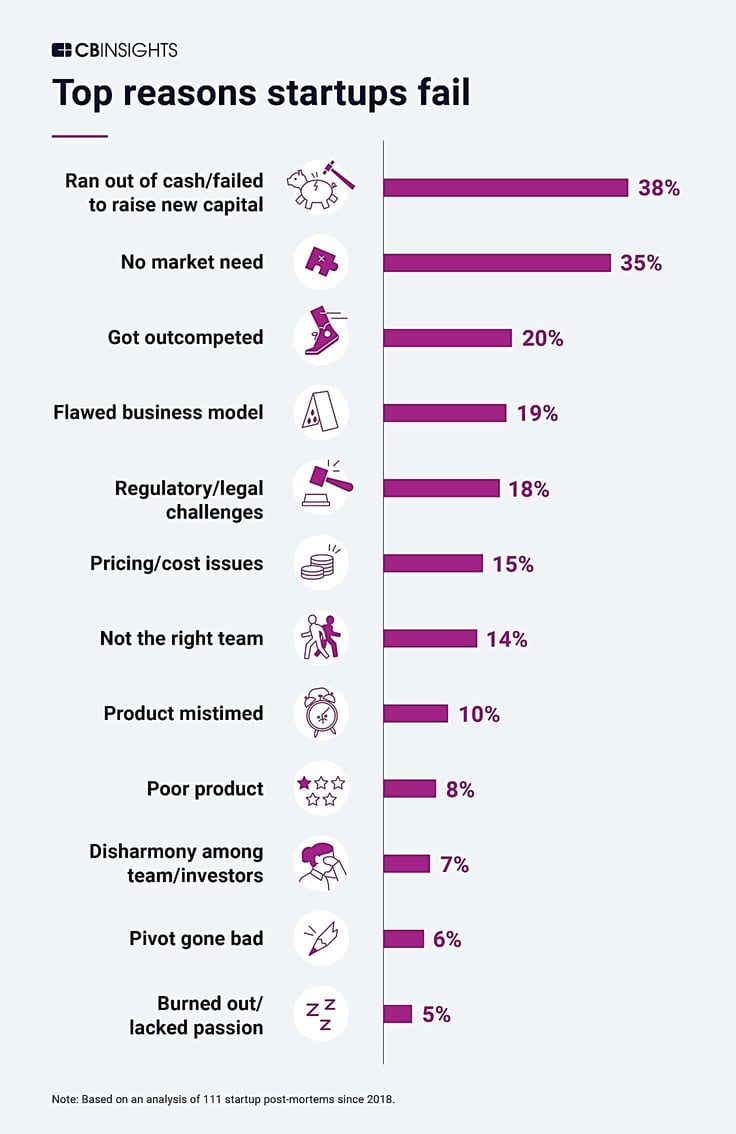
CB Insights found that, out of 111 startups that failed, the most common reasons were: they ran out of cash/failed to raise capital (38%), lack of product-market fit (35%), competition/getting outcompeted (20%), and a flawed business model (19%).
With trusted giants backing them, startups don’t have to manage billing tools, staging, or client support by themselves anymore.
And, because of their partner, they also get instant credibility — something they’d otherwise spend years trying to build. Imagine coming across a boutique host and seeing an “approved Bluehost partner” badge. You’d trust them, right?
In return, the hosts get their revenue multiplied. So while these hosts are offering support, they’re also cleverly getting customer acquisition.
But what if a smaller shop can’t keep up and doesn’t want to consolidate? Well, Glitch happens.
On July 8, the once-popular project hosting platform shut down for good, citing rising costs, security burdens, and time constraints. Glitch couldn’t scale to meet the demands of the competitive market, so it stepped back entirely.

The newer agency programs are a response to that reality. The goal is to give agencies everything they need while giving hosts everything they want: retention.
But there’s also a host’s responsibility, too. Glitch didn’t migrate, but plenty of SMBs will, and hosts need to make sure they’re prepared to support them for the long haul.
Take a look at TextDrive, a cheap shared web hosting provider that offered lifetime plans for only $200. It operated independently until Joyent acquired it in 2005. It honored TextDrive’s lifetime shared plans…until it didn’t.
As Joyent moved more toward cloud infrastructure, it decided shared hosting servers were too costly, and TextDrive’s services were sundowned by 2012. TextDrive tried to relaunch independently but subsequently shut down due to low funding and outages.
It should be a lesson: When hosts decide to open their doors for agency-in-a-box support, they need to be able to continue that support.
Survival of the…Backed?
Is the indie host or spirit of the startup dead? Definitely not, but it does look like it’s being reshaped.
At this point, it won’t be surprising to see a future where SMBs are forced to either collaborate with a well-branded host or get swallowed up altogether.
Those who choose to be backed by a big-name host are the ones who gain access to enterprise-level tools so they can scale as fast as they need with as much help as they need.
Those who don’t will likely continue to build for specific verticals or perhaps remain freelancers with very few clients. They’re the ones who will be treading water.
For hosts — and not just the mega giants — this is still a lucrative opportunity, when done right. Agency clients mean:
- More domains
- More services
- Longer commitments
While it’s always disappointing to see how the little man gets squeezed out, it doesn’t change where the market is going. And if hosting providers are smart, they’ll scaffold around these businesses and throw them a lifeline.
