




Writer: Jordan Sprogis


Editor: Lillian Castro


Reviewer: Cristian Lopez

Key Takeaways
- Holiday shopping peaks on Black Friday and Cyber Monday, but hosting providers should really be preparing for a month-long increase instead of just those two days.
- Wix’s Oren Intidzky shared with us how the platform prepares for a season-long surge with scaling, stress testing, and strict code-freeze policies.
- Inditzky also warns against treating Cyber Week as a single, annual event, urging merchants to use this time of "brand curiosity" to create long-term loyalty.
Any hosting provider who services eCommerce shops should know that holiday shopping spikes happen well outside of Black Friday and Cyber Monday.

Adobe Analytics found that the full Cyber Week — Thanksgiving, Black Friday, Small Business Saturday, Cyber Sunday, and Cyber Monday — accounts for only about 17% of holiday-season revenue, which means more than 80% of eCommerce activity actually happens across the entire November-December window.
Even the “dead week” between Christmas and New Year’s is a sleeper hit because people spend gift cards, return items, and buy the things they actually wanted.
For eCommerce platforms, this quarter is the revenue anchor. But for hosting providers, it’s a yearly stress test for infrastructure and service.
And if you’ve ever wanted to peek inside someone else’s playbook, this is that moment: HostingAdvice spoke with Oren Inditzky from Wix about how the megaplatform prepares for the industry’s busiest stretch of the year.
It’s a Season-Long Surge, Not a Single Weekend
A HostingAdvice survey found that nearly 80% of U.S. consumers plan to shop online throughout the entire holiday season, not just Black Friday or Cyber Monday. For platforms like Wix — or really any provider hosting eCommerce shops — that means weeks of elevated load.
This year looks different, too: With agentic AI — crawlers that search on behalf of users — it also means heavier AI-driven interactions.
“Our services automatically scale resources up based on traffic and processing demands, preventing bottlenecks during high-volume interactions, and ensuring that spikes in processing requests don’t degrade the performance of the storefront itself,” Inditzky explained.
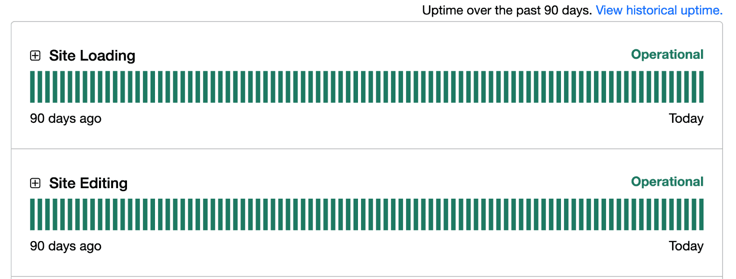
It’s standard stuff. But none of it matters if the platform can’t keep chugging along even if something comes up. This happened to Shopify just last weekend: Due to an authentication error, about 4,000 merchants were locked out of their stores during the biggest shopping day of the year.
That’s why, Inditzky says, load testing and code freezes are no-brainers, adding: “We initiate a code and production freeze policy in the period before and during Black Friday/Cyber Monday and other holiday seasons to ensure the stability of the system.”
The idea is simple. Nothing new goes live while merchants are bringing in the most revenue they’ll see all year.
“We also have a dedicated on-call and escalation policy set for each team from the relevant domains, tune system limits, as well as alerts in place to support our users,” Inditzky added.
The Biggest Mistake Merchants Make
Yes, the end-of-year holiday season is easily the busiest shopping time of the year. But Inditzky says many merchants still make the same mistake: They treat Black Friday and Cyber Monday as one-offs instead of a larger window of opportunity.
Generally, holiday shopping is unusually “brand-fluid,” Inditzky says: “During these times, shoppers are more exploratory than at any other time of year, they’re discovering new brands, trying unfamiliar stores, and making first-time purchases at scale.”
Every transaction has that priced dollar value, but he argues the real opportunity occurs after a customer checks out. Some simple actions Inditzky encourages hosts to build into their platforms — or urge their clients to use — include:
- After a purchase, follow up with some type of communication, such as a welcome or recommendations email
- Use “real messaging” — sharing useful info or updates — instead of solely relying on discounts
- Stay active and engaging on social media so customers don’t forget about the brand or site
- Always prioritize keeping customer service fast and actually handled by real people
“Simple actions like [these] can transform a holiday buyer into a repeat customer who keeps coming back long after the sale banners disappear,” Inditzky said.
