



Writer: Jordan Sprogis


Editor: Lillian Castro


Reviewer: Cristian Lopez

Key Takeaways
While much of the Automattic vs. WP Engine drama has been playing out in blog posts and social media rebuttals, plenty has been happening in the courtroom: Just a few weeks ago, WP Engine filed its third amended complaint, adding several new details to the case.
A few of those new details are particularly interesting, including allegations that Automattic’s CEO Matt Mullenweg owns wordpress.org, and claims that Automattic attempted to interfere with WP Engine’s vendor partnerships.
So… Who Actually Controls WordPress?
Let’s rewind a bit. In 2010, Automattic announced it would be donating its WordPress trademark to the nonprofit WordPress Foundation to hold the brand and keep it from being controlled by any single company.
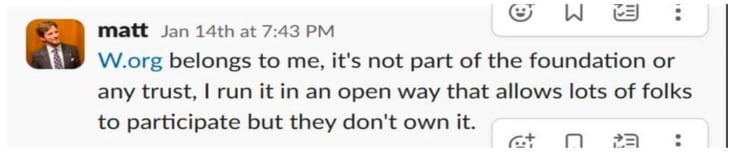
WPE’s second amended complaint claimed that the Foundation later licensed the trademark back to Automattic, referencing statements where Mullenweg acknowledged that he personally controls or owns wordpress.org.
WPE stated in its original complaint that, under the impression that WordPress is an open-source platform, it influenced how hosting companies built businesses around WordPress.
If the trademark were controlled by a single entity, that could create risk around future policy changes, which would directly affect WordPress hosting businesses like Kinsta, Bluehost, and WP Engine.
The complaint also takes a closer look at the Foundation’s IRS filings.
WPE claims that it shows very few assets, arguing that this is unusual since the Foundation should hold the WordPress trademark — a brand that many would consider extremely valuable.
In reality, this doesn’t actually indicate any wrongdoing. Intellectual property is often recorded at historical value instead of market value, as the Financial Accounting Standards Board notes:
“Donated assets, including intellectual property, are recognized at fair value at the date of donation and generally remain recorded at that value.”
The issue is it’s unclear how much the trademark was worth at the time of its donation.
Then There’s the Stripe Situation
The filing also adds a new claim that Automattic tried to pressure one of WPE’s vendors — payment platform Stripe — to stop working with the hosting provider.
This may not come as much of a surprise. The two companies have been publicly butting heads for years now: Automattic has publicly encouraged users to switch hosts. WPE, for its part, focused on promoting alternative plugin infrastructure to WordPress’s.
But if true, trying to win customers is one thing, and cutting off a competitor’s vendors would be something else entirely. WPE said that Mullenweg emailed a Stripe executive requesting that the company:
“cancel any contracts or partnerships with WP Engine.”
The filing further claims the email included an implicit ultimatum:
“If you chose not to do so, we should exit our contracts.”
Again, it’s not clear from the complaint how WPE obtained these emails. We also don’t know how Stripe responded.
But — at least publicly — nothing seems to have changed: Stripe remains one of the most widely used payment platforms across WPE and WordPress.
No trial date has been set to date. The case is still in pleadings and discovery, so we expect more information in the coming months.
