




Writer: Jordan Sprogis


Editor: Lillian Castro


Reviewer: Cristian Lopez

Key Takeaways
For the past few years, the data center industry’s biggest obstacle was supposed to be whether there was enough demand to go all in on AI.
Could developers build fast enough to keep up with the AI gold rush? Well, it turns out that was the easy part. The problem is that almost nobody anticipated how much opposition their new neighbors would have.
Halfway through the year, it looks like those neighbors include a zoo, some ghosts, a millionaire, and a New England town that saw the whole thing coming.
Nashville, Tennessee: The Zoo Fights Back

DC BLOX — an AI-ready data center company — wants to build a 69,220-square-foot data center in Nashville. The problem is that it sits about 50 yards from Nashville Zoo, which is home to ~3,000 animals…and a clouded leopard conservation program.
And no: As you would guess, the elusive, endangered clouded leopard is not a fan of loud noises.
“We are vehemently opposed to having a data center so close to animals,” Rick Schwartz, the zoo’s president and CEO, said to NBC. The zoo’s opposition page goes into a bit more detail, warning that constant cooling system, generator noise, and security lighting, could disrupt the animals’ natural rhythms.
Councilmember Courtney Johnston says her phone has been ringing nonstop: “I’m getting phone calls. I’m getting emails. All of my social media. Text messages. The community is speaking,” she said.
Since then, the petition has shot past 325,000 signatures, with other celebrity names including Sheryl Crow, Jack White, and Margo Price on the list. Then last Thursday, country star Brad Paisley posted an Instagram video calling the whole thing “an absolute nightmare scenario.”
The zoo’s attorney has now filed a zoning appeal to overturn DC BLOX’s approved permits. Meanwhile, Nashville’s Metro Council is eager to ban data centers more than 500,000 square feet (about the size of a football field) that would require half-mile buffers from homes, schools — and yes, zoos.
Spring City, Pennsylvania: A Haunted Attraction
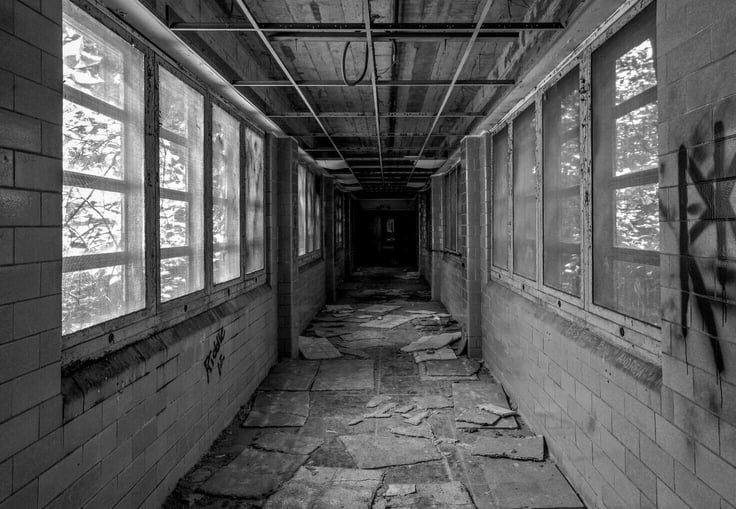
East Vincent Township in Pennsylvania has spent some time now fighting a proposed 1.9-million-square-foot data center (about 33 football fields) on the grounds of the old Pennhurst State School and Hospital.
These grounds have a … complicated history. Pennhurst opened in 1908 as a state institution for people with disabilities and closed nearly 80 years later after being exposed for neglect and abusive conditions. It then became the Pennhurst Asylum, a haunted attraction that draws tens of thousands of visitors every year.
To a data center investor, this lot is the perfect spot to build: It’s a massive unused piece of 125 acres, an hour outside of Philadelphia, and sits inside a fiber-and-power corridor that runs from Washington up through New York.
But that’s not who’s pushing this. It’s Derek Strine, who actually co-owns Pennhurst Asylum. (Maybe he wants a multi-million-dollar payout so he can retire and stop showing adrenaline enthusiasts around every weekend…)
Whatever the reason, residents aren’t thrilled. Steve Hacker reminded news outlets that pollution and noise don’t respect that kind of line. Another resident, Donald Hyman, adds: “You’re trying to force something on us we don’t want. We don’t want it, period.”
On May 21, officials voted unanimously against the project. Pennsylvania state senator Katie Muth celebrated the vote, saying the decision was “made in the best interest of the public, not big tech bros seeking to profit off of poisoning our community.”
The fight isn’t over, though: An attorney for developer Pennhurst Holdings LLC says the company may appeal.
Box Elder County, Utah: “Shark Tank” Enters
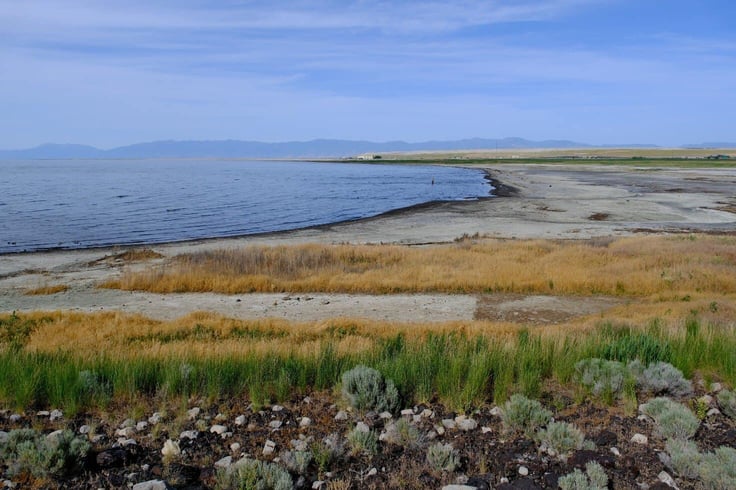
Chaired by Kevin O’Leary — yes, Shark Tank’s very own — the Stratos Project is a proposed AI and data center campus that will sprawl 40,000 acres in rural Box Elder County. If built, it would require 7.5-9 gigawatts of dedicated power generation. For the record, all of Utah’s existing coal, gas, wind, and solar capacity combined adds up to about 10.2 GW.
Despite its insane power demands and proximity to Great Salt Lake, the project has received backing from Utah’s Military Installation Development Authority (MIDA). CEO Paul Palandjian also attempted to reassure the public that “every single landowner in the MIDA project zone has signed a letter of support.”
Of course, landowners signing it is one thing; what the public has to say is very different.
An initial request to divert 1,900 acre-feet of water for the project resulted in 3,900 protest filings in just one month and was eventually withdrawn. Scientists have also warned of the heat-island risk a plant this size could pose near the already-shrinking Great Salt Lake.
The news of the Stratos Project has spread far beyond Box Elder County residents’ backyards. Utah’s governor, Spencer Cox, has even publicly responded, agreeing that the rollout was “not good.”
He also separately recently announced that Utah is teaming up with Arizona, Colorado, and New Mexico to pursue geothermal energy — that is, drilling into the earth to harness heat for power — saying it would be a better alternative to gas or coal plants, which could solve the power problem for big projects like Stratos.
Mansfield, Massachusetts: Preparing with Zoning Laws
One town in Massachusetts saw what was happening across the country and decided to get ahead of it. At its May 5 town meeting, it approved Article 23, making Mansfield the first town in Massachusetts with dedicated data center rules.
Anyone who does want to apply needs to prove they’ll cover electrical demand, cooling, water use, and noise. The town also reserves the right to demand outside peer review at the developer’s expense. Plus, permits expire after five years.
It’s interesting how the sheer possibility of a data center nearby also triggered the law change: Mansfield hadn’t touched its municipal noise ordinance law since 1996.
“The only thing worse than having a bylaw from 1996 is not having one,” a city planning director, Sarah Raposa, said. “If you are at home sleeping with your windows closed, you probably shouldn’t be hearing a data center that happens to be nearby.”
Now, facility noise is now capped at 50 dBA during the day and 45 dBA at night. So, if anyone wants to build a data center near here, they’re going to have to make sure that it’s not louder than the sound of a running fridge.
