




Writer: Jordan Sprogis


Editor: Lillian Castro


Reviewer: Cristian Lopez

Key Takeaways
Imagine offering your clients hosting services not in a warehouse somewhere in Virginia, but aboard an orbiting satellite. It sounds like science fiction — but thanks to Starcloud and Crusoe, it’s looking more like reality.
Now it’s official: The Denver-based sustainable cloud company announced a partnership with Starcloud (formerly Lumen Orbit) to deploy Crusoe Cloud infrastructure aboard satellites, with the first GPU capacity expected to go live in space by early 2027.
Watch the teaser video below:
“We believe that space will ultimately matter to the future of computing because it enables new solutions to a key scaling constraint for AI infrastructure, which is sourcing abundant, consistent and clean energy,” said Cully Cavness of Crusoe. “By partnering with Starcloud, we will extend our energy-first approach from Earth to the next frontier: outer space.”
Aiming for the First Data Center in Orbit
Starcloud, a Redmond-based startup backed by Y Combinator, plans to launch a small 60-kilogram satellite in late 2025 as a hardware proof of concept, carrying an NVIDIA H100 into orbit to see just how well computing performance in space goes.
That mission will hopefully pave the way for a larger deployment in 2026, which will include a dedicated module running the Crusoe Cloud platform. This way, customers can deploy AI workloads. Powered by solar arrays and cooled by the vacuum of space, the system will operate without relying on Earth-based grids, cooling systems, or land resources.
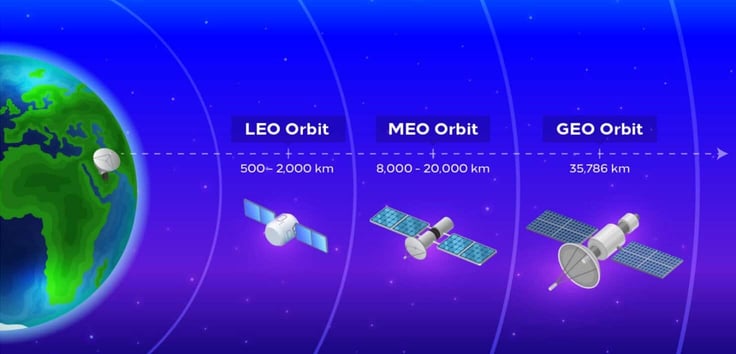
Because in low Earth orbit (LEO) you get near-constant sunlight (depending on orbit) and you avoid many of the energy losses/constraints of Earth (weather, atmosphere). Starcloud says its orbit-based solar panels and vacuum cooling lets them tap “abundant, consistent and clean energy.”
“Together, we are building not just a data center in space, but a new category of cloud computing that will unlock extraordinary possibilities for research, discovery, and innovation,” Philip Johnston, CEO of Starcloud, said of the Crusoe partnership.
Solving the Data Center Energy Problem?
Starcloud says it’s building data centers in space to solve Earth’s energy crunch for AI workloads. That means it’s trying to solve one of the toughest problems facing AI workloads on Earth today: the incredible strain they put on our global infrastructure.
Data centers burn through nonrenewable resources, sprawl across thousands of square feet that eat into local ecosystems, and consume staggering amounts of energy to stay cool. This orbital data center, on the other hand, is set to have much lower energy costs.
Plenty of companies have tried (or are trying) to fix the problem here on Earth — from water-based cooling systems to solar-powered facilities — but at the pace that new data centers are being built, it’s not enough. Maybe one day it will be. For now, Crusoe and Starcloud think they’ve found a longer-term answer.
“In space, you get almost unlimited, low-cost renewable energy,” Johnston told NVIDIA. “The only cost on the environment will be on the launch, then there will be 10x carbon-dioxide savings over the life of the data center compared with powering the data center terrestrially on Earth.”
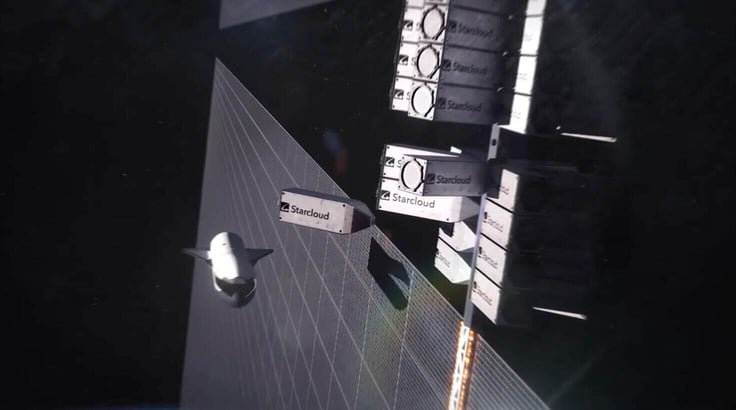
Another source suggests that it will also get around five times more input from sunlight due to the fact that there are no clouds/atmosphere filtering.
If all goes well and the future really is in orbit, it opens a whole new set of questions: What happens if a meteor knocks it out of space? What if an alien comes by and steals all of our information? What if a foreign spy steals it and it’s the Cold War all over again?
Wild hypotheticals aside, it’s a fascinating proposition for hosting providers. This could become an entirely new revenue stream. Imagine offering clients a Premium Orbit Hosting tier.
Now, regulation and data-sovereignty issues? That’ll be its own feat.
