



Writer: Jordan Sprogis


Editor: Lillian Castro


Reviewer: Cristian Lopez

Key Takeaways
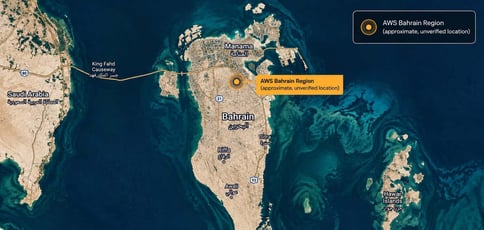
Back in March, I covered AWS’ outage in the Bahrain thanks to drone missile strikes. When that happened, AWS told customers to move their workloads out of the region. Six months later, the company is still dealing with damage to its infrastructure in the UAE. And now, it looks like data stored exclusively in the mec1-az2 Availability Zone (AZ) may be gone for good, according to Reuters and WIRED.

Hosts and businesses relying on that infrastructure are really going through it right now. It’s frustrating because you can do everything right: trust a major provider, have backups, multiple AZs, a recovery plan ready. When physical damage takes out the infrastructure, all those precautions feel a bit pointless.
Relocating is the right move, but it’s not exactly something you can do by clicking a button. AWS’ own guidance on moving workloads between regions gets deep into dependency mapping, infrastructure setup, compatibility checks, data transfers, and testing.
AWS Middle East Availability Zones
A reference table of AWS Availability Zones across Israel, the United Arab Emirates, and Bahrain.
| Availability Zone ID | Region | Geography |
|---|---|---|
| ilc1-az1 | il-central-1 | Israel |
| ilc1-az2 | il-central-1 | Israel |
| ilc1-az3 | il-central-1 | Israel |
| mec1-az1 | me-central-1 | United Arab Emirates |
| mec1-az2 | me-central-1 | United Arab Emirates |
| mec1-az3 | me-central-1 | United Arab Emirates |
| mes1-az1 | me-south-1 | Bahrain |
| mes1-az2 | me-south-1 | Bahrain |
| mes1-az3 | me-south-1 | Bahrain |
Thankfully, the company is helping affected customers move to other regions, use backups where available, and try alternative solutions if any data seems unaccessible.
AWS says it expects to provide more updates in early 2027. Yes, that’s three months away. Some are still waiting to find out what happens next, while others already know that certain data isn’t coming back. It’s another casualty of war, this time buried in the cloud.
