




Writer: Jordan Sprogis


Editor: Lillian Castro


Reviewer: Cristian Lopez

Key Takeaways
- A new partnership between two European providers further confirms that the talk around the sovereign cloud is turning into action at the industry level.
- As the EU takes back control from the American hyperscalers its people depended on for so long, those same giants are hoping to implement their own infra across the pond.
OVHcloud just partnered with Almaviva to co-create solutions tailored to the EU’s strict regulatory and data-sovereignty requirements, especially under the new Data Act, across the finance, healthcare, and telecom sectors.
“This partnership marks a significant step forward in creating a more competitive and sovereign European digital ecosystem, benefiting businesses, public administrations and citizens,” said John Gazal, the Vice President Southern Europe of OVHcloud.
The European Data Act took effect in September and applies to any service that stores or processes data. It essentially gives users the right to access, share, and transfer the data they help generate by using their services, and governs how companies can use it.
With everyone currently updating their policies, OVHcloud and Almaviva’s partnership couldn’t have come at a better time. But the choice was not as simple as picking a name out of a hat; the Italian-based digital global company has deep roots in public-sector IT and national infrastructure projects, so it’s perfect for those sensitive industries they hope to target.
It looks as if the French cloud provider is already on a sovereign spree, too: The Almaviva partnership follows another OVHcloud deal with Crayon, whose goal is to contribute to the EU’s infrastructure through locally built hardware and software.
The Cloud Divide (Finally) Takes Shape
It’s an interesting time for the European market, and hosts working in Europe are now part of the sovereignty conversation — whether they like it or not. With that in mind, recent trends have shown that the region’s cloud landscape is splitting into two camps.
First is the obvious: the regional providers like OVHcloud, Scaleway, and Deutsche Telekom that are doubling down on full European control of data, hardware, and software (and pitching that as a major selling point).
Then there are the American hyperscalers like AWS, Microsoft, and Google that are all eager to localize their infra to satisfy regulators (and keep European customers). To many, it’s a funny twist in the larger picture — seeing U.S. giants participating in a region that’s built on keeping them at arm’s length.
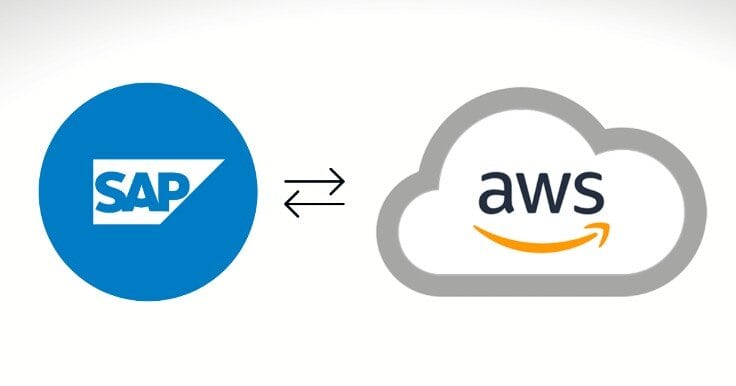
But it is happening in full swing. AWS and SAP, for instance, are co-launching a European Sovereign Cloud operated entirely under EU oversight. Meanwhile, Cisco is building Cisco Sovereign Critical Infrastructure, designed for Europe’s most sensitive sectors.
The logic is simple. When consumers talk about something that can be used as a selling point, companies are bound to listen.
For years, performance and reliability defined a provider’s worth. But businesses have voiced time and time again that speed alone isn’t impressive anymore. Customers want assurance that their data is safe and living under the right jurisdiction — especially in sensitive sectors where noncompliance fines can climb into the millions.
Taking a Page Out of the EU’s Book
What’s happening in Europe likely won’t stay there.
We’ve already seen it start in Japan. In July 2024, the EU and Japan signed a Data Flow Agreement built on what Brussels calls “data free flow with trust.” The pact basically says that the two regions are free to share and move data as normal, just while upholding agreed-upon privacy and protection standards.
Even the U.K. joined in by securing an adequacy decision from the EU under its 2018 Data Protection Act. It basically means that the EU approves Britain’s privacy rules as equivalent to the GDPR, so the way data is shared/moved isn’t much different than it was pre-Brexit.
But make no mistake that these are only steps, so hosts outside Europe should expect similar regulation changes, even if the exact rules will look a little different. Soon, clients everywhere are going to ask: Where is my data, and who has access to it? And governments and providers alike will have no choice but to listen.
