




Writer: Jordan Sprogis


Editor: Lillian Castro


Reviewer: Cristian Lopez

Key Takeaways
Singapore just got another American-based data center, this time from DreamHost. The company officially launched its first APAC location in late March.
It’s DreamHost’s second move outside the U.S. after opening in Amsterdam in early 2025, which means that DreamHost — an employee-owned company that built its name on shared hosting — is now running a three-continent infrastructure strategy.
What is also worth paying attention to is why they picked Singapore when they did.
“More businesses are building for global audiences from day one, not scaling into it later,” DreamHost’s COO, Chris Ghazarian, told HostingAdvice.
As hyperscalers build out regional infrastructure, they’re also raising the baseline for what customers expect — low latency, local data residency, and regional support — are the norm now, and it’s a model more mid-market providers may have to adopt just to survive.
As in, we should be fully prepared for this to become a common move for all mid-market players.
Why Singapore, and Why Now
The APAC data center capacity is projected to expand from 32 GW to 57 GW by 2030.
DreamHost’s move is smart because it’s following in the hyperscalers’ footsteps. Southeast Asia (SEA) alone had more than $55 billion in AI infrastructure commitments last year:
- AWS planned a $6 billion investment in Indonesia, $5 billion in Thailand
- Google committed $2 billion to Malaysia and $1 billion to Thailand
- Microsoft put $2.2 billion into Malaysia — its largest investment there in 32 years
- Microsoft also launched new Azure cloud regions in Indonesia and Malaysia in May 2025
That’s obviously a different position than “we opened where customers asked us to,” and more of a proactive geographic investment.
“Instead of expanding reactively, we’re building infrastructure in regions where demand is already forming and where we know it will continue to grow,” Ghazarian said.
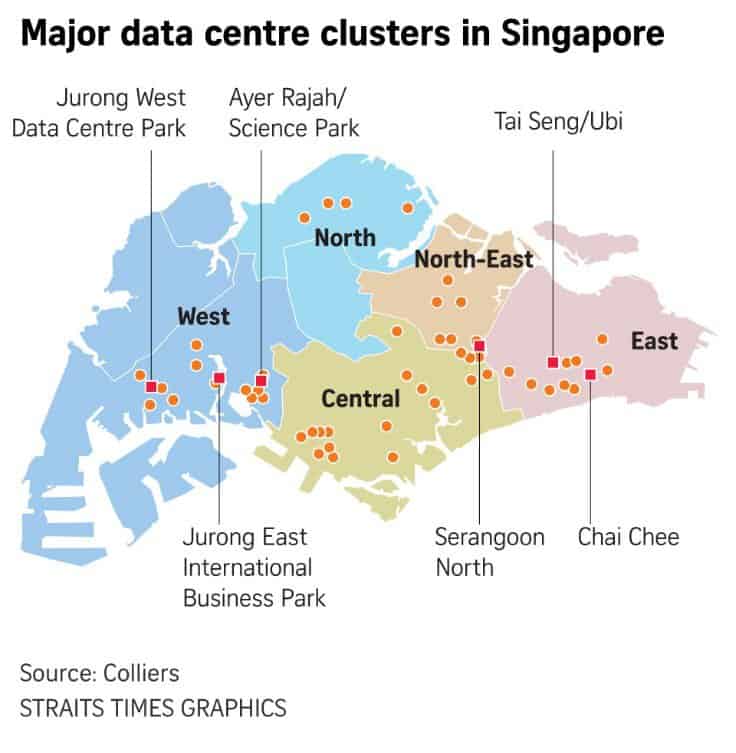
DreamHost got in at the right time: Singapore is operating at just 1.4% data center vacancy, which is the lowest in APAC.
The low vacancy is naturally forcing demand into neighboring regions, which explains why DreamHost also has its sights on Indonesia, Vietnam, Thailand, and the Philippines.
The data doesn’t hurt either: Internal benchmarks show up to 95% faster server response times and nearly 60% faster first page renders for SEA users compared to U.S.-served traffic.
OK, yes — vendor benchmarks are always worth reading with some skepticism, but the argument still stands.
We already knew that serving Jakarta from Los Angeles was never a great idea; you can’t run a responsive AI product from across an ocean and expect users not to notice.
It’s as Ghazarian said: “As applications become more sensitive to latency, and user expectations continue to rise, location plays a much bigger role in overall performance.”
