




Writer: Jordan Sprogis


Editor: Lillian Castro


Reviewer: Cristian Lopez

Key Takeaways
- Imad Qadri from BerryByte and Steven Korkowsky from GPORTAL shared with us how late-stage game launch changes can affect the game hosting stack.
- Underfulfillment is a huge problem when game hosts typically buy capacity ahead of time based on how much player demand they forecast at launch.
- The opposite is a problem, too. Not having enough capacity reserved can turn people away or cause server crashes.
New World disappeared from all digital stores in January. Once one of the biggest MMORPG launches of its era, the 2021 debut was cursed by massive hours-long server queues. By 2023, 90% of its original players were gone.
The indie game developer Running With Scissors, best known for its Postal franchise, scrapped an upcoming title in December, after players accused it of using AI-generated imagery in its trailer.
A month earlier, in November, just weeks before its early release, the game developer of Paralives, a life-simulation game that some say is the potential competitor to The Sims 4, extended its release by six months because beta players said the game still felt unfinished.
Game studios will tell you it’s par for the course. And yet, in all three scenarios, player reaction forced changes late in the release cycle. By then, platform hosts have likely already committed capacity.
So how do game hosts plan for an industry where player reaction can change a release plan overnight — both good and bad? We spoke with BerryByte’s Imad Qadri and Steven Korkowsky from GPORTAL to understand how hosting strategy is adapting in response.
The Real Cost of Late-Stage Delays
Despite how it may look from the outside, Qadri argues that late-stage changes in game launches pose a greater financial risk than a technical one for hosting providers.
Hosting capacity for game launches is often planned and committed weeks — sometimes months — in advance. Servers are reserved and regions are selected long before a game ever goes live.
“When a title is paused late in the cycle, you’re often left with provisioned compute that can sometimes not be immediately be repurposed without contractual or technical friction,” Qadri said. “Especially since server hosts rely on upstream compute vendors and commit capacity based on projected demand.”
This isn’t a game-hosting-specific problem, though. Cloud over-provisioning is already a well-documented loss across the industry. Studies consistently estimate 25%-35% of cloud spend is wasted, largely due to reserved or pre-provisioned capacity that goes unused.
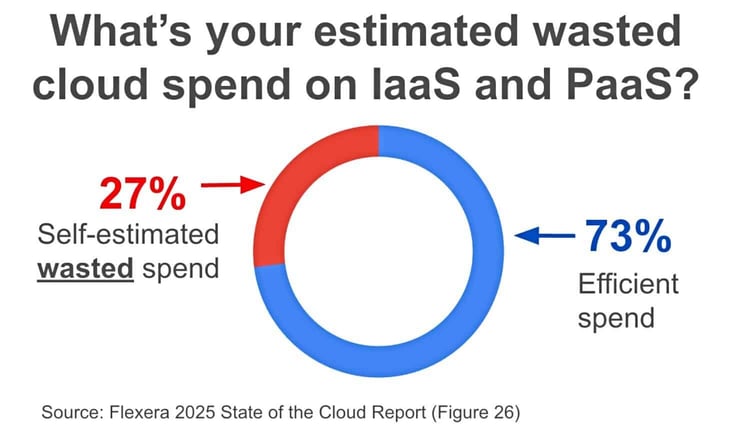
It just looks like game hosting feels the impact a bit harder. After all, launches are public to a very vocal demographic, and demand spikes can be downright brutal.
Major AAA releases, in particular, can effectively freeze the release calendar, which just adds more unpredictability to hosting forecasts.
“Major AAA releases also influence other development studios and their game releases, which can lead to further delays on their part, as studios often do not want to compete with such blockbusters, even if they do not fall into their own genre,” Korkowsky said.
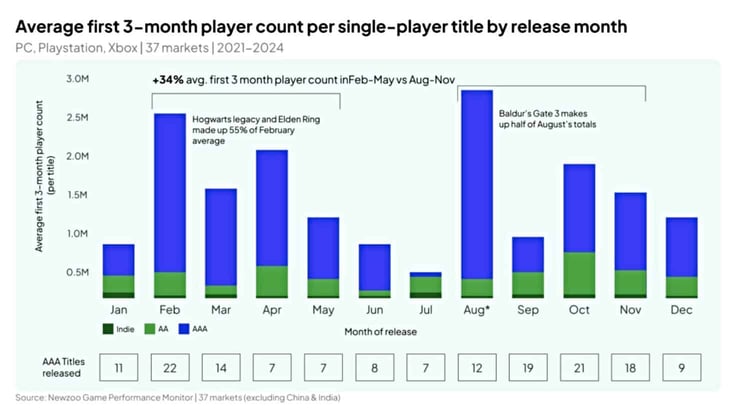
Studios try to game the calendar to manage the releases — though that strategy doesn’t always work.
AAA games tend to crowd heavily around the holiday window, with one study finding that 45% of all single-player games were released between mid-August and mid-November. It’s a predictable, high-visibility period — but not necessarily the most effective: Outside that window often performs better, with off-season releases from January to April titles converting 7-20% better than average.
When Demand Spikes Overnight
Because the opposite of underfulfillment can happen.
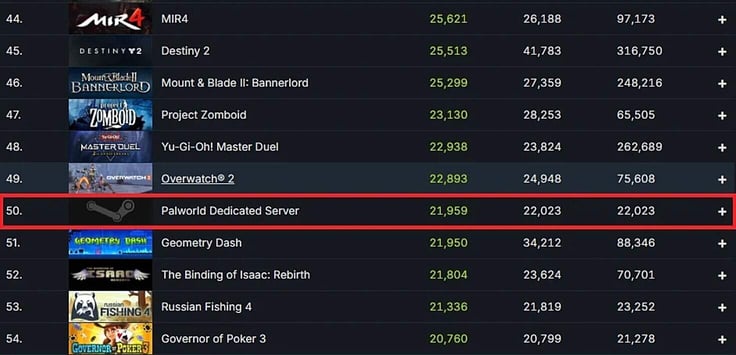
Korkowsky said that the launch of Palworld, a massive open-world survival-crafting game, in January 2024 is a good example of how difficult player interest can be to predict for GPORTAL.
“The game’s release was well known, but at the time, it was difficult to estimate the number of players and the amount of server hardware we would need to provide,” he told us. “It scaled far beyond initial projections.”
A lot of that came down to timing, creators, and a pitch so simple it practically marketed itself — that is, “Pokémon with guns” — Palworld broke out well beyond its expected audience, sustaining more than 1 million concurrent players for days after launch.
“In a situation like this, it was extremely important to maintain good communication within the teams and also with our partners in order to meet customer needs,” Korkowsky said.
That assumes everything goes right. Alas, as in web hosting, user expectations are changing, and their reactions have the power to delay launches, change release strategies, or cancel projects.
“We closely monitor industry sentiment because community reaction increasingly influences release strategies and infrastructure planning,” said Korkowsky.
Even delays and cancellations are routine, said Korkowsky. Sure, it’s still disruptive, but parts of modern release cycles, nonetheless.
“There are, of course, delays in games (or updates) for which we offer corresponding server hosting. This leads to delays in release planning in our IT department, in marketing (e.g., for giveaways), and similar areas,” said Korkowsy. “However, this is something that we at GPORTAL can handle quite well and are very flexible about.”
But Qadri says late-stage changes does force hosts to rethink how much capacity they’re willing to buy ahead of time.
“While the revenue impact may be limited, repeated disruptions push hosts to favor shorter commitments and more conservative scaling models, which could ultimately raise costs for studios,” said Qadri.
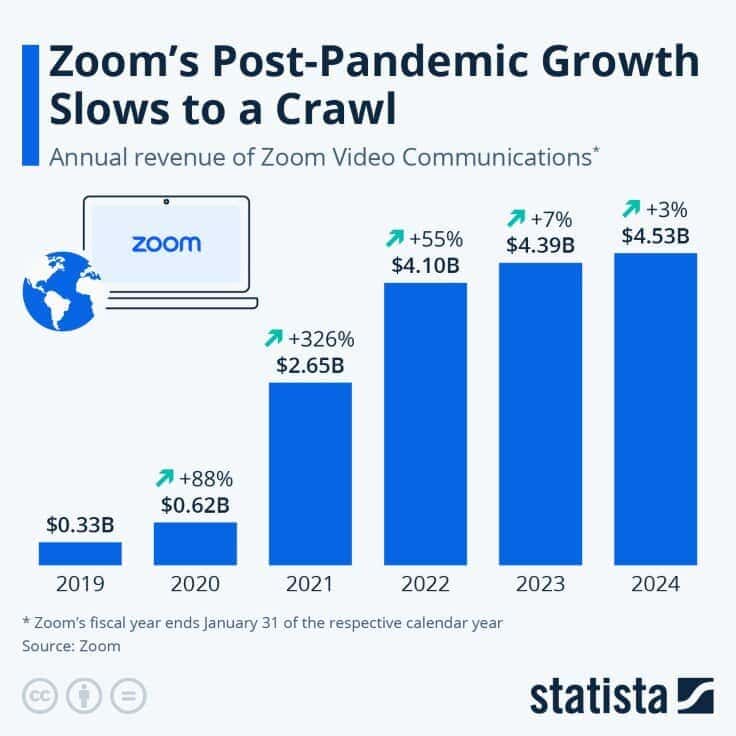
We’ve already seen what happens when demand is overestimated. Look at what happened to Zoom or Peloton, both of which bought massive capacity during the COVID-19 pandemic that went unused once people returned to pre-pandemic habits.
“Studios may suddenly pull features, roll back systems, or delay updates — all of which can invalidate prior scaling assumptions,” said Qadri. “For us server hosts, that means building more flexible, modular infrastructure instead of long-term locked capacity, which again shifts cost and risk upward.”
At this point, both hosts say that simply forecasting isn’t enough. It’s time to be “on” all the time and stay flexible so as not to get stuck paying for infrastructure no one ends up needing.
It’s as the old proverb says: “Hope for the best, plan for the worst.”
