




Writer: Jordan Sprogis


Editor: Lillian Castro


Reviewer: Cristian Lopez

Key Takeaways
- AI-generated websites and builders are everywhere, but DreamHost is showing the industry that users still want the human touch and just might be willing to choose providers that offer it.
- But why? While people prefer AI builders for their speed, studies show they actually find human-built sites more trustworthy, accessible, and engaging.
- If the human touch is a unique selling point, should hosts meet in the middle by blending AI speed with human oversight?
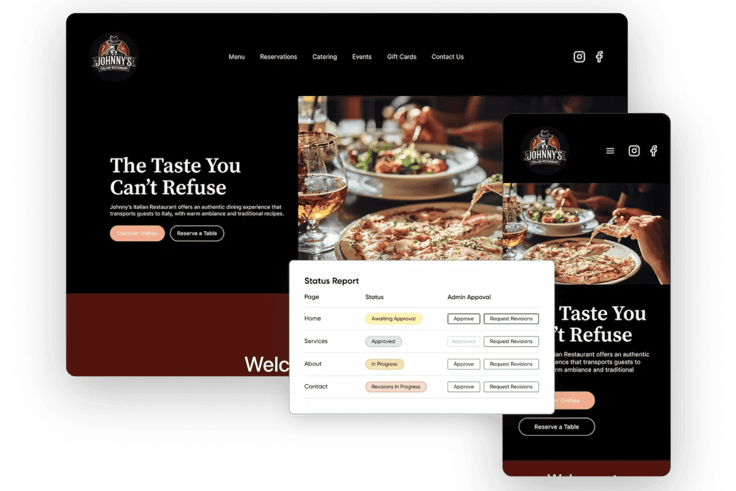
DreamHost recently announced it’s now giving new customers a fully built WordPress site, handcrafted entirely by humans, with every newly purchased hosting plan.
DreamHost already has its own AI builder, Liftoff, which was launched last year and lets users to create WordPress sites in about a minute. So why offer a manual alternative that could take days?
According to the company’s press release, the decision was driven by customer demand for “website builds with a distinctly human flair.”
While the rest of the industry is chasing automation, DreamHost’s Brett Dunst leaned into a more romantic pitch for human-made design: “There’s something uniquely personal about a beautiful new website that’s been shaped by skilled hands.”
Dunst continued: “Not rough hands that have known the toil of manual labor, or the clawed hands of androids desperate to find their humanity, but smooth human hands that have only known the touch of the world’s finest keyboards, delivering the polish of professional design uniquely driven by the authenticity of human creativity.”
Human Touch vs. AI Hype?
The global AI-powered website builder market is projected to reach $31.5 billion by 2033, (25.8% CAGR), and it’s platforms like Wix, Hostinger, Squarespace, GoDaddy, and Jimdo that are flooding the market with AI-driven design tools which promise speed and convenience.
But fast doesn’t always mean better. Multiple studies show users trust and prefer human-developed websites when it comes to aesthetics, clarity, accessibility, and emotional engagement:
- Human-generated content outperformed AI in emotionally sensitive areas like healthcare and education, where trust and authenticity were key
- Human-designed interfaces ranked higher for customization and accessibility, while AI tools delivered faster — but more generic — results
- In advertising and product descriptions, people trusted and engaged more with human-written content
- AI-generated UX flows were efficient but emotionally disengaging
- Accessibility tests found that AI-generated wireframes lacked contextual awareness and struggled with usability
- Deceptive patterns were more common in AI-generated layouts, creating user discomfort
It’s safe to assume that most users still care about human intention, emotional nuance, and ethical awareness, especially in sensitive digital spaces.
Speaking of sensitive digital spaces, security is another key feature that AI/vibe-coded builders may miss.
Overreliance on LLMs stretch too far in some ways, especially since AI builders automatically increase the attack surface. Things like automated API integrations usually introduce new weak points that are easy to exploit:
- Prompt injection attacks can manipulate outputs or expose sensitive information
- Auto-embedding third-party scripts expands supply chain vulnerabilities
Lineaje CEO Nick Mistry has flagged the growing risks tied to unclear software supply chains, especially in the age of AI-assisted development.
But one proposed solution is the Software Bill of Materials (SBOM), which is a full inventory of all components within a given application.
“A detailed SBOM provides full visibility into all components within the software, empowering organizations to verify software integrity and respond quickly in the event of a vulnerability or breach,” Mistry told HostingAdvice.
While AI tools can help monitor aspects like API security, they still require human oversight to provide context, manage exceptions, and respond to potential threats.
What It Means for Web Hosts
DreamHost isn’t doing anything groundbreaking. Five years ago, before generative AI took the web by storm, building websites from scratch was the norm.
Today’s climate is another story.
Now, that actually may open the door for hosting providers to rethink their unique selling points (USPs). While manual site builds may not scale like AI tools, they do offer something different, especially when paired with managed support, white-label dev teams, or premium onboarding.
That’s something most AI builders don’t always offer; and coupled with the fact they’re typically convenience-first and developed within closed ecosystems, security isn’t (always) a priority.
But that may also be exactly why DreamHost’s human-led model may be more than just a nostalgic gimmick. By giving customers a human-built site upfront, DreamHost sidesteps many of the known — and unknown — AI pitfalls.
And for other providers, there’s room to meet in the middle by providing AI-assisted site creation with human quality control, such as pre-vetted templates, security defaults, and final QA reviews.
