




Writer: Jordan Sprogis


Editor: Lillian Castro


Reviewer: Cristian Lopez

Key Takeaways
Managed services and multicloud are set to define the next five years of hosting, according to a new UpCloud survey. Roughly 6 in 10 providers say managed services will be their biggest growth opportunity by 2030, while just over half predict multicloud adoption will accelerate.
These findings suggest that hosting clients definitely still want flexibility from their hosting plans, but they also expect them to handle the overhead. And given the rise of vibe coding and the flood of AI-curated attacks, it’s not hard to see why success for hosts may depend less on the servers they sell and more on the management that makes those complexities easier to deal with.
Hi Flexibility, I’m Management
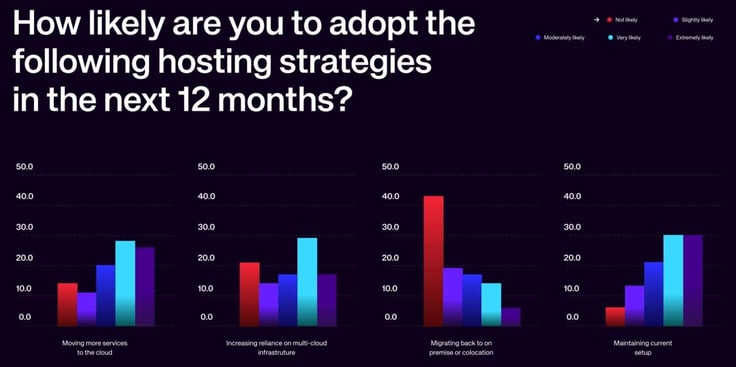
For years, multicloud strategies were something only Fortune 500 companies bragged about. But now, about 45% of hosting providers say they’re very or extremely likely to increase reliance on multicloud in the next 12 months, with another 18% moderately likely to do so.
That growth is fueled by frustration with vendor lock-in — because clients are, understandably, increasingly wary of being stuck with a single provider. From outages and price hikes to navigating compliance, customers are feeling like there are endless risks when depending on a single cloud vendor.
A study from 2016 still holds substance to that point, observing that “vendor lock-in is a major barrier to the adoption of cloud computing, due to the lack of standardization.” The issue today is that the problem only grows as workloads increasingly move to more diverse cloud setups.
In that sense, multicloud acts like a release valve.
Miguelángel Fernández, UpCloud’s PaaS lead, credits the portability that makes multicloud viable to the Cloud Native Computing Foundation’s (CNCF) Kubernetes Conformance Programme, which ensures Kubernetes deployments work exactly the same across vendors.
“In this new world of hybrid and multicloud, the adoption of Kubernetes becomes even more important than ever, because it gives companies a previously unseen degree of freedom when choosing to migrate their deployments,” he said in the report. “This is what makes Kubernetes workloads truly portable and helps companies avoid the dreaded ghost of vendor lock-in.”

Of course, flexibility alone doesn’t suddenly erase the complexity. Multicloud may win over some customers, but for hosts, it means more overhead.
And yet, 54% of providers see managed services as the force that marries meeting expectations and protecting revenue.
The problem is that the industry is racing toward a skills gap. Vibe coding, with its low-code platforms and front-end-first workflows, is leaving fewer teams able — or willing — to deal with backend infrastructure.
Fernández framed that as a opportunity for providers.
“This can help hosting providers to optimize costs and improve resilience — all-important features to retain customers in a highly competitive environment,” he said.
And that’s where the money is for hosts. As long as providers aren’t just selling server space and bundling all the things SMBs don’t want to do themselves (migrations, monitoring, security, compliance), the survey says clients are happy to pay for the convenience.
