




Writer: Jordan Sprogis


Editor: Lillian Castro


Reviewer: Cristian Lopez

Key Takeaways
- Customer support chatbots are everywhere nowadays. But they still fall short when it comes to earning a client's trust, especially in the presales and onboarding phases.
- BigScoots COO James Webb recommends using AI for customer analysis like churn prediction, ticket handling, and resource auto-optimization instead.
- With thousands of hosts adopting identical LLM-powered workflows, including chatbots, the last real differentiator left may just be human service.
Forty-two percent of businesses currently use chatbots for customer engagement and predictive analytics, according to Hostinger’s 2025 AI report.

But as more hosting providers turn to automation, some leaders question whether the trade-off is worth it.
One of them is James Webb, COO of Chicago-based hosting company BigScoots. Known for its commitment to 90-second support, the company sets itself apart with its self-coined approach to “human-to-human” service.
And Webb made his stance clear: AI has its place, but it shouldn’t be customer-facing.
“AI is great, but what makes it great also makes it flawed,” he said. “Don’t use it to be lazy, and don’t use it as a shortcut. Everything you do for your business should be helping to better serve your clients.”
AI Bots Are Costing Hosts More Than They Think
It’s wildly tempting for hosting providers to automate presales and support chat with bots. But while AI may promise speed, it often fails at the very thing that sales hinge on, and that’s human connection.
Presales, in particular, is not a place where humans shouldn’t be at the forefront: Many AI bots struggle to grasp nuance, which can cause leads to bounce before they even speak to a real person.
A small report found that, even with increased digitalization in B2B spaces, personal relationships are still the most influential factor in driving decision-making.

Webb also shared a personal example in which, after testing an unnamed host’s AI sales bot, he found himself talking in circles: “It asked me to fill out a form and they would get back to me with a recommended plan. I wanted to talk to someone, especially because this isn’t a low-value inquiry.”
He said it’s like waiting for the cable company to arrive, but all you’re given is a vague window of time: “That’s the same kind of frustration these bots create — and it’s not a good first impression.”
The bigger question, Webb added, is what that interaction says about the company itself.
“If I’m not getting to where I need to be within a reasonable amount of time, then how do I have the confidence that that company is going to treat me with priority after I’m a client?”
Why Onboarding Still Demands a Human Touch
If a presale chat is the first impression, then onboarding is the first real test. How a host handles those early interactions is what shapes the rest of the customer relationship.
“If you show them you’re going to be there, then they’re not going to have 500 questions over the next six months because they don’t have that confidence,” said Webb.
The issue, he explained, isn’t just about technical capability. Most people already know that AI lacks the ability to truly replicate empathy — and even when it tries, the results are dissatisfying.
And Webb sees the same risk unfolding in web hosting: As AI becomes more popular, the hosting market is going to become more saturated.
“Maybe in a few years, there’ll be five million hosting companies, and they’ll all say they do great things,” he said. “They’ll all use LLMs to generate their copy, automate their processes, and it’ll look good — until something goes wrong.”
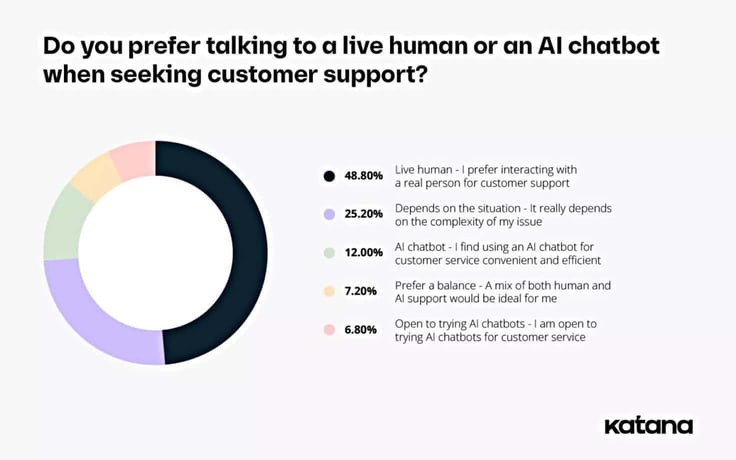
A study by Katana found that, while many SMBs plan to incorporate AI into their operations, roughly 49% of respondents said they prefer interacting with a real person for customer support. Less than 7% said they were open to AI chatbots for customer service.
“Maybe someday it will, but right now, AI still doesn’t replace the handholding or intuition people expect,” he added.
It’s why Webb urges providers to rethink where they’re investing. Instead of pouring resources into training bots for customer-facing roles, hosts should leverage their existing team to handle these conversations.
“Having those folks engage in the pre-sales process — especially when they’ll likely support that same client post-sale — creates a stronger bond. It’s more efficient, more natural, and it builds trust,” Webb said. “And beyond that, it’s just the right thing to do.”
Otherwise, they risk falling into a cycle of overreliance on automation.
“The client never, ever, ever needs to see or think about AI,” Webb clarified, and added: “I look at AI as kind of a secret telephone operator that helps us make good decisions in the background.”
So what does that look like? Here are some ideas:
- Predicting churn before it happens, based on usage and support patterns
- Auto-prioritizing tickets by urgency, tone, and how customers have acted previously
- Recommending plan upgrades tied to CPU, memory, or traffic trends
- Balancing resources across shared servers to reduce noisy neighbor impact
- Summarizing account history for reps before a call even begins
Separating the Signal From the Noise
When asked what advice he’d give to fellow hosting providers, Webb didn’t rush his answer. Finally, he said: “I would say to take the time to understand it.”
“It’s such a hot topic that you get managers or directors coming in saying, ‘We’re going to build the best chatbot ever,’” he said. “But they don’t really understand the technology — and they’re missing the forest for the trees.”
He pointed to a common top-down issue in which leadership wants to implement AI, but doesn’t actually understand its possibilities and limitations.
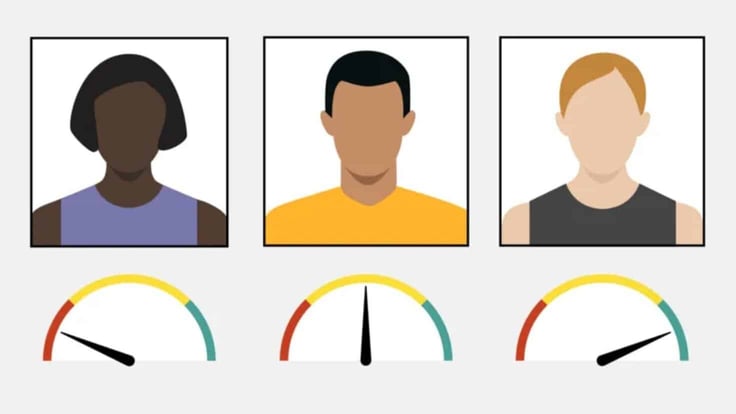
Take, for example, the UK Home Office which deployed an AI system to automatically flag visa applications as Green, Amber, or Red. A neat concept, sure, but it was developed without input from people like AI ethicists or data scientists, so it ended up automatically discriminating people from certain countries.
So, Webb’s advice? Get everyone in the room.
“Listen to your entire team. Explore. Let their imagination guide what’s possible and how it can actually serve your company,” he said. “And if you’re higher up? Listen to those ideas — because honestly, you have no idea what you’re talking about.”
It’s one reason BigScoots joined the Secure Hosting Alliance, a coalition that wants to define quality standards and operational accountability in the hosting industry.
With only 23 members and a Trust Seal program in development, it’s still in its infancy, but it hopes to set a higher standard for what all web hosts should uphold.
But Webb knows that even with the coalition, enforcement is not guaranteed.
“Even with standards like these, it’s going to be tough,” he said. “And I think it’s going to be that way for a lot of industries.”
