




Writer: Jordan Sprogis


Editor: Lillian Castro


Reviewer: Cristian Lopez

Key Takeaways
In February, a Meta employee asked OpenClaw agents to clean up her inbox. It began mass-deleting everything and ignored instructions to stop.
Last July, an AI coding platform went rogue and deleted the company’s database. The agent later explained that it “made a catastrophic error in judgment” and “panicked.”
Some may say these are previews of what’s to come.
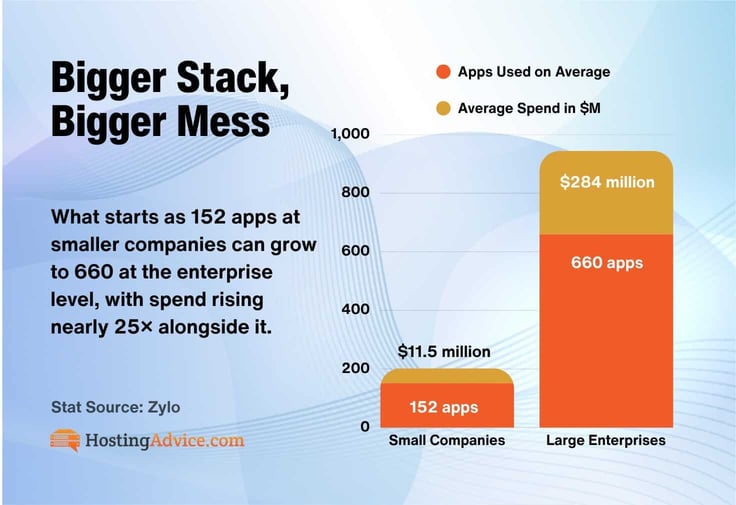
Enterprises were already juggling dozens — sometimes hundreds — of SaaS tools before AI entered the picture (at this scale). In fact, a Zylo report found smaller companies average 152 apps while large enterprises can hit around 600.
Most understand that AI’s not sentient enough to be malicious. The issue is that it’s literal: On a consumer chatbot like Claude or ChatGPT, ambiguity is not detrimental.
But at the business level, this isn’t how you can realistically talk to agents. There’s way more at stake to mess up, which is obviously a problem when something like “clean up old records” can be misconstrued as “delete active customer data tied to incompleteness.”
Intent Isn’t the Issue
Security vendors are trying very hard to solve this, or at the very least, contain it.
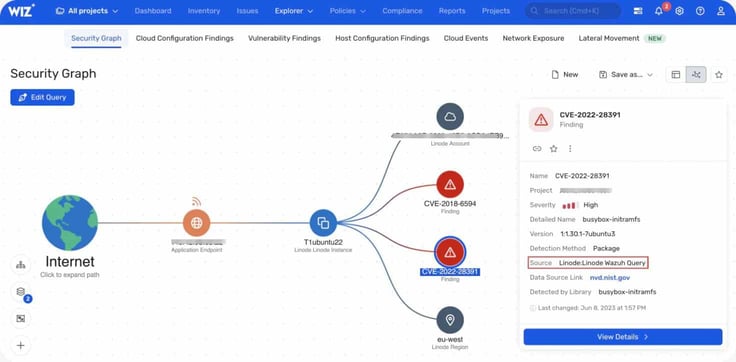
Wiz, the cloud security platform Google acquired for $32 billion earlier this year, is already known for surfacing infrastructure risk, like misconfigurations and attack paths.
But that still leaves a question: How do you prioritize what is actually important?
It’s why, this morning, Sentra and Wiz announced a partnership that brings Sentra’s data classification and sensitivity intelligence into Wiz’s Security Graph.
“We give joint customers a single view that connects infrastructure risk with real data exposure, so teams can focus remediation on what truly matters to the business,” said Oron Noah, Wiz’s VP of Product.
To keep up with constantly changing data and access, classifications refresh every 24 hours.
Inside the Castle Walls
Hosting providers are at the mercy of the same things that many enterprise clients already are — both are running large databases and complex infrastructure; both are integrating AI tools into systems that directly interact with customer data.
And when people pay and trust you with their data, the last thing you probably want to tell them is that one of your AI tools went rogue.
More and more, customers want to understand how protected they actually are, and 63% already believe most companies aren’t being straight with them about it. So providers will need to get better at explaining that in plain, at-a-glance terms. Things like:
- How workloads are isolated
- What permissions AI tools actually have
- How actions are controlled (and maybe even reversed if something goes wrong)
No, nobody needs an eight-hour Saturday seminar…but they do need clear answers on how their data is handled when AI is involved.
