



Writer: Jordan Sprogis


Editor: Lillian Castro


Reviewer: Cristian Lopez

Key Takeaways
- In HostingAdvice’s last coverage of WordCamp U.S. 2025, we learned that the event brought more than 800 attendees to Portland, and AI was at the center of nearly every conversation.
- Leaders from Automattic, Kinsta, and StellarWP stressed that the basics are still foundational — even in tandem with AI — and that WordPress’s future depends on community strength.
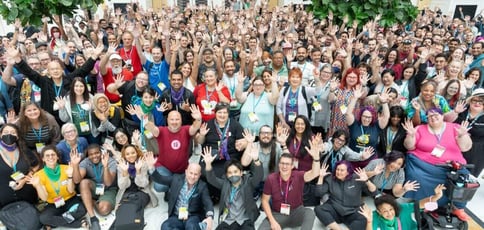
This year’s WordCamp U.S. took over Portland, Oregon, Aug. 25-29. There, AI was at the top of most attendees’ and providers’ minds — not only in terms of new tools but also in terms of how it should fit into the fundamentals of WordPress’s core ecosystem and mission.
This time, going beyond the keynotes and demos, HostingAdvice sat down with leaders from Automattic, Kinsta, WordPress, and StellarWP to ask the bigger question: Where does WordPress hosting go from here?
Performance + Security + AI
Almost nobody knows better what the year ahead holds than Automattic itself: According to WordPress’s parent company, WordPress’s future success is about embracing what’s new without letting the fundamentals fall by the wayside.
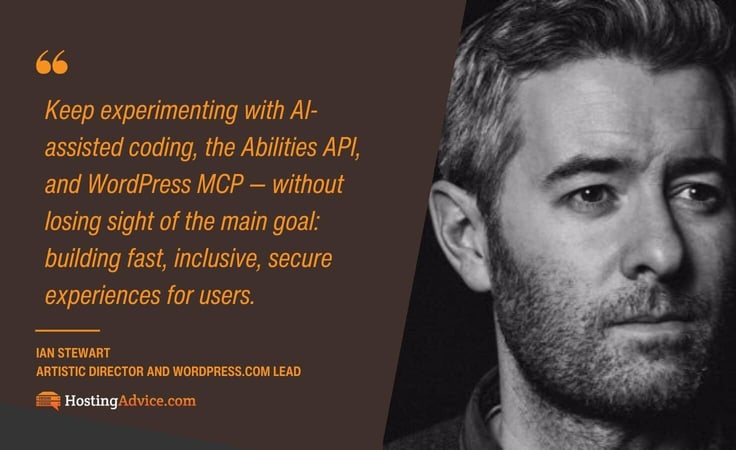
As for what tools Automattic is prioritizing, Ian Stewart, Artistic Director and WordPress.com Lead, said the focus is on incorporating AI workflows into the natural WordPress ecosystem.
“Keep experimenting with AI-assisted coding, the Abilities API, and WordPress MCP — without losing sight of the main goal: building fast, inclusive, secure experiences for users,” Stewart said. “It [also] means getting the basics right: strong site structure, GEO-ready SEO, and compelling content. AI can amplify a solid foundation, but it can’t replace one.”
Integrating AI into WordPress is a unique process given its open-source ecosystem and layered backend and stack. But a 2024 Gartner survey found that businesses using generative AI reported an average 16% revenue boost, 15% cost savings, and 23% productivity gains.
These are the kinds of numbers that WordPress hosts can use to market to clients. And it’s not a hard sell, given that most clients want gen-AI tools. But with every new tool comes concerns around the obvious: How will it affect security?
Just as gen-AI is used to monitor things like DDoS attacks or prompt injections, it’s also used to deploy massive botnets. Paul Maiorana, who’s in charge of Special Projects at Automattic, believes that leveraging the very mission WordPress is already built on is how to protect it.
“The biggest opportunity is collaboration around performance, security, and AI,” said Maiorana. “That means sharing best practices, coordinating on security, and building tools that move the whole WordPress ecosystem forward.”
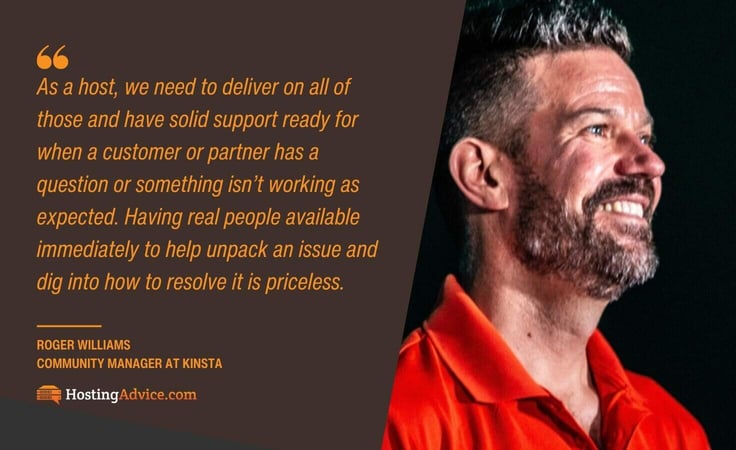
Community manager of Kinsta, Roger Williams, also said that these things — marrying performance, security, and AI — have become the base expectations in today’s market.
“As a host, we need to deliver on all of those and have solid support ready for when a customer or partner has a question or something isn’t working as expected,” Williams told HostingAdvice. “Having real people available immediately to help unpack an issue and dig into how to resolve it is priceless.”
Matt Cromwell, who’s the Senior Director of Customer Experience at StellarWP, explained that the most common thing he picked up on at StellarSites’ booth was that there’s still a desire for practicality, even amid the new flashy tools that are reshaping the industry.
“Customers aren’t inspired by abstract promises of hosting; they want to see a site that feels real, functional, and ready before they ever reach for a credit card,” said Cromwell. “They expect them to be there, quietly working in the background, so they can stay focused on their goals. The more problems you solve invisibly, the more freedom customers feel, and the more trust you earn.”
Automattic’s Chief Customer Officer, Christie Wright, agreed with the sentiment.
“Customers want simple, cost-effective tools that improve efficiency, while larger companies are focused on consolidating onto fewer platforms to reduce operational overhead,” said Wright.
Simplicity Still Sells
WordCamp sessions on eCommerce workflows and site optimization made clear that fundamentals still drive outcomes, even though AI essentially dominated most of the conversations.
Williams pointed out that while there’s plenty of excitement around gen-AI and LLMs, these are still just tools, and the real differentiator is whether sites actually deliver smooth user experiences.
“I still see eCommerce sites without Apple Pay, for example,” Williams said. “Talk about a shortcut for making it easy to check out and share my shipping information!”
Now, GEO is the new phrase on everyone’s lips. But it still doesn’t erase SEO, even as AI overviews and agents are pulling traffic. Sites still need clean structures, strong performance, and engaging content, and all GEO does is build on top of those basics by making sure AI systems can understand, cite, and surface relevant information.
And it’s still up to hosts to make sure that what they offer is readable to those agents.
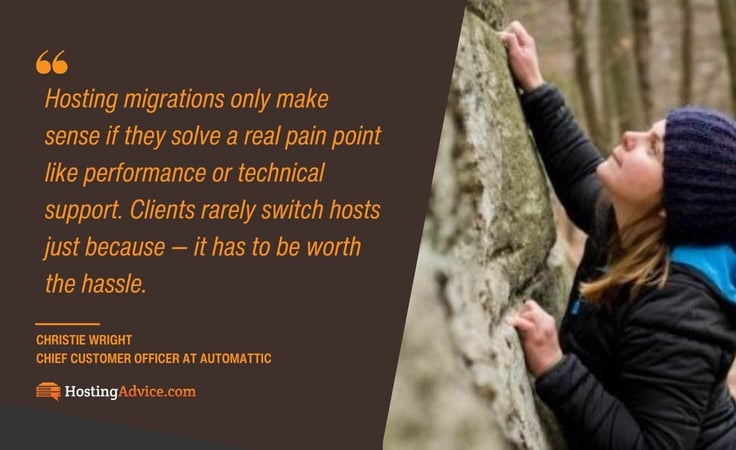
Wright added: “Hosting migrations only make sense if they solve a real pain point like performance or technical support. Clients rarely switch hosts just because — it has to be worth the hassle.”
So WordPress hosts just need to make sure they’re never giving their clients that reason.
There’s Strength in Numbers
Although many hosts had their own takeaways, most agreed on one thing: WordPress’s future depends on the community staying just as passionate as it’s always been.
In particular, Williams noted that competition from other CMSs is creeping in because other CMS platforms offer simpler, cleaner UIs.
“We need to stay connected and branch out to other open-source communities and learn from each other. The open web is only as strong as we all make it,” said Williams. “WordPress is strong because of the community that builds and uses it.”
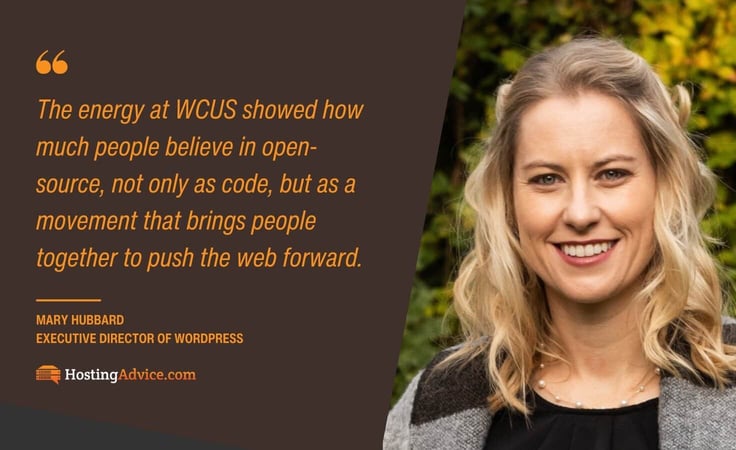
Mary Hubbard — WordPress’s executive director — told HostingAdvice something similar: The WCUS events are less about the event itself and more about the community passion behind it.
“WordPress isn’t just thriving, it’s accelerating,” said Hubbard. “The energy at WCUS showed how much people believe in open-source, not only as code, but as a movement that brings people together to push the web forward.”
