


Writer: Jordan Sprogis


Editor: Lillian Castro


Reviewer: Cristian Lopez

Key Takeaways
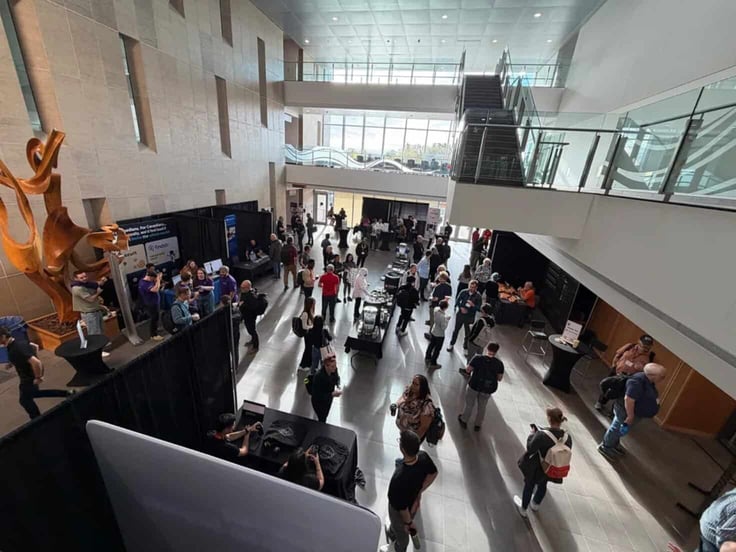
Held at Carleton University’s Richcraft Hall, this year’s WordCamp Canada took over Ottawa Oct. 15-17. The location, a Green Globe-certified venue that looks over the Rideau River, was a nice touch given all the recent talk about sustainability in hosting.
But this year, WordCamp Canada (affectionately tagged #WCEH) invited developers, designers, and web hosts to share in a few different conversations. Even Matt Mullenweg dropped in for a 45-minute town hall, opening the floor to WCEH’s 300-plus crowd.
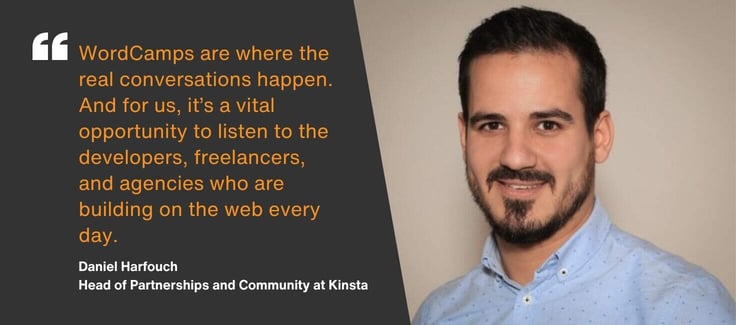
Kinsta was among the many hosts there. Daniel Harfouch, the company’s Head of Partnerships and Community, summed it up nicely. “WordCamps are where the real conversations happen. And for us, it’s a vital opportunity to listen to the developers, freelancers, and agencies who are building on the web every day,” he said.
Digital Accessibility Takes the Stage
Richard and Sandi Gauder of CMS Web Solutions — which specializes in creating digitally accessible websites — said this year’s theme hit close to home. It makes sense: From what we heard, if there had to be one word for WCEH 2025, it’d be inclusion.
“We’ve been thrilled with the exposure given to digital accessibility, a key focus of our company and one of the deciding factors in our decision to attend and participate,” said Gauder.

Gauder presented at this year’s event with the session “Audit and Remediate a WordPress Site for Accessibility” alongside Jennifer Curry Jahnke, a digital accessibility educator. Their session was an audit of sorts, inviting website owners and devs to test their own sites using Heuristics.
“Content Managers: Let’s Make Your Website Accessible” by web designer Sasha Endoh was targeted at the non-tech side of WordPress. She reminded content managers that web accessibility can’t just be about checking off WCAG boxes — but that they, too, can do small things that go a long way, like adding descriptive alt text and logical heading order.
The Block Editor Evolves — and So Do Its Builders
Accessibility is a double-sided coin: It helps both the people using WordPress and the people building it. It’s why a second big theme was the evolution of the block editor, where many speakers encouraged devs to give Gutenberg another look and see how far it’s come.
“We’re really excited about the discussions around the evolution of the block editor and full-site editing, as it’s fundamentally changing how developers build sites,” said Harfouch.
Joe A. Simpson Jr., a frontend web developer, presented “My Reasons for Returning to the Full Site Editor.” He compared reembracing blocks to “missing your firstborn until they reach third grade.” A clever play at devs who may be coming back from third-party page builders.
Collaboration technology expert Jesse Dyck’s “Building for Content Editors” also urged designers and developers to give editors the right guardrails — like prebuilt block patterns, styling limits, and staging setups — and then encouraged editors to provide meaningful feedback in return. True collaboration in practice.
Balance in a Human-AI Workflow
Of course, AI came up…but in an actually refreshing way with plenty of thought leadership messages to go around.
One session in particular — “Keeping Humans in the Loop: Tactful AI in a Collaborative Community” by Jonathan Desrosiers, principal software engineer at Bluehost — called out the elephant in the room by asking: As AI tools grow smarter, how do we integrate them without losing the human side of WordPress?
Paul Sheldrake, a HR recruitment specialist, presented “Automating Quality Inside an Agency’s DevOps Pipeline for WordPress,” to offer a counterpoint: Developers and site builders can (and should) think systemically about their pipelines. Where in the whole workflow — from staging to production — can automation improve quality?
Last but not least, self-described “future generative AI content handler” Alycia Leno’s session “From Overwhelmed to Augmented: How Everyday Creators Can Use AI Without Losing the Plot,” had a similar point, but this time angled at the content creators.
The message is one that many folks have talked about in recent years: Don’t let AI handle the creative aspect of your work; instead, let it boost your productivity — whether that’s through first drafts or handing redundant tasks off to the bots.
WordPress’s Future Is the People
Every WordCamp Canada 2025 session came back to the same message: WordPress stays alive because people keep showing up.
It’s as Harfouch said: “Being there in person is the most direct way we can show our commitment and be an active part of the community’s future.”
Learn more about WordCamp Canada’s future events on the official website.
