




Writer: Jordan Sprogis


Editor: Lillian Castro


Reviewer: Cristian Lopez

Key Takeaways
- HostingAdvice spoke with Kinsta’s Roger Williams about how AI agents are turning the search journey into a "zero-click world."
- As we enter this new era, hosts need to remember that LLM-friendly sites require clean structure, schema, and speed.
- But as some users lose trust in generic AI answers, could we be on the verge of witnessing the return of blogs?
Many people will look back on 2025 and agree that it was a weird year for the internet. As soon as generative AI became popularized across just about every platform out there, agentic AI entered the picture and flipped the way business and site owners connect with their visitors.

Both the how and the why of websites changed. AI summaries ended up absorbing the traditional search journey, forcing publishers and their hosts to figure out how to keep up and meet them halfway as organic traffic shrunk while conversions managed to stay steady.
Roger Williams, the community manager at WordPress hosting provider Kinsta, described this as the cannibalization of web traffic. But he promised that this isn’t all bad news for site owners and hosting providers.
“We’re seeing a zero-click world,” he said. “The informational aspect of the web is conglomerating into Google, into ChatGPT, all these different AI LLM tools. But once they’re ready to take action — make a purchase or make contact — they’re still visiting the site.”
Ironically, that’s also what’s triggering an early pendulum swing back toward owned content: newsletters, static sites, and yes — actual blogs.
AI Isn’t “Reading” Pages — It’s Parsing Them
The issue is that these agents aren’t reading pages in the traditional human sense. They’re parsing them by breaking content into labeled chunks — that’s “chunking” — and making ranking decisions to end users based on how organized and informative the site is. That means if the LLM can’t decipher your client’s site, then it doesn’t exist.
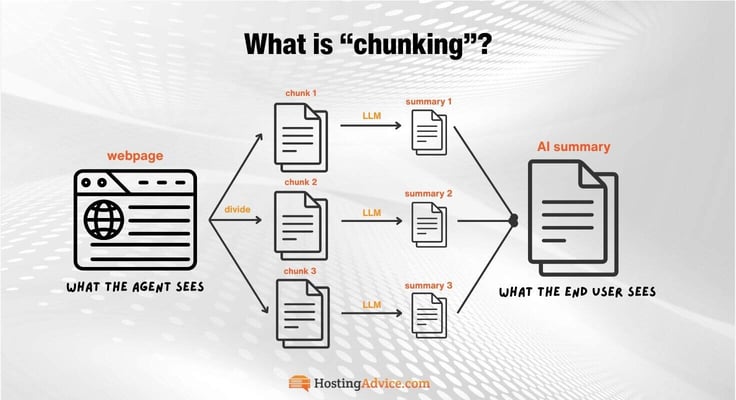
“We need to be using structured data and creating our documents in a way that LLMs can easily digest them and return that information to the users,” Williams said. “If users struggle with your content, the bots are going to struggle with it.”
But great content or websites don’t matter if the agents find it. Hosts have as much influence over visibility as their customers do, so they’ll need to continue prioritizing what they always have, just with a couple of additions:
- Reliable hosting with modern PHP, stable caching, and fewer plugin conflicts quietly breaking structure or metadata
- Speed under dynamic load because slow TTFB tells AI agents that a site may be stale or low-value
- Schema-ready CMS setups, which means clean metadata, such as datePublished and dateModified, which tells agents that it’s a fresh page
- Migration tools that don’t punish long-form creators, especially users who want to combine with platforms like Medium or Substack and want to preserve URLs, archives, and publish history
- Built-in visibility testing, so publishers can see how AI agents actually interpret their pages
- Affordable plans built for long-form publishing, not bundles stuffed with features writers don’t need
- Newsletter integrations that feel native so creators don’t have to rely on third-party platform’s algorithm or paywall rules
“Good markup and clear writing matter more now,” Williams said. “Bots need deliberate structure — arguments, subpoints, clean grammar. You might even have to bring some of your prose down to a fifth- or eighth-grade reading level so the agent actually understands it.”
What’s interesting is that is exactly what traditional blogs were already good at: Rewind 15-20 years, and most of us will remember that blogs are built on a typical hierarchy — titles, dates, categories, tags, human-readable sections.
In a strange full-circle moment, the web’s oldest content format is turning out to be one of the most machine-friendly. And as users lose trust in AI summaries and start seeking out original voices again, the thing that died 15 years ago may become a valuable resource.
Why the Blog Might Be Coming Back
In the era of convenience and efficiency, AI answers — like Google’s AI Overviews — are saving people lots of time from sorting through several websites for a single answer. But some people are also realizing that its answers aren’t always…accurate.
“Repeatedly, I’ve had it give me suggestions that are totally wrong,” he said. “It’s very confident, and people are going to get burned a few times and then they’ll learn to see the summary and click through to read the source material more often. Trust, but verify.”
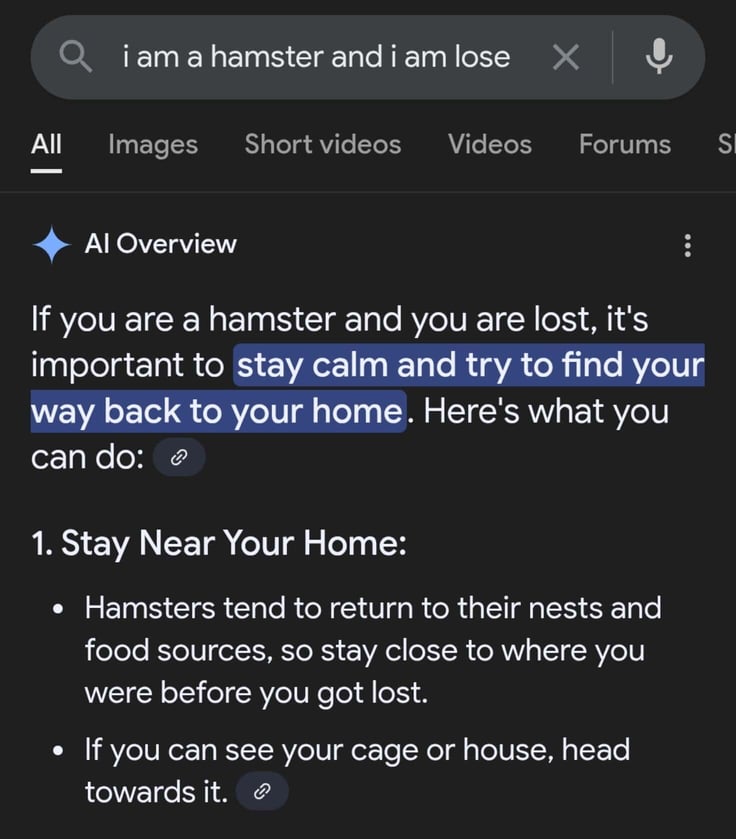
It’s happening often enough that people are quietly backing away from AI-as-the-interface and returning to something older: direct sources. And for some, that’s blogs.
“I’m starting to appreciate people that have their own take on things,” Williams said. “Whether it’s hosting or content creation or recipes or whatever — really getting those genuine human opinions. I think we’re seeing people learn to appreciate that more again.”
Many people are already flooding to newsletter-style platforms like Substack. That’s why Williams said we may see a surge in paywalls.
“We see this a lot with newsletters,” Williams said. “A free version that’s limited, and then a full version with more timely information. Publishers need to experiment and see what works for their audiences.”
Is There Evidence of a Blog Revival?
Because I’m an insane person who wants to see actual numbers, I did some digging to question whether Williams is right about blogs coming back — because, yes, there are millions of “blogs” on the internet.
But most of them are Tumblr GIF bottomless pits or WordPress sites (originally a blog-first platform) running eCommerce stores. Counting actual blogs is nearly impossible because platforms stopped labeling them that way a decade ago.
But let’s take a look at the most popular PaaS/SaaSes and where they stand today:
- Substack: 20 million monthly readers, 3 million paid subscriptions
- Medium: Tens of millions of monthly readers, 1 million paid subscribers
- Ghost: 8,000 paid Ghost(Pro) publishers with several thousand additional self-hosted users
Even Google Trends shows a noticeable climb for “blog” and “blogging” between 2024 and 2025. Maybe it’s nostalgia. Maybe it’s exhaustion. Maybe it’s that people are tired of AI confidently giving them wrong instructions on how to reset their iPhone.
Of course, searches alone don’t prove a revival. So I went poking around for what people who actually work in SEO and content strategy are seeing.
One SEO expert predicts a resurgence of blogging by 2026. And it’s not because the universe suddenly loves long-form again, but because blogs are still the easiest way to publish structured, quality content.
Another writer, Joe Procopio, argues that “blogging is dead” only in the sense that the SEO-churn version of blogging is dead — the personal, opinionated, human kind is alive because people still want voices, not summaries.
And indie writing communities are starting to say the same thing: Personal blogs and niche blogs are creeping back in as readers go hunting for sources that weren’t generated in a blender.
None of these are formal studies. But when everything online starts sounding the same, or is just plain wrong, we get a regurgitation loop of low-quality content cycling around the internet.
“Over the years we’ve seen things get very generic — just cranking out as much content as possible and hoping the algorithm takes it to the top,” Williams said. “Now the algorithm is just going to take your content and republish it. So rather than being generic, get much more specific. Bring original voices to your content and make it very useful and very unique. That’s what’s going to set you apart.”
AI isn’t going anywhere, but it also can’t replace the human experience. AI can summarize; it can make educated guesses. But what it can’t do is replicate the part where someone with an actual lived perspective says: “Here’s what I think, and here’s why.”
So, if the pendulum really is swinging back toward blogging, hosts may find themselves sitting right in the middle of whatever comes next for both web hosting and the future of web content.
