




Writer: Jordan Sprogis


Editor: Lillian Castro


Reviewer: Cristian Lopez

Key Takeaways
- Web hosting quite literally cocooned itself and blossomed into something grand this year — platforms integrated much more into their stacks, especially as AI changed base expectations.
- HostingAdvice spoke with industry experts on what changed hosting this year. A lot of the conversation came back to AI sites, agent traffic, rising costs, and how only selling specs was not as impressive as it used to be.
If this year felt like whiplash, it’s probably because 2025 was one of the busiest and most influential years hosting has seen in a long time.
Some may say it’s since the dot-com burst; others may say it’s since the rise of cloud hyperscalers. Maybe it is somehow both. Either way, the definition of web hosting went through a metamorphosis.
Now, as the year closes, it’s time to look back and ask again what (and why) actually changed in hosting. HostingAdvice spent the year talking with hosting, platform, and infrastructure teams. So, let’s see what they had to say.
#1: Hosts Started Selling the Whole Damn Thing
At the risk of sounding obvious, this was the year web hosting stopped being an infrastructure service and started acting like a complete, all-in-one web platform.
SiteGround’s Daniel Kanchev noted most people just want everything bundled — that includes domains, hosting, site creation tools, email services, marketing automation, eCommerce, analytics, and AI assistants.
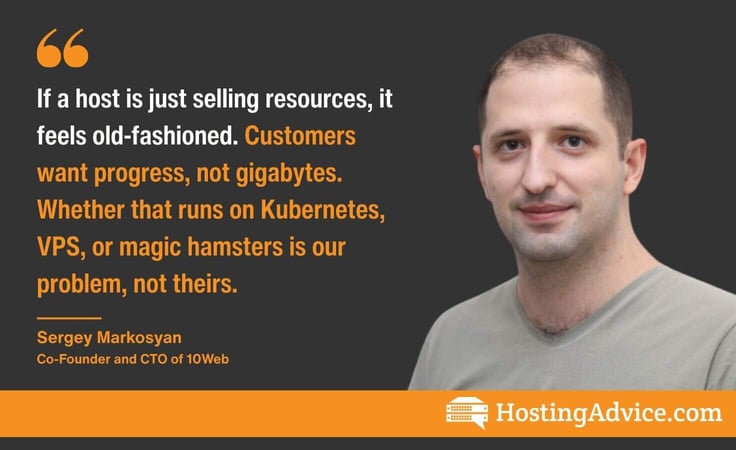
Sergey Markosyan, CTO of 10Web, added: “If a host is just selling resources, it feels old-fashioned. Customers want progress, not gigabytes. Whether that runs on Kubernetes, VPS, or magic hamsters is our problem, not theirs.”
But if there was just one thing that truly grabbed everybody’s attention, it was the rise of AI-generated websites and automatic website builder platforms.
Trey Long, software engineering director at Squarespace, said, “We saw a wave of tools promising to spin up entire sites from a prompt, which grabbed attention and raised expectations about what ‘easy’ should mean.”
All it takes is one prompt and a few minutes to get a fully formed website. And depending on the provider, that sometimes comes with copy, layouts, and basic functionalities already included.
That’s why Drew Wilde, director of product management at GoDaddy, says that customers really only prioritize hosting providers that can help them bring their ideas to a reality on a dime.
Wilde added, “The landscape is shifting to meet customers’ broader needs; not just hosting a site, but powering everything around it.”
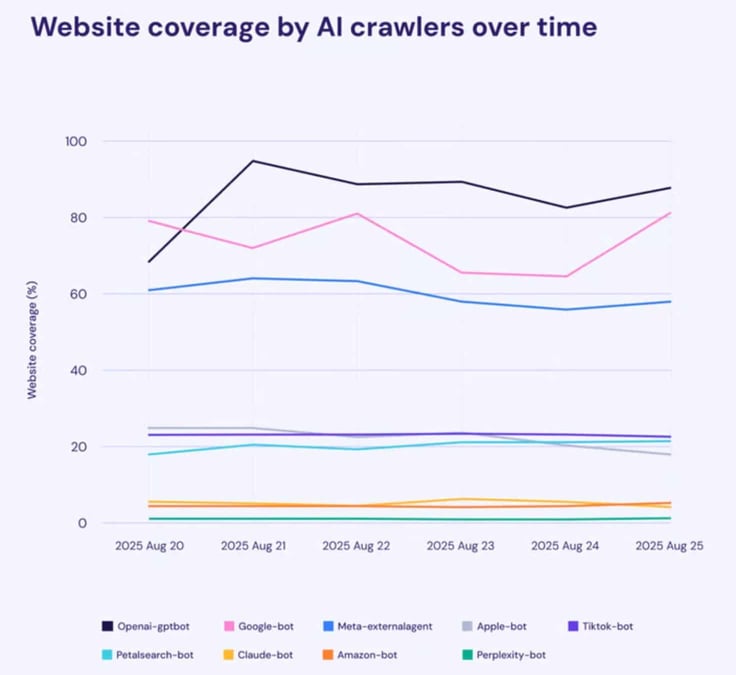
We saw it all year. Hosts were pitching legitimate solutions — as was the case with Hostinger, which launched an AI Audit tool after finding that AI bots were crawling up to 85% of sites every day.
It’s as Kanchev said: “[Customers] keep asking, ‘What can I accomplish?’ rather than ‘How many CPUs do I get?’ This is why AI website builders, eCommerce-in-minutes solutions, and built-in AI marketing tools are becoming decisive differentiators.”
Across the board, hosts of all types expanded their offerings by merging with or adding new services. Many providers also rolled out add-ons like email hosting and domains, or added in integrated services, including automatic site builders and marketing tools.
A chain reaction quickly followed. Everything that came next — AI assistants, agents, vibe coding — thrusted hosts into the center of the web for every kind of end user.
#2: AI Went Mainstream (But It Didn’t Make Everything Easier)
Within a couple months into 2025, HostingAdvice began covering a wave of AI-powered site builders. They were all the rage, promising instant results from simple prompts.
“People expect AI to build the first version of the site, content and basic design done for them, and speed and security to be handled,” 10Web’s Markosyan explained.
It’s why vibe coding platforms like Lovable, Bolt, and Vercel surged. Lovable itself received a $200 million Series A, making it one of the fastest-growing companies in Europe at one point this year.
Undoubtedly, it was the year where nearly every hosting provider under the sun began layering AI into their platforms. Instead of choosing from a small pool of SaaS builders or hiring a developer, someone with little experience on the web could build a whole site with a few words and clicks.
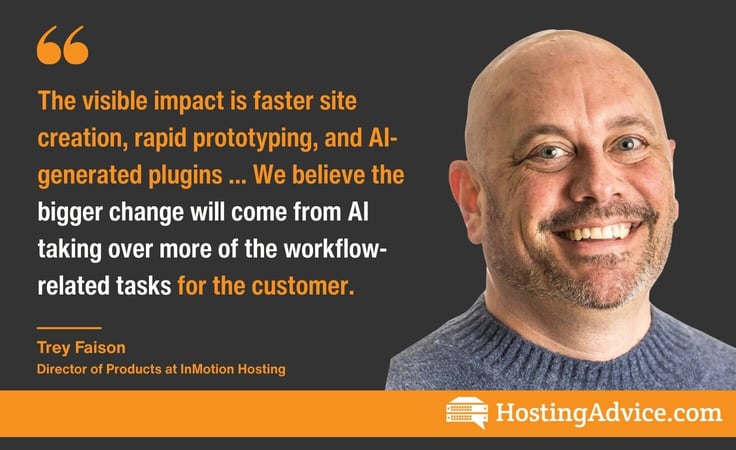
“The visible impact is faster site creation, rapid prototyping, and AI-generated plugins,” said Trey Faison, Director of Products at InMotion Hosting. “But we believe the bigger change will come from AI taking over more of the workflow-related tasks for the customer.”
While true, Saulius Lazaravičius, VP of product at Hostinger, said that customers quickly realized how pointless a lot of those AI integrations were.
“Customers began looking for providers and products that actually know how to apply AI with purpose,” said Lazaravičius. “That means fine-tuning models, defining architectures for specific tasks, and using user data to get real results.”
That kind of demand for AI also made infrastructure a hell of a lot more difficult.
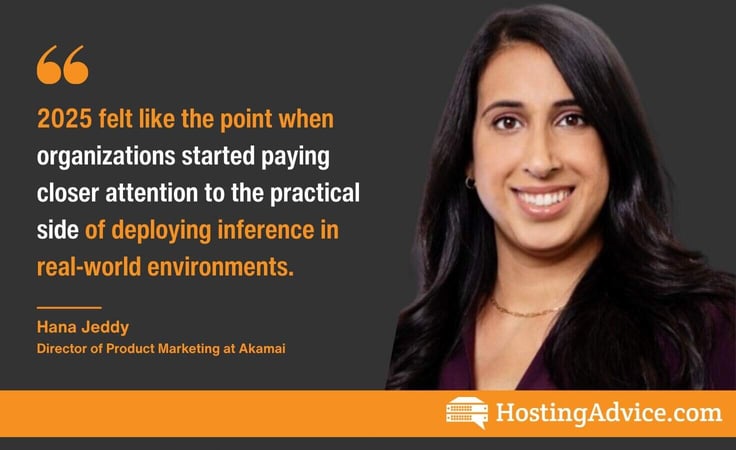
“2025 felt like the point when organizations started paying closer attention to the practical side of deploying inference in real-world environments,” said Hana Jeddy, the director of product marketing at Akamai.
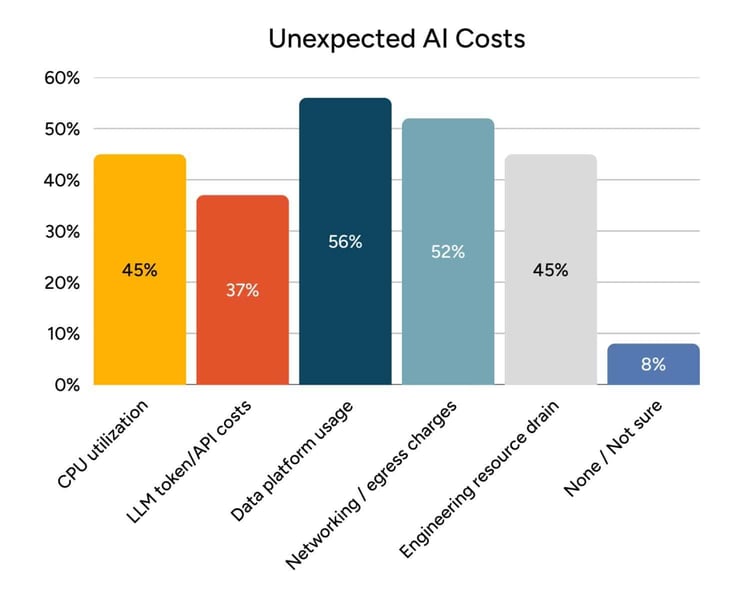
AI is very expensive to build, train, and run: Training a frontier-scale model can cost millions to tens of millions of dollars. Inferencing can cost anywhere from a fraction of a cent to several cents — but if you’re handling hundreds to millions of requests per day, that adds up dramatically.
A report revealed that 80% of enterprises underestimated their AI infrastructure costs by more than a quarter of their budget. Nearly 85% of those who did reported that they’re making less money per dollar of revenue because AI is expensive to run.
So it’s clear that they’re not overspending a little; they just had no idea what to expect.
A little setback occurred for some. Perhaps it’s as Jeddy explained, teams started asking a simpler question: “OK, wait — which environment actually makes sense for this workload?”
Once AI started being a dependency — across organizations and the end user — any infrastructure decisions mattered a lot more.
#3: Value Changed…But Reliability Was Still Non-Negotiable
Once hosting stopped meaning only offering infrastructure and some add-ons, the idea of value changed, too.
“Value became less about novelty itself and more about outcomes — performance, cost efficiency, smart integrations, and tools that actually support the way they work,” said Hostinger’s Lazaravičius.
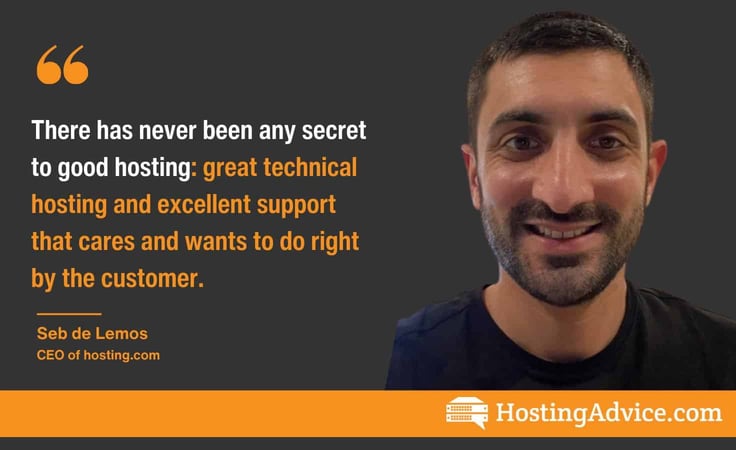
But at its core, hosting.com’s CEO Seb de Lemos says that everybody still wants a dependable host: “There has never been any secret to good hosting: great technical hosting and excellent support that cares and wants to do right by the customer,” he said.
With that in mind, hosting has always served a couple of different audiences. These days, most of that pool is taken up by developers who need a flexible platform on which to build, while everyone else — small business owners, for example — just needed a site that works.
Squarespace’s Long said those tools were “exciting for developers and technically-minded users” because a short prompt could get them most of the way. Take 10Web’s vibe coding for WordPress for example, a perfect tool for devs with WordPress clients.
But most people who buy hosting aren’t developers.
“For the majority of those who need hosting — small business owners, entrepreneurs, and others — a prototype isn’t enough,” said Long. “They need a platform that handles the full lifecycle: design, content, commerce, analytics, domain management, and ongoing updates.”
Even as what the end user perceived as valuable changed, every site owner still needed to make sure their sites were being found. And that brings an entirely new audience into the equation.
#4: The Web Stopped Being Just for Humans
AI agents don’t care about design, navigation, or visual appeal; they care about structure and clarity. That means the backend infrastructure hosts use now needs to be LLM-friendly.
“Sites need to load fast for humans but also serve up clean, machine-readable data for AI systems,” said Ramadass Prabhakar, CTO at WP Engine.
Sites that aren’t structured in a way AI agents can understand risk not showing up at all. Prabhakar said that pressure will force hosts to make another round of infrastructure changes.
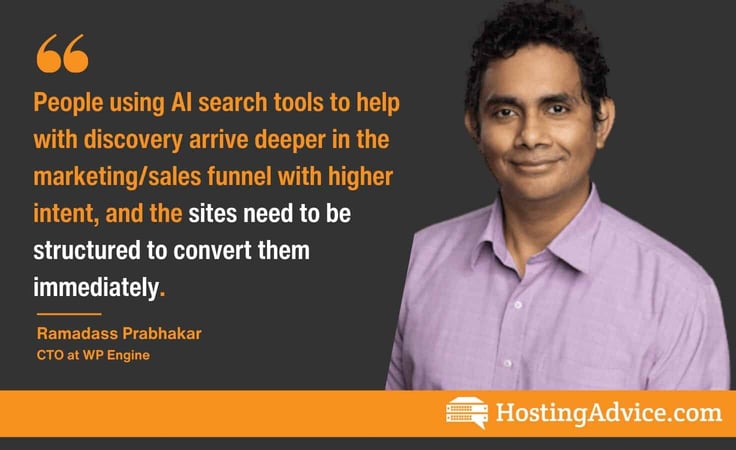
“People using AI search tools to help with discovery arrive deeper in the marketing or sales funnel with higher intent, and the sites need to be structured to convert them immediately,” said Prabhakar.
AI agents are turning what used to be a web built around websites into a zero-click internet.
Unlike traditional search crawlers, which mainly index pages and move on, AI agents repeatedly scrape, summarize, and reprocess content to feed AI-driven search tools. (Looking at you, Googlebot and GPTbot.) That changed according to 2025’s traffic data. Global internet traffic grew by 19%, but the increase wasn’t driven by more people coming online. It was driven by automation.
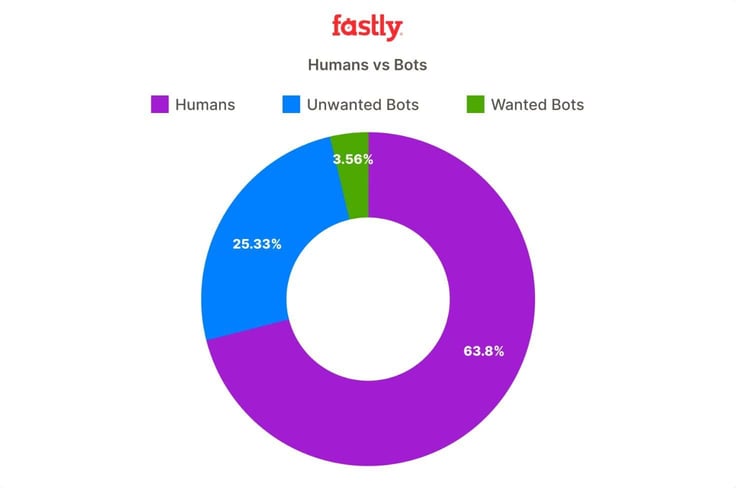
AI bots now account for 29% of all web traffic, and AI crawlers make up nearly 80% of all AI bot activity. The result? Disproportionate strain on bandwidth, servers, caching layers, and analytics. And all this often comes without any referral traffic or attribution to content owners.
That’s the zero-click aspect of it; the other aspect is how much it costs to feed crawlers in bandwidth. A repair guide site managed to rack up $5,000 in bandwidth costs because of them.
“By 2026, managed hosting providers will be required to treat smart agent traffic as a first-class architectural requirement,” said Prabhakar.
And that’s before you even get to the other side of non-human traffic.
#5: Security Tried to Keep Up Amid the Automation Era
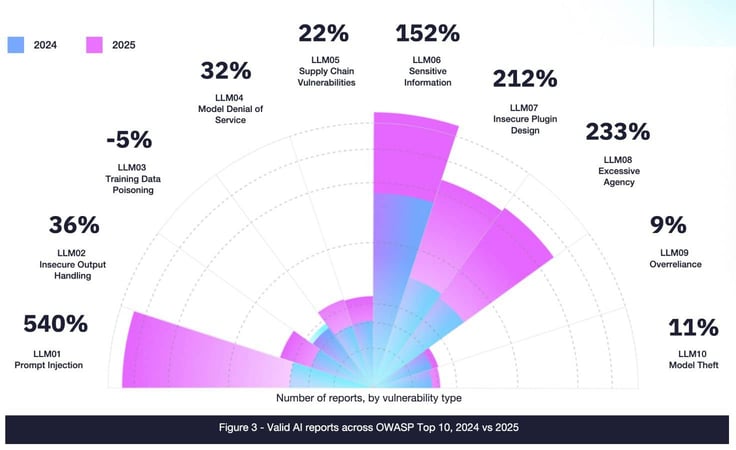
Prompt injection attacks were the fastest-growing AI-related threat HackerOne tracked this year, reporting a 540% jump in valid prompt injection cases. More findings say early autonomous hackbots have successfully submitted more than 560 vulnerabilities.
Kara Sprague, CEO of HackerOne, told us before that nobody is safe from these kinds of attacks. Yes, even small, unassuming hosts and clients are targeted with the same kinds of attacks as major enterprises.
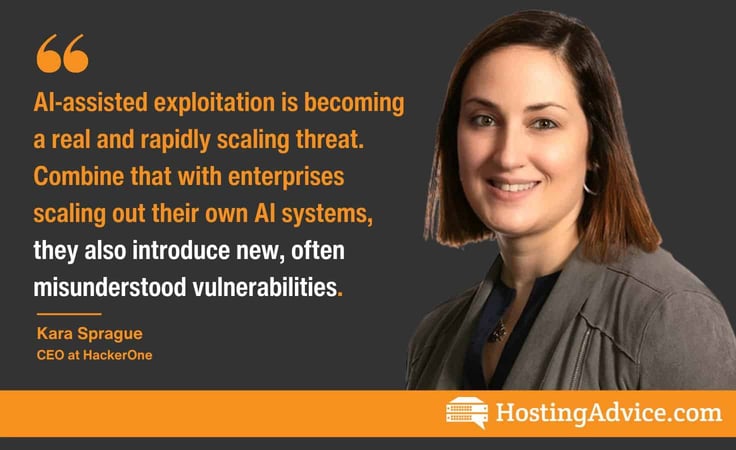
“AI-assisted exploitation is becoming a real and rapidly scaling threat,” Sprague said. “Combine that with enterprises scaling out their own AI systems, they also introduce new, often misunderstood vulnerabilities.”
Prompt injection, model manipulation, and similar failures expand the attack surface and create new exploitable risks.
Attackers are not manually testing systems; they’re relying on AI-driven tooling that can scan, test, and eventually, exploit infrastructure practically effortlessly. What’s worse is that these automated attacks often blended in with legit-looking traffic.
Industry measurements indicate that malicious bots now account for almost 30% of all internet traffic, while automated crawlers (both benign and malicious) still strain infrastructure by scraping, testing, and retrying systems continuously.
Prabhakar said that’s exactly what changed in what customers expected from their hosts. And that’s what they have to remember going into 2026.
“This year marked a pivotal ‘bridge year’ — where the industry recognized that a modernized infrastructure evolution is necessary,” he said. “The hosting providers that successfully adapt their platforms will be the ones to define the internet’s next era.”
Curious about what these same experts anticipate in 2026? We break it down in our accompanying outlook on what’s coming next.
