



Writer: Jordan Sprogis


Editor: Lillian Castro


Reviewer: Cristian Lopez

Key Takeaways
The Trump administration is reportedly talking about requiring AI data center developers to pay 100% of new power generation costs. Though not specifically named, these agreements — or “compacts” — would mainly affect large developers like AWS, Azure, OpenAI, and Meta.
This information came from an anonymous source for POLITICO who obtained a draft of the agreement, although an unknown White House official said the agreement “is outdated and no longer accurate.”
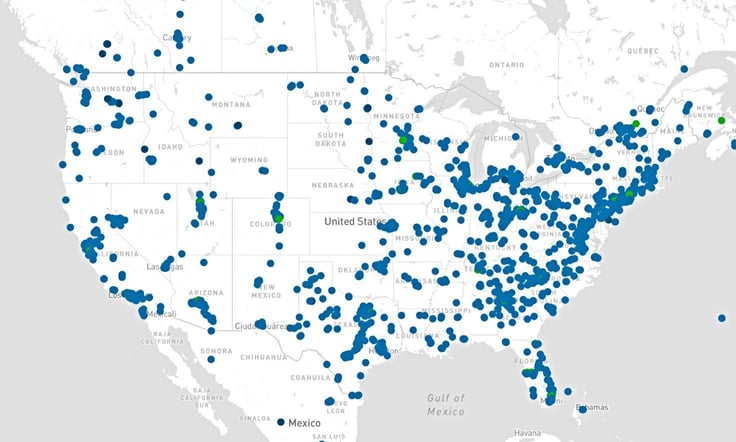
Still, the draft suggests a lot. (Plus, that official could just be doing some damage control.)
For the sake of conversation, let’s assume it’s true. If so, then it would mean that new data centers must commit to avoiding increasing household electricity costs, over-taxing water supplies, or overwhelming local grids, even when upgrades are required.
To many, it seems like these kinds of requirements should have been put into effect long ago. Communities across the U.S. have spent years pushing back against data center projects that strain local grids, raise electricity costs, and deliver few local benefits.
When a Data Center Is the Size of a City
Data centers are expected to increase their energy consumption by 230% within the next four years with new hyperscale facilities ranging from 100 MW to 200 megawatt loads. For reference, a typical midsized data center operates in the 5 MW to 10 MW range.
Yes, that means a single hyperscale build can equal dozens of traditional facilities combined.
A 100 MW to 200 MW data center is like dropping a city onto the map overnight. Not only are there hundreds of thousands of people already on that given power grid, but in some cases, so are hosts.
And the last thing any host wants is to pay higher power costs because they know that they’ll either have to pay for it themselves or pass the increases onto their customers.
And data center electricity demand already do contribute to higher power prices.
Residential and commercial electricity bills have increased alongside data center buildouts as utilities have to add capacity and recover the costs from all customers. Wholesale electricity costs in areas with heavy data center growth have also climbed, some by nearly 300% over the past few years.
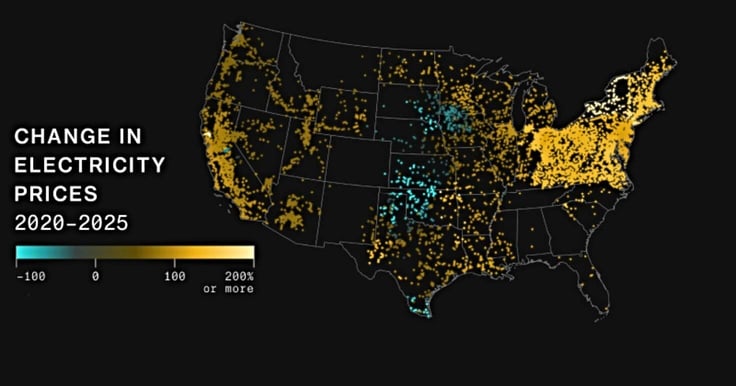
Some are fighting back: The Tennessee Valley Authority is explicitly discussing “electric rate fairness.” Texas grid operator, PJM, has been vocal about forcing technology companies to finance new generation capacity.
Like the Trump administration’s efforts, these are not laws but more so recommended frameworks. So any type of enforcement would likely vary by region and type of energy.
Still, it seems like a step in the right direction.
Environmentalism has often been dismissed as a “non-issue” societal issue.
And yet, some polls suggest that most Americans support transitioning the U.S. economy to clean energy by 2050, saying renewable energy development should be a priority for the president and Congress. Fossil fuels are finite and volatile, but data centers are built to run for decades, with massive and continuous cooling needs.
So, without proper constraints or alternative energy resources, the math stops mathing.
