




Writer: Jordan Sprogis


Editor: Lillian Castro


Reviewer: Cristian Lopez

Key Takeaways
PHP platform Laravel just announced it’s partnered with DigitalOcean to launch a new service called Laravel VPS.
It’s a developer’s dream: They can create and manage servers directly from the Laravel Forge dashboard by using DigitalOcean’s VPS infrastructure. This means devs don’t need to touch the host’s control panel or — perhaps the best part — ever have to remember separate credentials ever again.

This actually brings attention to the bigger picture that the web space has been experiencing: Whoever offers the easiest “deploy” button owns the customer. And Laravel raised that bar for some of the most demanding users in tech: developers.
In fact, they’re already responding.
James Clark, a senior full stack developer, said: “Provisioning a new server via Laravel VPS was shockingly fast and simple. I wouldn’t have considered my previous process slow until I tried this. The improvements saved me significant time in getting the site deployed — time I could spend back in the codebase itself.”
So, is it a sign of what’s to come — that dev-first platforms are becoming the new hosts? Maybe.
The Next Gen of Hosting?
Laravel’s choice to work with DigitalOcean seems like a natural fit. The provider has long been championed as a developer-friendly platform and was also just named HostingAdvice’s best host for web devs.
“I set a pretty high bar for the team, and DigitalOcean helped us blow it out of the water,” said Taylor Otwell, founder and CEO of Laravel. “It’s a massive leap forward for developer experience only possible with their help.”
Their partnership is all in the name of simplifying one of developers’ biggest pain points: setting up servers.
It’s an interesting — yet fresh — dynamic. Instead of acting as the forward-facing host as per usual, DigitalOcean provides the power and gives Laravel storefront ownership over the customer experience.
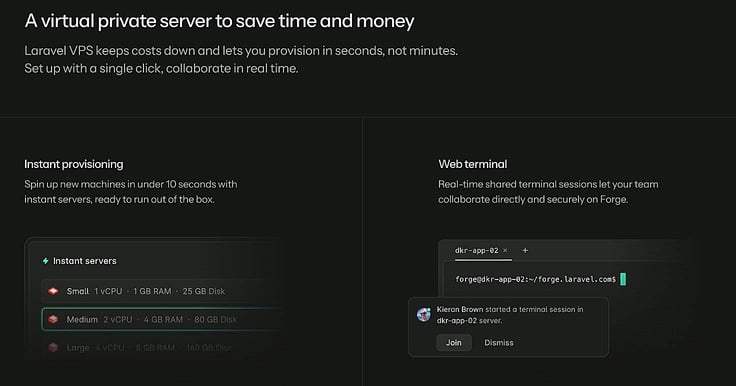
This is all good news for developers, less so for web hosts.
Much like domain registrars who are branching into hosting, Laravel joins other platforms like Vercel, Netlify, and GitHub in offering “one-click deploy” tools that pretty much cut out the hosting middleman.
Vercel, for example, built its reputation on Next.js. And now, it controls the entire deployment experience for those users. Netlify made a similar choice by expanding from static-sites to full-stack hosting. GitHub too now offers tools that let devs automate deployment and CI/CD pipelines directly from their repositories.
It’s not all doom and gloom for hosts though. The opportunity here is to meet developers where they already work.
Take a look at Kinsta, which is traditionally known as a managed WordPress provider. Around 2023, it pivoted hard to the other side of the spectrum by building its Application Hosting and Database Hosting products, which are directly targeted at developers.
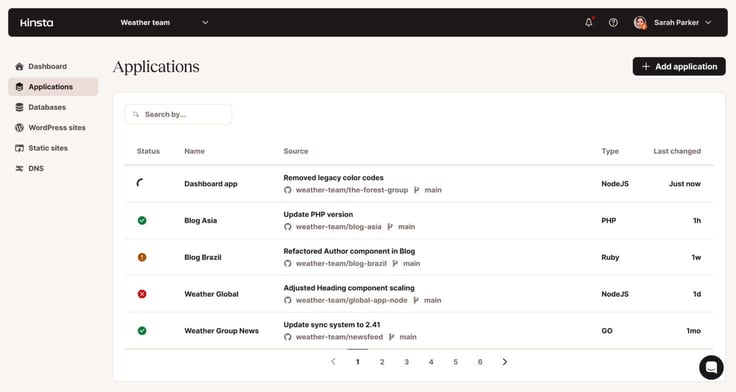
Others like Hostinger and SiteGround have also added GitHub integration so it’s easier for devs to switch between the two platforms.
Because easier deployment for developers equals harder competition for hosts.
So those whose customer base is mainly developers may need to rethink their strategies — at the very least by embedding hosting into pipelines rather than separate dashboards — before those customers stop needing them altogether.
