




Writer: Jordan Sprogis


Editor: Lillian Castro


Reviewer: Cristian Lopez

Key Takeaways
- The static hosting market is projected to grow at a 19.3% CAGR through 2031, driven by JAMstack adoption and demand for faster, leaner websites.
- All-in-one dynamic site builders like Wix and Squarespace still dominate because they're easy to use while static hosting is more accessible for developers or SME environments.
- Speed, security, and internal use cases like intranet portals and documentation sites are among the major growth areas for static architecture.
Static hosting is officially making a comeback: According to a report by Research and Markets, the global static hosting services market is projected to grow at a 19.3% CAGR between 2025 and 2031.
The spike in growth is mainly driven by JAMstack adoption coupled with the need for less resource-intensive sites, such as landing pages, documentation, and portfolios.
JAMstack, short for JavaScript, APIs, and Markup, is a modern web architecture that differs from traditional models by pregenerating pages and delivering them via CDNs.
This results in faster load times, improved security, and better scalability — something many companies have been prioritizing, but can now implement without such a server-heavy backend.
Why Static Hosting Is Coming Back
Static websites first gained traction in the 1990s, when developers and hobbyists built HTML pages and uploaded them to hosts like GeoCities and Angelfire.
But in today’s web landscape, the big “why” behind the resurgence is speed. Static sites load up to 10x faster than the ever-popular dynamic website. They also come with fewer security vulnerabilities and are more SEO-friendly.
With the rise of the vibe coding movement and genAI, dynamic sites have been all the rage as of late. But they can get bloated quickly since so many moving parts are needed to truly make a site dynamic. And that equals sluggish performance, more patching, more attack surfaces.
And when Google made Core Web Vitals part of its ranking algorithm, many site owners saw that poor Core Web Vitals directly led to higher bounce rates and lower conversions. For example, Vodafone gained 8% more sales by improving its loading metrics.

Edge computing is helping too: Since static hosting relies on prebuild, prestored files that don’t change on user request, CDNs and edge infrastructure essentially work together to serve content from the nearest mode.
And when devs do need a dynamic touch (e.g., contact forms, checkout flows, payment handling, search bars), serverless functions are a lightweight add-on for those who still want a little interactivity without the overhead of a large backend server.
The Research and Markets report also noted the rise of green and sustainable hosting is driving static web pages. Since they require fewer server resources, generate less compute load, and can be distributed evenly via CDNs, they naturally reduce energy consumption.
Call it a perfect storm for the comeback of what some may still refer to as an internet relic.
But…There’s a Convenience Gap
The most obvious challenge static hosting will face is direct competition from popular site builders like Wix and Squarespace. These all-in-one cloud platforms offer drag-and-drop, vibe-coding simplicity that gives anyone the ability to build a site with minimal technical knowledge.
The website builder market is booming: According to Business Research Insights, it’s projected to grow from $2.02 billion in 2024 to $3.71 billion by 2033 (7% CAGR). Wix alone commands 45% market share among simple website builders, with Squarespace not far behind at 16-18%.
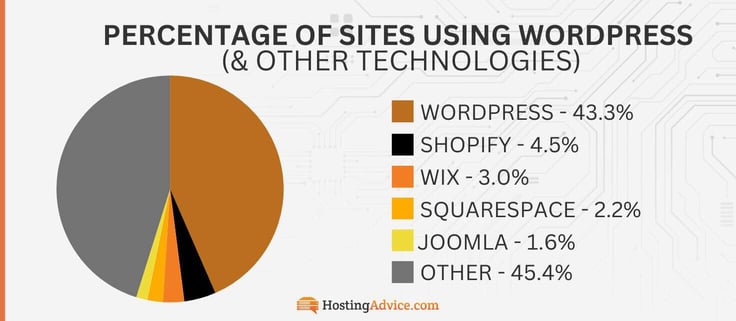
Many static sites, on the other hand, are following the new-ish JAMstack model that centers around coding, deployment pipelines, and backend configuration.
So where dynamic builders soar is exactly where static sites tend to fall short.
Wix, for example, is becoming increasingly AI-native and can support user profiles, real-time collaboration, and a wide array of features, whether through plugins, widgets, or built-in APIs.
Until static platforms can match the ease and integration of dynamic site builders (which they may, if its frameworks are telling us anything), they’ll continue to be the go-to for developers, but not necessarily the mainstream choice.
The Future of Static Hosting
Even some of the hosting pioneers, including Netlify, are rebranding the static hosting approach with JAMstack, advertising it as “a new approach for faster, more secure websites.”
Frameworks like Next.js have also matured to meet modern expectations for static site development. In the past couple years alone, Next.js has introduced things like Incremental Static Regeneration, which enables static pages to be updated automatically and in real time.
The Research and Markets report indicates that the appeal of static hosting isn’t just limited to public-facing pages. It predicts a growing demand in intranet services and internal documentation sites.

Another report by Data Bridge Market Research estimates the global intranet software market size will grow exponentially between 2024 and 2032, with a CAGR of 11.3%.
Whether on-prem or on cloud, most SMEs and larger enterprises — primarily due to better security and the remote/hybrid workplace model — will drive the shift for private ecosystems for better internal doc management, collaboration, knowledge management, and communication.
