



Writer: Jordan Sprogis


Editor: Lillian Castro


Reviewer: Cristian Lopez

Key Takeaways
WordPress just held its State of the Word (SOTW) 2025 event on Dec. 2, and I’ve got to say — there’s a lot coming that’s going to change the game for WordPress hosts.
True to tradition, it takes its name from a musician. WordPress 6.9 is nicknamed “Gene,” named after jazz pianist Gene Harris. And it’s easily the most foundation-forward release the platform has ever announced.
WordPress is not only fully embracing AI, but it’s literally embedding it into its infrastructure. We’re talking APIs for AI agents, MCPs that connect to your favorite LLM, and automation galore, including a built-in commenting system within Gutenberg.
If you missed the stream (or didn’t have 90 minutes to spare), don’t worry because I did. Here are the biggest announcements WordPress hosts should keep an eye on so they can start planning.
WordPress 6.9 Is Here, and It’s AI-Focused
It’s been a topic of conversation for years now.
Once Squarespace, Hostinger, Shopify, Elementor, and basically every closed-platform builder started rolling out AI tools — site generators, automated copywriters, layout assistants, “build a homepage in 60 seconds” promises — thousands of people looked to WordPress, wondering: “When — or is — WordPress going to do this?”
Well, it officially is.
The Abilities API and AI Experiments Plugin
WordPress is getting a universal command vocabulary.
The Abilities API (which came out in 2023) gives WordPress a universal menu of actions that both humans and AI can call. Instead of every plugin inventing its own way to “Create a Post,” WordPress now makes it more like a common language so an AI agent can simply say create_post and WordPress knows exactly what to do.
Similarly, the AI Experiments Plugin is also an amazing creative development tool, letting users ask the AI to help with:
- Title generation
- Excerpt creation
- Alt-text generation
- Design suggestions
- Block/section layout assistance
The content editor has also gotten so much more seamless. Now, users can drag and drop sections, position images side by side, and rearrange easily without using the drag handle or arrows.

As a regular WordPress user, this will change the way I upload posts. Hosts should absolutely lean into advertising this as part of the WordPress pitch.
The WP AI Client and The MCP Adapter
These tools may be one of the most exciting features that WordPress is bringing to the building space: direct APIs for all LLMs, whether your favorite is OpenAI, Claude, Gemini, or another.
Plus, it’s a great opportunity to offer AI-boosted plans as part of the sought-after “plug-and-play” models that many other hosts are doing.
In the demo, Matt Mullenweg, co-founder of WordPress, showed a use case with a real website. The user asked Claude: “I want you to provide concise and helpful information about my site annezazu.wordpress.com.” Claude came back with headers, tags, metadata, and even storage.
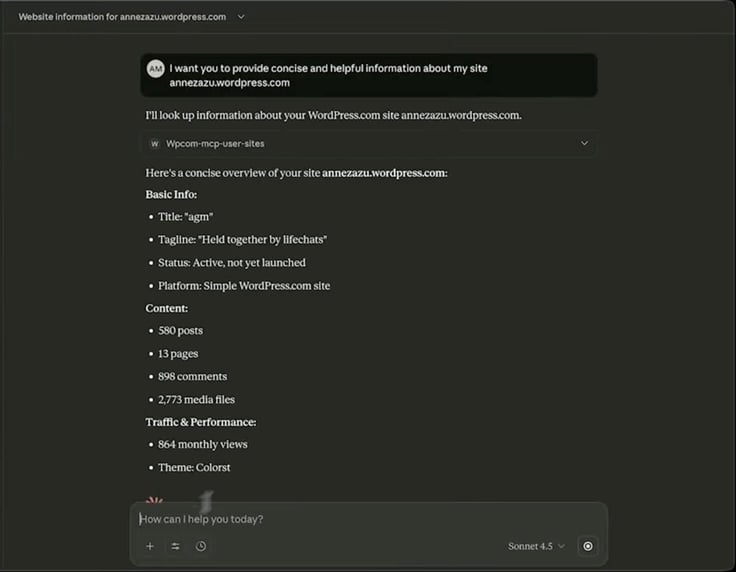
This is an insanely helpful action that can help users truly understand the status of their sites and success of their businesses.
Of course, Claude doesn’t read the entire site in a traditional sense. It calls WordPress abilities like:
- list_posts
- get_post_content
- summarize_content
- analyze_categories
It can help read analytics and offer actionable plans and insights, which is another great opp for plug-and-play marketing/add-on bundles.
Similar to the WP AI Client, the MCP Adapter will plug LLMs directly into WordPress sites, letting any LLM treat a WordPress site like an application they can interact with.
So, users can ask: “Claude, clean up all tags on my posts,” and the agent can do it safely, using the Abilities API.
WordPress Is Becoming Agent-Ready
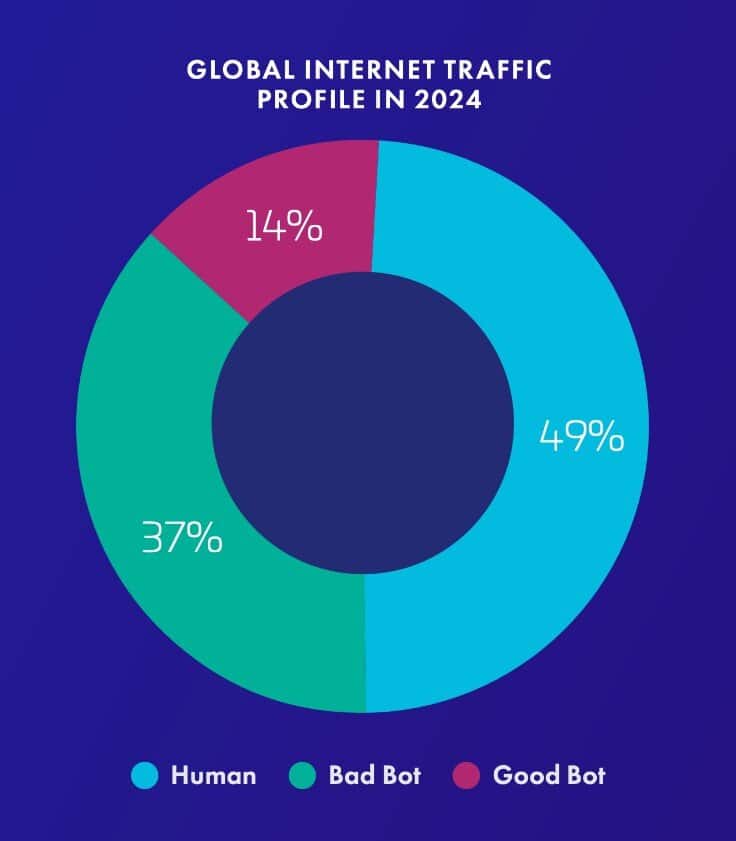
According to the 2025 Bad Bot Report, Imperva found that bots make up 51% of all internet traffic.
That includes everything from benign crawlers to outright malicious traffic — but it’s the rise of AI agents inside that category that changes how hosts need to interpret traffic.
“The amount of traffic coming from AI bots crawling is now dwarfing some of the human traffic — and this is just with some of them doing the indexing of the web, much less the real-time interactions that’ll happen,” said Mullenweg.
The agent can just scan and pull the information the user wants without sending them to the page. For a while — and still happening for thousands of businesses right now — this has meant fewer actual click-throughs or on-site purchases.
So if someone asks for the best banana bread recipe, Nina’s Kitchen might get cited and the recipe may get surfaced inside a ChatGPT chat, but the visitor never actually lands on Nina’s Kitchen’s site.
But the fact is agents don’t just crawl; they are actually using the sites. It means agents will help end users:
- Shop via WooCommerce
- Leave reviews
- Trigger workflows
- Hit APIs
- Summarize pages
- Create posts
- Perform admin tasks
WooCommerce products can already be browsed and even purchased inside LLM interfaces. That means the sale still goes through the store, but the traffic never appears in its analytics.
Sudden spikes from agent activity are to be expected but visitor numbers won’t reflect the same activity. Hosts are the first people customers turn to when their metrics start looking “wrong.”
Agents need clean structure to interpret a site, which is why HostingAdvice has stressed ML-friendly formatting (clean headings, schema, readable layouts). And WordPress knows it.
With AI crawlers and agent traffic already surpassing human traffic in some places, WordPress is actively rethinking how sites should be exposed to machines. It’s now exploring new machine-readable content formats, including:
- A Markdown feed proposal (/post-name.md)
- Cleaner RSS/Atom variants tuned for AI parsing
- Minimalist representations that cut out HTML cruft
- Structured versions of posts that reduce token usage
- Slimmed-down content feeds optimized for LLM ingestion
All of this makes WordPress content dramatically easier for models to consume, which is a winning pitch for any WordPress host. Hosts can tell clients, “Good news: Your site is automatically crawlable and findable by the next generation of search.”
Plugin Quality, Security, and the AI-Powered Pipeline
Everybody in the WordPress ecosystem knows there’s a massive backlog for checking plugins.
In early 2024, the plugin queue had more than 2,300 plugins awaiting review. By the end of the year, the team was able to bring wait times down from 37 weeks to nine weeks.
But now, plugins are promised to be approved in less than 7 days.
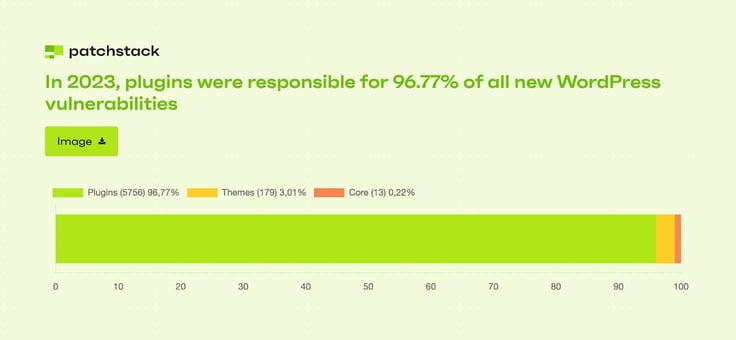
It’s like Mullenweg said at SOTW: “Whenever you see a headline about a problem with the WordPress sites — if the news site is good, they say it’s a WordPress plugin. It’s usually not core.”
He’s not wrong. Patchstack’s vulnerability database shows 97% of WordPress vulnerabilities originated from plugins or themes in 2023.
With 6.9, every plugin update submitted to the directory now undergoes automated scanning before being released to users, which includes:
- A new Plugin Check tool
- A new safety window (24-hour delay before auto-updates)
- Automated code review pipelines
That means fewer emergency support tickets for WordPress hosts.
What’s Next?
The WordPress team made it clear that the next major release finishes what 6.9 started.
“We shipped the server half of it, but we’re shipping the client half of it in 7.0. And that gives you complete coverage of the entire software of WordPress,” said James LePage of the WordPress AI Team (which was put together just six months ago).
This is unsurprising — the .0 releases are always the big ones — so it’s exciting to see just how jam packed and foundation-building 6.9 is.
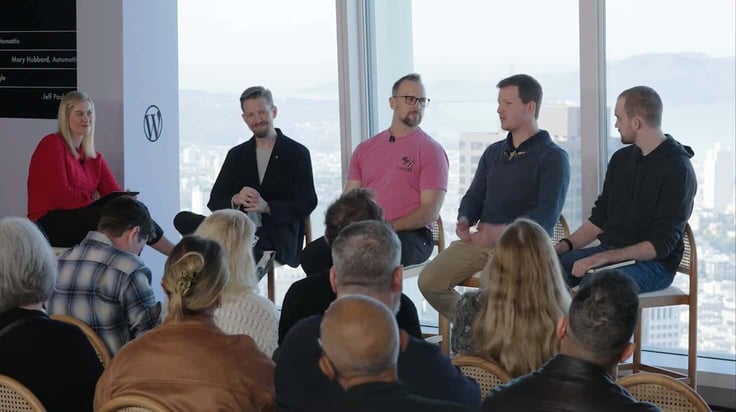
Based on this year’s SOTW, WordPress 7.0 may introduce:
- Real-time collaborative editing (including Google Docs-style editing)
- Block-level comments
- Suggestions and notes inside the editor
- AI as a participant in the editor
- More agent-readability + machine-first abstractions
- Hosts expected to bundle AI + support agent traffic
“I can easily see a world where all hosts — and I know three major hosts already — will provide bundled AI credits into their plans, which means you will have AI out of the box for any plugin that uses this API,” LePage said. “AI can become a commodity and it becomes something that everybody has access to.”
Take that note and run with it, hosts.
