



Writer: Jordan Sprogis


Editor: Lillian Castro


Reviewer: Cristian Lopez

Key Takeaways
- A new site for a 1,600-kilometer subsea cable is landing at Greenhouse Datacenters in South Holland.
- The IOEMA Project could help reinforce Europe’s data preferences, making South Holland a new rival to Amsterdam’s datacenter hub.
- Despite their power, subsea cables remain vulnerable with up to 200 breaks occurring each year.
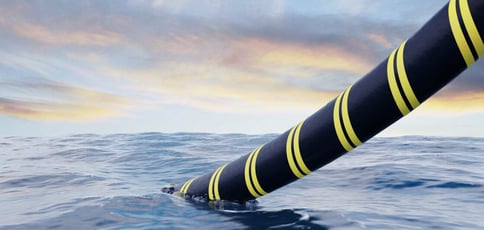
A 1,600-kilometer (994 miles) fiber-optic cable is literally about to surface on the Dutch coast.
The IOEMA Project, launched in 2023, is building a subsea network beneath the southern North Sea that will connect six countries, from the U.K. to Norway and soon France. Its newest landing was just announced: Greenhouse Datacenters in Rotterdam near The Hague, which sits just south of Amsterdam’s sprawling digital hub.
To the average person, a cable landing isn’t the most exciting news. But in the data world, it’s seismic. A line like IOEMA’s fiber cable can change how traffic and data is transferred throughout Europe — and especially the Netherlands’ growing digital ecosystem.
“The arrival of new submarine cables is critical for the Netherlands’ digital business climate and economic competitiveness,” said Ruben van der Zwan, CEO of Greenhouse Datacenters. “The IOEMA landing at Greenhouse . . . positions South Holland as a strategic alternative to the Amsterdam data center market.”
From Cable to Corridor
Greenhouse Datacenters’ South Holland facility sits just 12 kilometers (7.46 miles) from shore, with direct links to the massive AMS-IX internet exchange, which is one of the busiest internet exchange points in the world. It can handle several terabits of traffic per second.
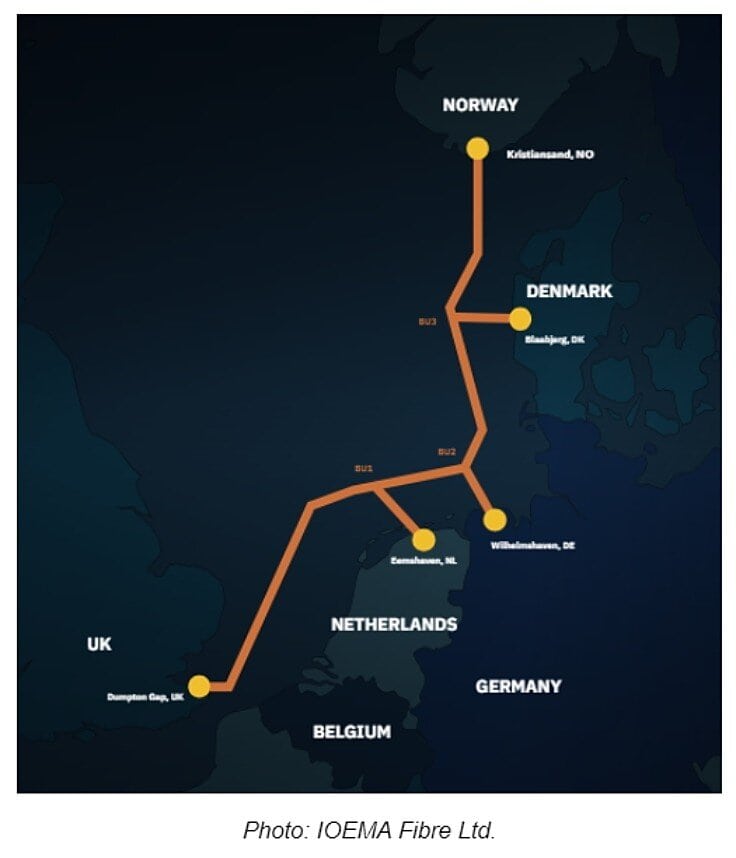
“With IOEMA, Greenhouse creates a new sovereign AI corridor linking AI hubs across Northern Europe with Rotterdam, The Hague, and Brussels,” said Rick Pijpers of PWDR.AI.
The term “AI corridor” sounds like industry talk for something more lofty, but it actually comes down to the thing Europeans have long been clamoring for: digital sovereignty.
As American hyperscalers make new homes all over the world, Europe has been extra careful about wanting more control over its digital ecosystem. And it’s projects like IOEMA that make this goal possible — the one of keeping traffic, processing, and data within EU borders — instead of relying on foreign companies.
That’s a big win for hosts who have GDPR-sensitive, compliance-heavy clients and need their data to “stay European,” so to speak.
How the Netherlands Became a Data Hub
Amsterdam already has a reputation for being the region’s digital and datacenter hub, but it wasn’t always that way. Historically, Europe’s digital gravity was more standard in the south and west, like London, Paris, Frankfurt, Amsterdam.
But when AMS-IX — Amsterdam Internet Exchange — came into the scene, it helped put the Netherlands on the map as a European peering hub. That means traffic between European networks could flow right through Amsterdam without issue.
Initially, this surprised a lot of the EU; the UK already had transatlantic connections and the U.S. has massive hyperscalers sprouting locations just about everywhere.
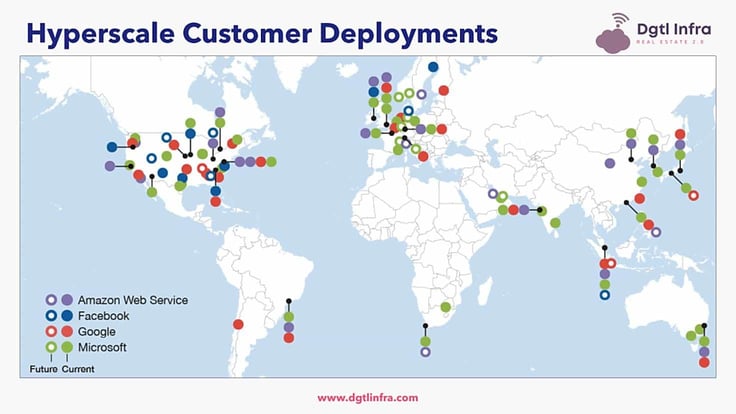
Some say that Europe’s regulatory model is what drove investors and builders to take Amsterdam seriously. And with IOEMA’s cable in the northern corridor, it brings Norway, Denmark, and coastal Germany more into the picture.
Van der Zwan added that this direct connection “positions South Holland as a strategic alternative to the Amsterdam data-center market,” while Eckhard Bruckschen, CTO of IOEMA, said the project “makes the IOEMA cable accessible to a broader market in South Holland and beyond, offering ultra-fast, redundant, and AI-ready connections across Northern Europe.”
The Frontier is Still Fragile
Yet, for all their promise, subsea cables remain the weakest link in the world’s strongest network. EU research estimates that somewhere between 150 and 200 cable breaks occur each year.
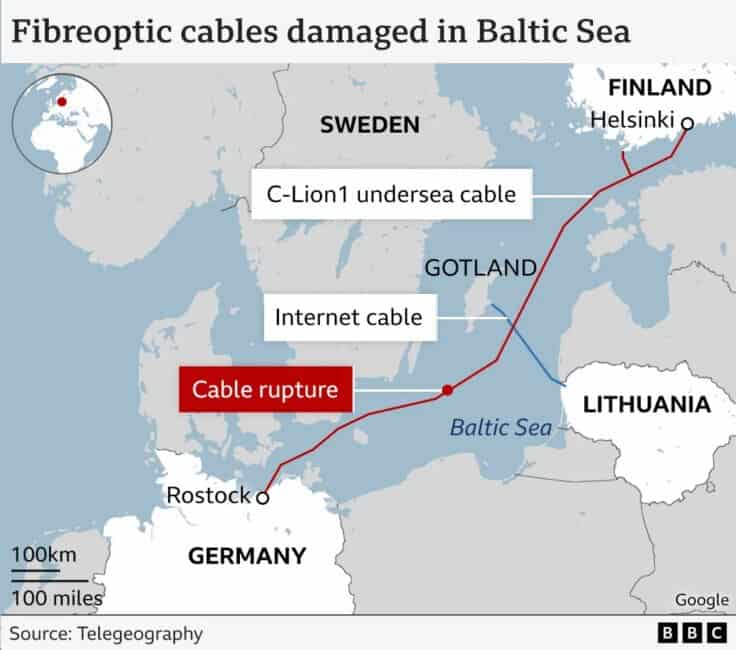
Most of them are due to human error, from fishing gear, anchors, drudging, and so on, though plenty are also due to natural disasters like earthquakes.
The most obvious issue with subsea cables is that a single break can reroute global traffic and cause bandwidth bottlenecks in seconds for millions of people. IOEMA’s answer is to fully armor the wire and bury it along a very specific route to protect against possible issues like this.
And so far, none of its other sites have experienced any issues, so it looks like the cable is in good hands.
If the IOEMA Project works as planned, its subsea cable will basically be a living, breathing, connective tissue between five of Europe’s largest traffic nations. And that in itself is what will create faster, private, and sovereign paths for European hosting providers.
