




Writer: Jordan Sprogis


Editor: Lillian Castro


Reviewer: Cristian Lopez

Key Takeaways
- Sen. Bernie Sanders and U.S. Rep. Alexandria Ocasio-Cortez recently proposed a federal pause on new AI data centers.
- This comes amid local pushback by communities around data centers, which are slowing projects nationwide.
- The bill demands regulation that will protect national security, which may be a problem if there aren't enough people who actually understand AI systems.
Two of Congress’s most prominent progressives want to draw a line for America’s data centers. For now, at least.
Sen. Bernie Sanders and Rep. Alexandria Ocasio-Cortez recently introduced the Artificial Intelligence Data Center Moratorium Act, which calls for immediately halting all new AI data center construction in the U.S. until there are certain federal safeguards:
- AI products undergo federal safety review before release
- Workers are protected from AI-driven job displacement
- Data centers don’t increase consumer electricity prices or harm the environment
“Legislation like this confirms what we’re seeing globally — AI infrastructure is scaling faster than the workforce trained to secure and govern it,” said Jay Bavisi from EC-Council, which offers cybersecurity certification and training.
The bill, introduced on March 25, would also ban U.S. exports of AI computing infrastructure to countries that lack equivalent safeguards.
The moratorium would apply to new and upgraded data centers that are being used for developing AI models at scale and that exceed certain electricity loads.
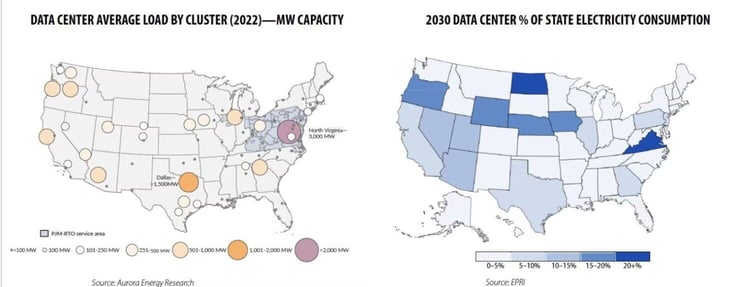
It’s a bit of a vague line, considering hyperscale AI facilities can demand anywhere from 100 to 500 megawatts or more, which is enough to power tens of thousands of homes.
Congress could do its part, easily. But it’s very unlikely this bill will go far since the administration is heavily invested in American-based data centers and buildouts.
The Power Problem
To be fair to the public anguish, electricity costs rose nearly 7% last year — more than twice the overall rate of inflation — costing the average household $123 more in 2025.
Communities near data centers have also been particularly vocal, with more than 100 local communities enacting moratoriums on data centers. Twelve states are also currently pushing forward with statewide moratorium proposals.
One report estimates that between May 2024 and March 2025, local opposition helped tank or delay $64 billion in data center projects across the U.S.
But the “other” side is happy to push back.
The Data Center Coalition also warned that a moratorium would “limit internet capacity, slow critical services, eliminate hundreds of thousands of high-wage jobs, drain billions in local tax revenue, and raise costs for American families and small businesses.”
The economic case for data centers is a good one. In 2023, U.S. data centers supported 4.7 million jobs and generated $162 billion in tax revenue.
Perhaps the problem is that most Americans don’t actually know that. Some would even argue that the industry has let critics define its narrative: President Trump himself said data centers “need some PR help” since people often assume electricity prices will rise if one is built nearby.
The People Problem
Another issue industry experts have been flagging for years: We’re building AI systems faster than we understand how to secure them.
Call it the downside of anyone-can-build AI: Is there now a lack of expertise?
This is especially worth noting when there are bills calling for federal AI safety reviews. But reviewed by whom, exactly? Bavisi warns that he’s seen many teams that still don’t even know what prompt injections are.
“They’re embedding AI into customer platforms without anyone trained to test whether those systems can be manipulated, poisoned, or exploited,” he adds.
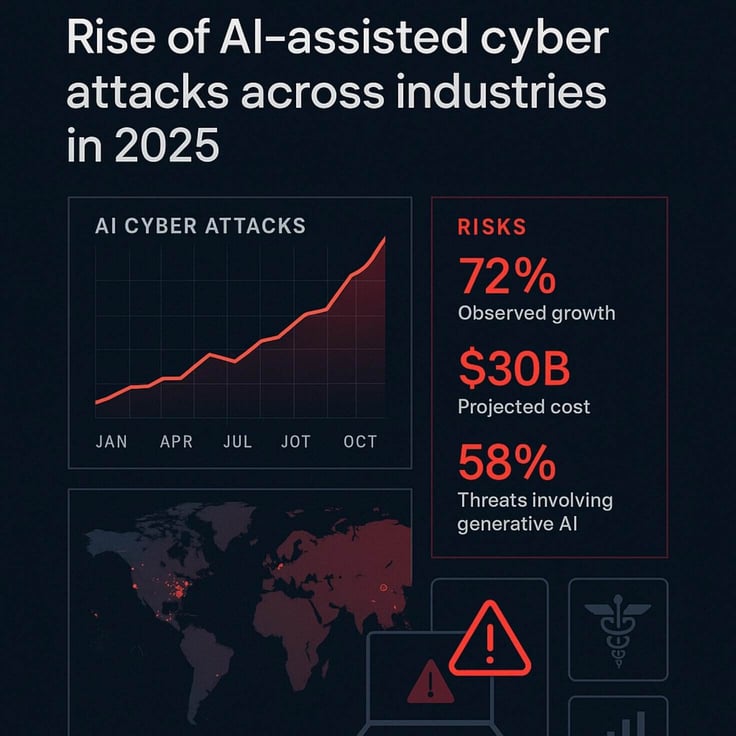
AI-assisted attacks have surged 72% in the past year alone, with phishing now almost completely AI-generated.
“Every conversation about infrastructure safeguards will circle back to the same root cause: We don’t have enough people who know how to secure what we’re building,” Bavisi says. “The gap isn’t technology. It’s people.”
For hosting providers and data center operators, the lesson may be as simple as getting ahead of this. Things like voluntary commitments on energy efficiency and rate impact do matter.
It’s actually exactly why Senators Elizabeth Warren and Josh Hawley sent a joint letter to the EIA last week, demanding that Congress establish annual reporting requirements for data centers.
With 72 countries now having AI policies in place, the EU AI Act already in enforcement, and Gartner predicting 75% of organizations will face AI compliance audits by 2027, the regulatory pressure is real. Yet only 18% of organizations have formal AI governance today.
So, maybe Bavisi is right about the gap being people. But the beauty is that it’s also fixable.
