



Writer: Jordan Sprogis


Editor: Lillian Castro


Reviewer: Cristian Lopez

Key Takeaways
Two years ago, ReliableSite was known for bare metal servers, in-house hardware, and a security-first mindset.

But when we recently spoke with Radic Davydov, it’s clear the company has since basically mutated into a full-stack provider.
There’s more staff, more products, expanding into new continents. And, casually, a self-built data center in Miami designed around liquid cooling for high-density workloads.
“Things are moving well,” Davydov told us. “We’re growing, learning a lot, making a lot of mistakes. Definitely far from perfect, but it’s going well.”
It’s almost a humble response.
ReliableSite’s made a lot of changes in the past couple of years, having expanded into some new facets of hosting — including its own data center, a new hardware line, and a free global network for Minecraft servers.
A Self-Built Miami Data Center
About a decade ago, right around Thanksgiving, Davydov had what he called a “wild idea”: stop buying everyone else’s server chassis and build their own. That eventually spun out into a stand-alone hardware company called Boot Hardware.
“If you’ve ever seen the photos, they’re just those really bright blue chassis that we do,” he said. “We do the chassis, we do power supplies, and we’re kind of adventuring off into manufacturing bleeding edge water-cooled solutions.”
Davydov called it “probably the hardest thing I’ve ever done personally,” and it took nearly six years just to get the design and production side on the right track. And now, that’s expanded into System Data Center in Miami.
Miami isn’t exactly what many would consider a data center hub. Space and power are limited, so ReliableSite has bounced between facilities to find just the right setup.
“Miami’s not a huge data center hub and definitely very limited with data center space,” Davydov explained. “One data center doesn’t have enough power, another doesn’t have enough space. It’s been a bit painful for us in Miami.”
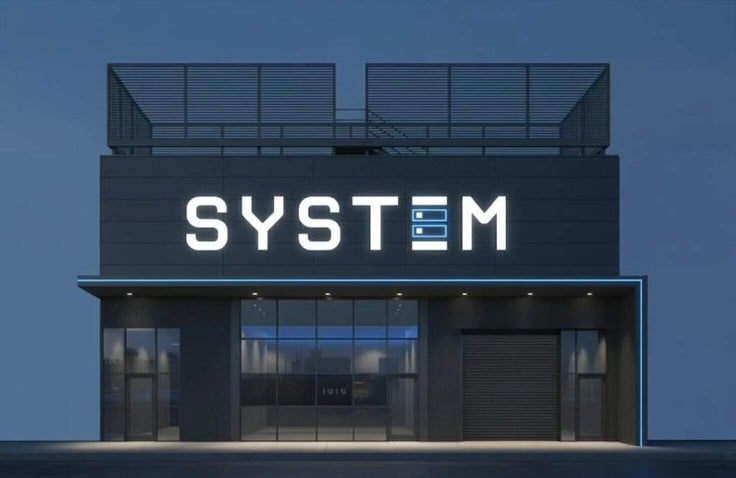
So his solution was to build a facility: System Data Centers. The location is near its current Miami facility, and the data center team is designing the building from scratch. The new site will be branded as System Data Centers (under the domain system.net).
“We’ve been working with a lot of really, really talented engineers that specialize in the technologies that we’ve been exploring, specifically rear door heat exchangers, direct to chip, and rack mount immersion cooling,” Davydov said. “You’d be surprised that not many companies around the world have actually physically played around with that and understand the actual engineering that goes into that.”
Apparently, most vendors only speak one side of the language.
“You’d be surprised that not many companies around the world have actually physically played around with that and understand the actual engineering that goes into that.”
“The data centers don’t understand the water cooling side of it,” he added. “And the guys who manufacture the water cooling side of it don’t understand operations within a data center.”
The team has just finished cooling designs and plans to fold that into the full data center blueprint and start the permitting process soon.
“It’s been painful, it’s been slow, but it’s exciting,” Radic said. “We’re trying not to make any mistakes. We’re not trying to rush anything. We’re trying to do it right.”
ADMN, an AI System Administrator
As many are familiar with, some hosts hear “AI” and immediately bolt a chatbot onto their services. But ReliableSite purposely went in another direction.
“We kind of went really heavy into AI this year,” Davydov said. “We haven’t scaled down in terms of the amount of staff that we have. We’ve just been trying to make people less busy and be able to do things tremendously quicker.”
“We haven’t scaled down in terms of the amount of staff that we have. We’ve just been trying to make people less busy and be able to do things tremendously quicker.”
These new ideas have branched into both internal changes and Deploy2k, a software brand tailored to hosting user. This includes:
- Internal sysadmin workflows (via ADMN, under Deploy2k)
- Product development, including LaunchMC (under Deploy2k)
- Frontend and portal improvements that ReliableSite customers have been requesting for years
When the ReliableSite team started experimenting with AI coding agents — things like GitHub Copilot-style tools, Gemini CLI, and Lovable — they realized the same concept could work for servers.
“We tried to create our own little localized agent that we ran up on a server and we were very impressed with what it could do,” he explained.
The internal prototype did a few things really well:
- Followed ReliableSite’s internal documentation exactly
- Deployed and configured large, complex applications
- Diagnosed hardware, OS, and software issues by reading logs
- Connected symptoms across systems without having to resort to Googling
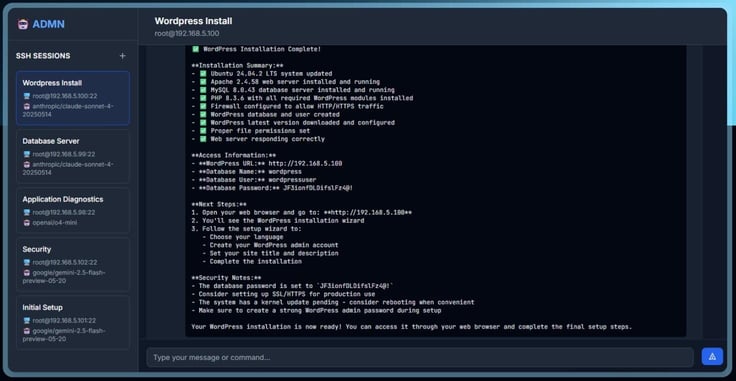
The result was ADMN (pronounced “admin”), an AI-powered system administration service.
ADMN is a web interface that connects over SSH to servers — primarily Linux — and lets sysadmins type in plain English what they want to do — deploy, configure, debug, or maintain — and ADMN runs the commands, interprets the logs, and walks through the resolution steps.
“All of our system administrators have been using this internally since about summertime,” Davydov said. “We manage thousands upon thousands of servers. It’s allowed our guys to be able to find issues and work through things much quicker than they’ve ever been able to do before and much more accurately. They’re definitely making far fewer mistakes.”
“If you’ve ever talked to a chatbot, the fastest thing you’re trying to do is get away from it and get to a human.”
But Davydov also wanted to emphasize that ReliableSite is not using AI as a front-line replacement for humans.
“If you’ve ever talked to a chatbot, the fastest thing you’re trying to do is get away from it and get to a human,” Davydov said. “We’ve been using AI for heavy efficiencies across everything that we do internally without actually sacrificing the frontline.”
LaunchMC, a Free Global Shield for Minecraft Servers
Game servers have always been part of ReliableSite’s customer base, but they come with two headaches that can’t be ignored: They’re extremely sensitive to latency and attract an absurd amount of DDoS traffic.
“It’s a niche that is hard to ignore,” Davydov explained. “The guys are very demanding with both network performance and they tend to attract all the DDoS attacks in the world, it seems like.”
This was a niche Davydov knew they wanted to fill — but ReliableSite didn’t want it directly tied into its main infrastructure or DDoS brand. So he built LaunchMC, a separate, 100% free service designed specifically to improve and protect Minecraft servers. This product is strategically separate from ReliableSite’s infrastructure and is compatible with any hosting service.
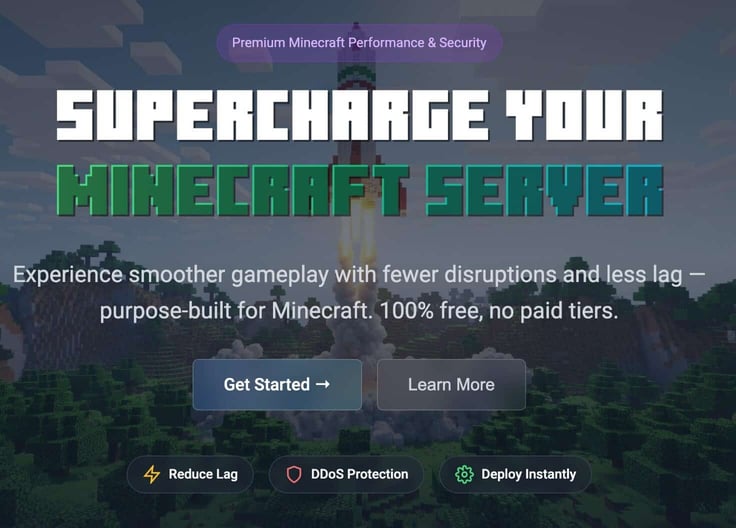
“This is completely free. It’s always going to be free. We have no paid tiers. There’s absolutely no advertising on it,” Davydov said. “We’re hoping that it will help everyone grow and not limit the quality and performance that’s available to only those mega servers that are bringing in massive amounts of money.”
The early version of LaunchMC relied heavily on third-party mitigation providers. ReliableSite layered Minecraft-specific features on top and started gathering feedback. And because there’s a very active online community, it came fast.
“We had a lot of really, really, really great feedback,” Davydov said. “We’ve had some very major pivots in terms of the kind of features and how we do things from how it originally launched.”
Today, LaunchMC looks a little like this:
- A single global entry point that can bring traffic in from any edge
- Edge locations in Sydney, Singapore, multiple U.S. points, and Europe
- Completely rebuilt tech stack (multiple times)
- A new release rolling out with proxy protocol support, one of the most requested features from server operators
“We have completely rebuilt this technology over and over and over,” Davydov admitted. “And we have a completely new version of LaunchMC soon that has proxy protocol support. It’s literally required us to start from scratch for probably the third time.”
Right now, LaunchMC protects hundreds of Minecraft servers, with the goal of becoming a default entry point for Minecraft hosting. Davydov hopes that one day, it’ll be seen as the Cloudflare variation of Minecraft.
The Reality of Growing Pains
Davydov says that ReliableSite is now two years ahead of where its development road map used to be. The downside of moving as quickly as they have is that they’ve run into a few bottlenecks.
“Our issue right now is it’s not enough staff,” he explained. “Bringing something new to the world is one thing, but then being able to support it and enhance it and having somebody that will be able to answer direct questions and understand it is a whole different animal.”
“Bringing something new to the world is one thing, but then being able to support it and enhance it and having somebody that will be able to answer direct questions and understand it is a whole different animal.”
On the client side, not everybody loves the idea of AI stepping into highly specialized workflows.
“There’s been a lot of pushback, especially from people who are really seasoned with certain things,” he said. “They see it as, ‘Okay, I really understand this and [AI] can’t really do it as well as I can,’ and they push back against it. That’s really been one of the biggest challenges for us.”
But these growing pains are par for the course; no journey is ever going to be picture-perfect. For hosts watching from the outside, ReliableSite’s road map is a good picture.
Maybe AI is most useful behind the curtain, game hosting is only getting more demanding — and if you can build your own stack, you’re less at the mercy of other people’s computers.
