




Writer: Jordan Sprogis


Editor: Lillian Castro


Reviewer: Cristian Lopez

Key Takeaways
Oracle, the Texas-based cloud provider, announced it has s just partnered with iXAfrica, a Kenyan hyperscale data center company that serves East Africa, to launch Kenya’s first public cloud region in Nairobi.

Though the AI data center was announced about two years ago by Kenyan President William Ruto, iXAfrica has officially decided on Oracle as its hosting partner.
“With this collaboration, iXAfrica is leveraging the renewable energy, talent, and abundant submarine and national connectivity available in our market,” said Snehar Shah, CEO of iXAfrica.
The company is already in “full execution mode,” indicating that construction, power, and infrastructure is already being deployed.
Nairobi is home to a number of submarine cable landings that power the East Coast of Africa — SEACOM, EASSy, Teams, and 2Africa, to name a few — so the connections are already there.
A Regional Land Grab Is Underway
Africa’s data center growth is concentrated around three hubs, with analyses like this one from Energy Chamber showing that South Africa has the most facilities (56), followed by Kenya (19) and Nigeria (17). Together, that’s about 41% of current data center infrastructure in Africa.
Capital is, unsurprisingly, clustering inside the continent. American hyperscalers are eagerly pairing up with operators who already know the region’s capabilities and its demographics.
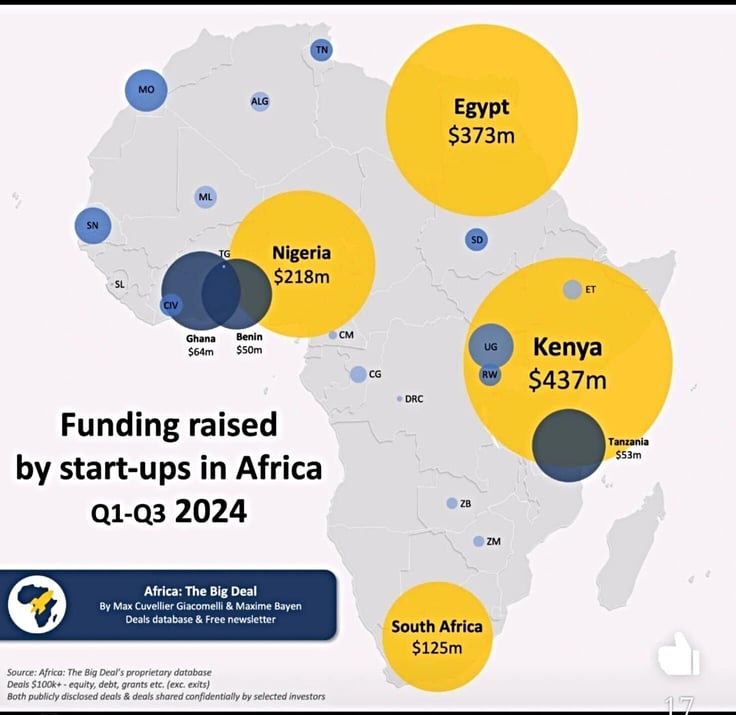
An analysis by DC Market Insights projects the market to double in the next 10 years, from USD $606 million in 2025 to $1.24 billion by 2035 as digital transformation and cloud workloads increase.
Oracle’s move comes just weeks after Kasi Cloud committed $250 million to a new data center in Lagos, with backing from Nigeria’s sovereign wealth fund.
And as more companies expand into high-adoption, low infrastructure maturity areas like Africa or APAC, it’s really just about becoming among the first to claim a stake in the area because it will undoubtedly explode in growth.
It’s basically a race to get your foot in the door first. And there are a few reasons why so many are so eager.
Energy, Demographics, and Mobile Adoption
By 2050, Africa is projected to account for the bulk of global working-age population growth. iXAfrica’s CEO argued, while on an episode of “Inside East Africa,” that’s part of why Kenya is prepared for long-term cloud expansion.
Shah also added that while data centers in markets like Ireland and the Netherlands already account for more than a third of national electricity consumption, Kenya is among the world’s largest geothermal producers with around 90% of its power coming from renewable resources.
“We are really well positioned to provide data centers, not only for our local or regional consumption, but actually for global consumption,” he said.
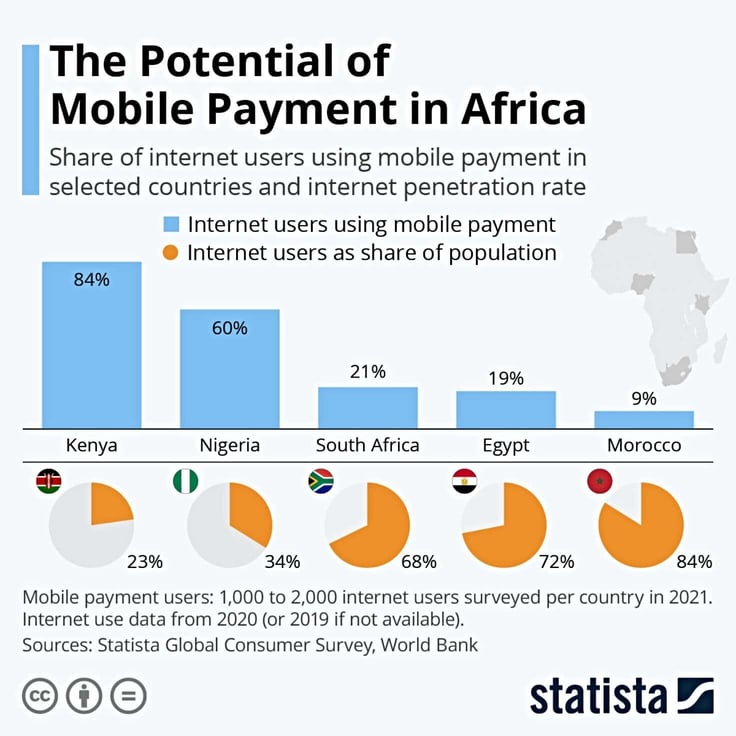
As for what’s driving it? As with many fast-growing regions, growth comes down to two factors: fast mobile adoption and eCommerce. For starters, the country grew from having a mobile penetration of 77% in 2024 to 91% by 2025.
In Kenya specifically, a main driver is mobile money — look at M-Pesa, which lets people send, receive, store, and even borrow money using basic mobile phones without requiring a traditional bank account.
But most notably, it’s so different from the Silicon Valley-based apps like CashApp and Venmo: M-Pesa works on SMS, flip phones, even in rural villages where there’s no bank or ATM for miles.
Accessibility is key here. When given that opportunity, the possibilities start flourishing.
“Nairobi is becoming the new Johannesburg,” Shah said in the podcast. “We have a developing skyline, we have the infrastructure there on top of the road network, the rail network. But the biggest misconception is really the population and the capability of the population.”
It’s as David Bunei, Oracle’s representative for Kenya, said: “These unique capabilities and our collaboration with iXAfrica will further support the growth of the country’s digital economy.”
