




Writer: Jordan Sprogis


Editor: Lillian Castro


Reviewer: Cristian Lopez

Key Takeaways
The U.K.-based web host, 20i, recently announced the opening of its 100% renewable data center in the heart of Singapore. Designed to work with the energy constraints of Singapore, the Equinix Tier III facility will also serve surrounding countries, including India, Pakistan, Sri Lanka, Bangladesh, Indonesia, the Philippines, Japan, and Australia.
“We’re incredibly excited to bring our most advanced, high-performance hosting platform to Asia, giving customers across the APAC region local access to a resilient, ultra-fast hosting platform,” said Lloyd Cobb, director at 20i.
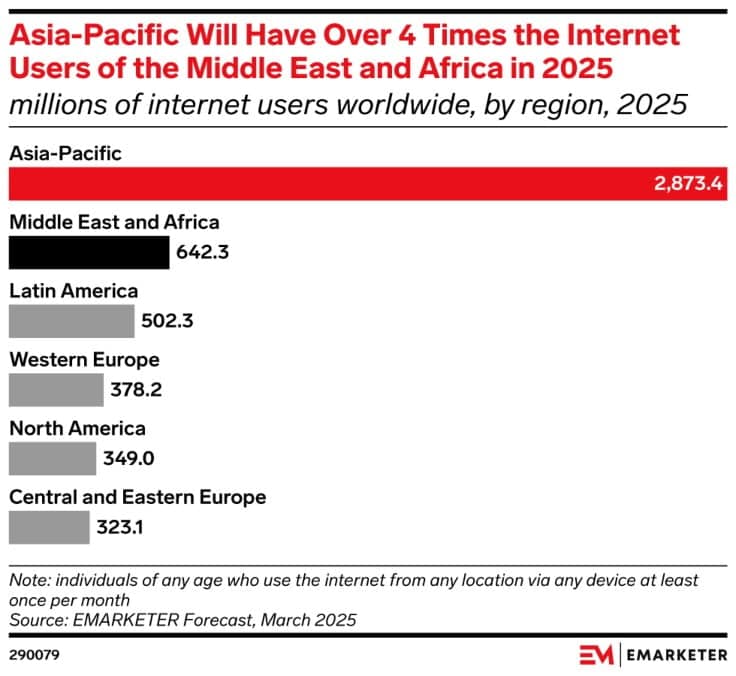
It’s a great opportunity for resellers or white-label hosts and agencies to expand into one of the world’s fastest-growing digital markets at a low financial risk. 20i’s autoscaling-first platform is also a major selling point, especially in the APAC region as infrastructure expands in the more remote areas. By 2030, it will account for more than 50% of the world’s internet users.
Where Mobile Is King
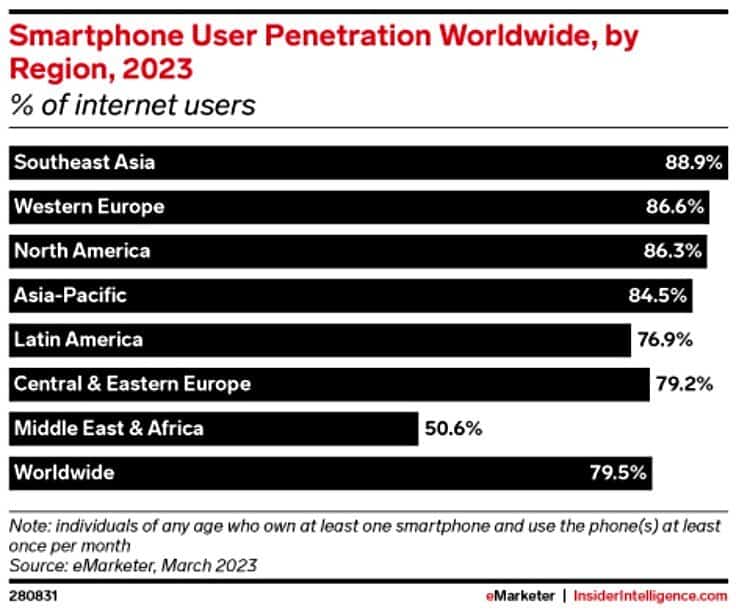
There are more mobile users in the APAC region than there are in more mature markets like the U.S. and the U.K. combined. And yet, penetration rates are slow — all pointing to infrastructure and scaling capabilities.
In many APAC markets, users have skipped the era of the desktop entirely. It’s a new demographic that just so happens to be mobile-first. People have access to their phones all day, so they’re not really “going online” as much as they are always online.
Desktop traffic tends to work much like you’d expect if you’ve ever worked a 9-5: People are online during the workday, dip out around dinner, and then come back in for some evening to late-night scrolling. Most “internet rush hour” data shows a heavy spike around 4 p.m. and then again between 7 p.m. and 11 p.m.
Mobile traffic is a different beast. Instead of spiking at an expected time frame, it’s really whenever people have a spare minute — which quite often is during times like commuting hours, lunch breaks, late-night scrolling.
It’s just an entirely different form of traffic that rules the APAC region.
And by 2030, APAC’s mobile traffic is expected to quadruple. It’s a fast-growing demand that the regional infrastructure is trying to keep up with.
It’s an issue that 20i’s autoscaling data center could fix. Instead of provisioning for the “average user” — which many mature markets consider desktop-heavy — autoscaling allocates compute resources only when there is demand for it, and pulls it back when that demand is done.
And boy, that’s helpful for Singapore — considering its data centers already account for 7% of its total electricity consumption. It’s a pretty high number for an island with limited land and a grid that depends on imported natural gas.
Autoscaling, in that sense, stops wasting the existing energy.
By scaling resources in real time instead of provisioning for a projected demand, hosts can (finally) stop paying to keep servers powered and cooled when no one is actually using them. That can equal to 20-30% cost savings compared to traditional provisioning (AKA: a new cardinal sin of keeping idle capacity “just in case”).
APAC is clearly a market many providers want a piece of, and reselling or white-label hosting lets them test demand without having to sign a contract or buy capacity based on an educated guess.
Even Gartner consistently encourages partner-led expansion as the key to market in new regions — it’s just a no-brainer way to mitigate market risk compared to building and operating anything directly.
It’s also a major selling point to customers because it’s easy to pitch “only pay for what you use.” Cost management is the number-one challenge for cloud users, so pricing that is directly tied to usage gives buyers a clearer sense of what they’re paying for — and, of course, what they’re not paying for.
