




Writer: Jordan Sprogis


Editor: Lillian Castro


Reviewer: Cristian Lopez

Key Takeaways
- Multiplayer games like Palworld and Valheim are setting new infrastructure expectations as players and devs demand low latency and high scalability.
- When mods and DLC add game longevity, hosts have to go beyond offering appealing VPS plans.
- Indie developers demand plug-and-play hosting that scales with their game, and not just on launch day.
-
Hear from Aline Dietz of GPORTAL and Imad Qadri of BerryByte about what they’ve seen firsthand in the game server industry in 2025.
Multiplayer survival games and indie devs seem to be causing major changes in the game server hosting industry this year: Blockbuster hits like Palworld and Valheim are pulling in tons of traffic, sure — but they’re also forcing hosts to adapt to specific demands for their massive communities.
“The industry is definitely growing, but it’s also maturing,” said Imad Qadri, CEO of BerryByte. “We’re seeing increased complexity as developers and studios now expect hosting partners to offer more than just raw infrastructure.”
Basically, the rise of massive multiplayer online (MMO) games has more or less challenged the definition of “good” hosting. Self-deployed servers to get up and running fast are great, but devs and gamers are looking for more proactive support that can withstand global players and popularity spikes.
Player-Generated Content = Longer Lifespans
One of the biggest catalysts behind the evolution of the industry’s trends is player-generated content. And not just as a feature, but as a core expectation for MMO players.
“These games are more than simply multiplayer; they depend on user-run servers to fuel community, longevity, and revenue through DLCs and mods,” said Qadri. “Studios that embrace this sort of decentralized model are driving much of the demand we’re seeing.”
From Minecraft to GTA V, ecosystems that can support mass communities are becoming the norm; that’s why Aline Dietz, Director of Marketing at GPORTAL, said mod support is another key feature that most gamers are looking for.

“It allows new player-generated content to be added to the game independently of the developers, thus significantly increasing its lifespan,” she said.
A core purpose of multiplayer and online games is to foster community, whether that’s through co-op gameplay, competitive matchmaking, or player-generated worlds. And it’s that community-first design that creates a more persistent demand on infrastructure.
Studies show that mod- and DLC-supported games see up to 50% more engagement and 50-70% longer lifespans. The games that let players host their own worlds also tend to have more long-term success.
Dietz and Qadri confirm that the devs have spoken: Server hosts need to offer things like mod integration, reliable backups, autoscaling capabilities, and tooling that helps them maintain uptime during traffic spikes.
Latency is a Major Churn-Causer
A good rule of thumb is to deliver speeds less than 50ms for live global games, especially in genres like PvP, survival co-op, and tactical shooters, where lag can instantly ruin the experience. In fact, a Liquid Web study found that 78% of gamers have quit mid‑game due to lag.
Here’s what else it found:
- 55% of players stop playing a title entirely if it’s lagging
- 49% reduce their playtime after experiencing delays
- 16% stay angry after gaming sessions, often for nearly 20 minutes post-session
These are huge churns that nobody can afford to ignore, especially when there’s proof that games can explode overnight, as seen with Palworld and Enshrouded.

To add another layer of expectation, many players are moving from PC to console playing. That’s a whole different beast of infrastructure to support because what works for a PC gaming audience doesn’t always translate cleanly to another platform.
“The move to bring more and more games from PC to consoles is increasing demand for game servers,” said Dietz. “But at the same time, it’s becoming more complex, with increased expectations for performance and global latency optimization.”
A Consumer Technology Association survey found that 61% of U.S. gamers play across multiple devices. Take ARK: Survival Ascended, a cross-platform title available on PC, Xbox, and PlayStation. No doubt its success relied on infrastructure that could keep gameplay consistent across all platforms, even if millions were playing at once.
Indie Studios are Loud, and They Want Support
This year may just mark a turning point in how the hosting industry supports indie and mid-sized studios. These developers are often the ones launching early access builds, testing live updates, and growing player communities from the ground up. And now, they’re becoming some of the loudest in the market.
But according to Qadri, the biggest hurdle the company faces isn’t creativity or funding. It’s the long-term haul: “Building multiplayer infrastructure is still too hard and expensive. We need plug-and-play infrastructure tailored especially for indie studios.”
That plug-and-play model comes down to mods, backups, observability, APIs, and support that doesn’t crumble when a game goes viral. For indie studios in particular, the difference between breakout success and mistrust is often about how quickly and reliably they can deploy multiplayer features — not just on launch day, but as communities grow, too.
Think about it: Would Palworld have gotten as big as it did if it weren’t easy to deploy? Probably not. It had more than 2 million concurrent players just days after its launch. And it’s not so much that Palworld was a fun or addictive game, but that the infrastructure kept up with the heavy traffic demands.
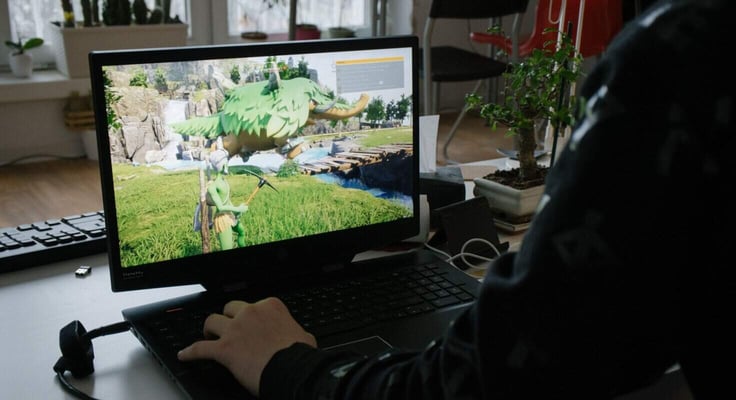
It’s why Dietz always gives this piece of advice: “Look for a provider that can scale with your game’s success over time, not just handle launch day.”
For hosts, that means supporting:
- Global latency optimization
- Mod and DLC lifecycle support
- Autoscaling and observability
- Developer-first APIs and SDKs
- Support that understands live demands
As Qadri said: “Anyone can rent servers. But great hosts understand what players want.”
