



Writer: Jordan Sprogis


Editor: Lillian Castro


Reviewer: Cristian Lopez

Key Takeaways
Microsoft and threat intelligence platform Cyware have officially partnered to bring automated threat response to Azure’s hosting environments. It’s another sign that all-in-one platforms are taking over the hosting stack — and once again proof that simplicity usually wins.
The pair calls it “bi-directional threat intelligence sharing,” but the idea is simple: Threat information floats both ways, giving hosts on Azure faster detection and response capabilities. And because it’s available through Azure Marketplace, setup is just another click inside the Microsoft ecosystem.
“This partnership allows cloud and hosting providers to consume and operationalize vast amounts of data,” said Sachin Jade, CPO at Cyware. “Microsoft Sentinel can ingest actionable threat intelligence from Cyware, while Cyware can receive intelligence and sightings from Microsoft Sentinel.”
All-in-One, One-for-All
For years, hosting teams have been collecting mountains of alerts they can’t easily sort and use. Maybe the data sits in different tools or half of it lacks context. Either way, sorting real threats from false alarms takes way too long.

“[They] struggle to operationalize threat intelligence at scale due to siloed data, inconsistent context and validation, and manual handoffs between tools,” Jade added. “Specifically for businesses hosting customer workloads in the cloud, this means faster visibility and actioning of threat intel to secure against attacks.”
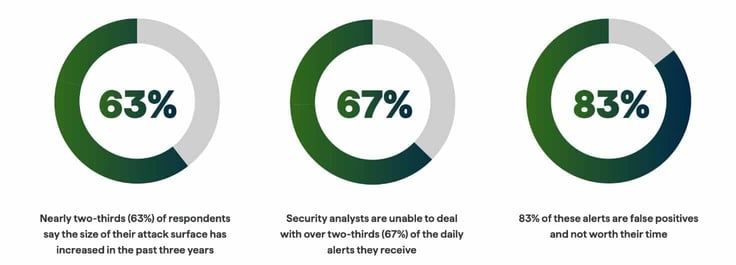
Take a look at the numbers. A 2023 survey of 2,000 SOC analysts found that the average team receives 4,484 alerts per day, and they’re unable to deal with about 67% of thems. Of those alerts, 83% were reported as false positives or “not worth their time.”
Microsoft Sentinel can pull in detailed threat info directly from Cyware, while Cyware can also get alerts and evidence from Sentinel.
And it fits into the trend we’ve all been seeing where platforms are eager to converge into single control panels that handle everything — billing, monitoring, mitigation — without its clients ever leaving that single ecosystem.
Jade also hinted that Cyware plans deeper integrations within Microsoft’s security suite, including Defender for Endpoint.
If that happens, it means fewer integrations and simpler management. But it also means less independence. This partnership is a textbook example: Adding security intelligence is just Azure’s way of integrating more into its already in-depth vertical stack — and hosts that depend on it become more narrowly intertwined.
That’s not bad news. The main downside of sticking to a single vendor is what happens when its systems go down, it goes down for everyone — like AWS’s mass global outage on Oct. 20, which essentially shut down Amazon and Google, among plenty more for the day.
But perhaps more importantly, the Microsoft-Cyware partnership shows where the industry is heading: fewer silos, fewer dashboards. And, of course, fewer excuses for slow responses.
