




Writer: Jordan Sprogis


Editor: Lillian Castro


Reviewer: Cristian Lopez

Key Takeaways
- On July 16, Wix debuted AI Visibility Overview so its users can see firsthand how LLMs like ChatGPT crawl, cite, and interpret their content.
- GEO demands hosting environments built for structured, semantically rich, and LLM-readable delivery.
- HostingAdvice spoke with Doreen Weissfelner, Head of Wix Analytics, about the builder giant’s latest move and what hosts should do to keep up.
Web builder heavyweight Wix recently debuted its first Generative Engine Optimization (GEO) tool, giving users a live look at how LLMs like ChatGPT, Claude, and Gemini crawl, cite, and represent their sites in AI searches.

It’s another example of what’s already here — a place where traditional SEO insights and managed offerings aren’t enough anymore. Because as the web shifts from keyword rankings to AI-generated answers, hosting providers that prioritize speed or indexability have to take it up a notch.
“Instead of relying solely on keyword-matching and traditional search engine rankings, visibility is increasingly determined by how well a brand is understood and cited by LLMs,” said Wix’s Head of Analytics, Doreen Weissfelner.
In an exclusive interview with Weissfelner, HostingAdvice digs into why GEO is becoming core to site performance, and what hosts will have to do to keep up.
Why GEO Demands a Shift in Hosting Architecture
Anybody reading likely knows that traditional hosting infrastructure is optimized for fast load times and SEO crawlability, but that alone won’t be enough in the AI-native future of the web.
Yes, GEO wants hosts that prioritize speed, but it also wants environments that can support structured data — the kind that LLMs like ChatGPT prefer.
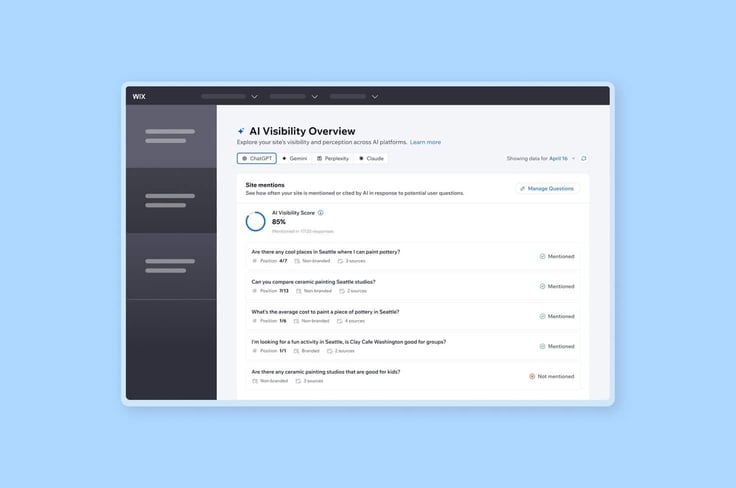
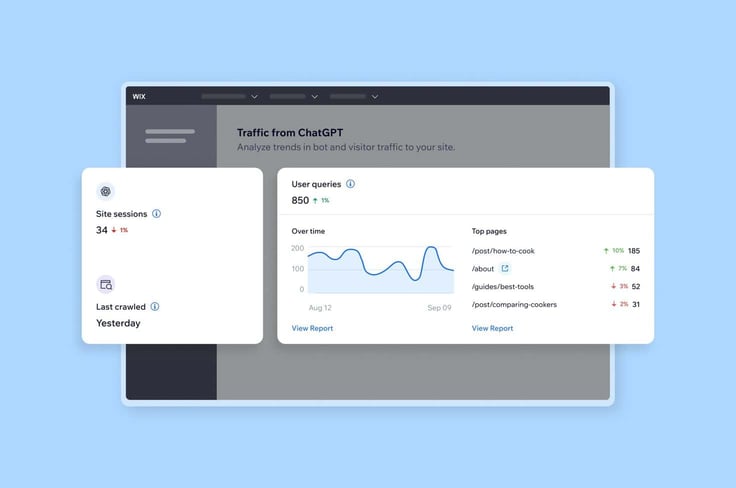
Perhaps unsurprisingly, Wix has already adapted to the GEO era with its AI Visibility Overview dashboard, which gives real-time insight into how client sites are cited, perceived, and trafficked by AI searches.
“This helps businesses not only maintain traffic levels but also unlock new streams of discovery by appearing in contextually relevant, AI-generated answers,” Weissfelner explained.
For example, site owners can see how many times AI platforms reference their site or compare AI visibility scores to similar sites and see who’s winning the GEO game (and why). Other features, including the llm.txt protocol — designed to help websites communicate directly with LLMs — can be accessed by certain Wix premium eCommerce customers.
It’s not unlike the function of robots.txt for AI engines, which is another future-is-here-now tool that hosting providers may soon want to embed and support.
Where robots.txt tells search engines what to crawl, llm.txt is designed to guide LLMs like ChatGPT or Claude in how they access and interpret site content.
“Hosting environments that support fast, structured, and semantically rich content delivery, structured data feeds, and new protocols like llm.txt — will be better positioned for GEO,” Weissfelner said. “This ensures LLMs can access and understand site data in a way that should improve representation in generative search results.”
Building for Comprehension, Not Just Indexing
There is no better way to see how far you’ve come than by comparing where you were. Ten or even five years ago, web hosts were just including SEO as a value-added managed service.
Now, we’re looking at a different, yet similar, beast. In an industry where features like SSL and CDNs were once premium upsells but are now the base expectation, could GEO follow a similar path?
“It’s hard to say whether hosting providers will choose to upsell GEO as a standalone service,” Weissfelner noted. “[But] tools that provide visibility into [AI-powered search] will grow in importance.”
Weissfelner emphasized that LLM search visibility will become a, if not the, contributing factor to traffic and engagement as more people grow dependent on AI for decision-making.
“We believe hosting providers will increasingly need to adapt,” Weissfelner confirmed. “GEO isn’t just about content — it’s also about how content is structured, served, and interpreted by AI systems.”
That’s exactly why, Weissfelner added, Wix already integrates SEO insights into its platform, with the GEO tool serving as the next evolution for a generative, AI-driven web.
“Rather than treating GEO as a separate upsell, we see it as the next phase in equipping users with the tools they need to succeed online, just as we’ve done with traditional SEO,” she said.
The shift from crawling to comprehension also affects how developers and creators structure their sites. Weissfelner recommends a few key changes for hosts to keep in mind:
- Site Architecture: Encourage clients to use semantic hierarchies, like proper H1s and H2s, relevant visuals, internal links, and clear sourcing — to help AIs understand context and relationships between sections.
- Metadata: LLMs rely on structured data to extract specific info. Hosts that promote schema markup are essentially handing AI models a map that leads directly to their clients’ most valuable content.
- Plugins: Added features/plugins that support product descriptions, reviews, and FAQs in structured ways give AI models more to work with.
- Content Style: Hosts can’t control content quality, but they can guide it. LLMs don’t reward keyword stuffing anymore and prefer clarity, relevance, and usefulness.
Optimizing infrastructure for LLMs now is like learning to speak a language that most sites still can’t.
