




Writer: Jordan Sprogis


Editor: Lillian Castro


Reviewer: Cristian Lopez

Key Takeaways
- The Trump administration’s “Big Beautiful Bill” ranks among the most unpopular in decades.
- But the good news is certain business tax breaks create a short-term window for investing in AI-ready infrastructure.
- Hosts can fully write off new equipment, claim bigger deductions, and even expense overtime wages — but only by 2030.
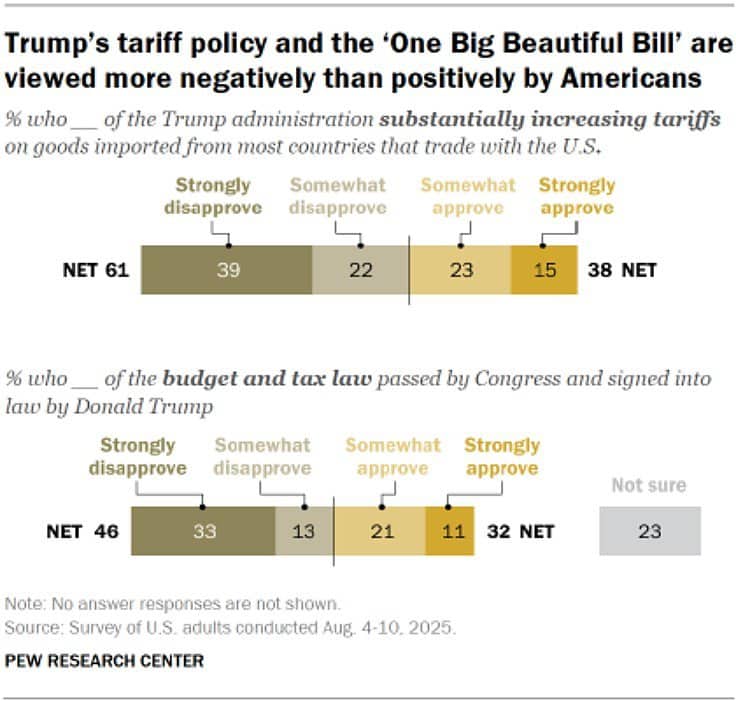
When a new policy is branded as one of the worst in history, silver linings are hard to find. Pew Research data shows H.R.1, 119th Congress — the “One Big Beautiful Bill (OBBB)” — is drawing more opposition than support, with disapproval outpacing approval by 14 points.
And yet, buried in the sweeping budget and tax law changes is something hosting providers may want to pay attention to: Businesses can write off the full cost of new equipment right away instead of spreading it out over years.
Bruce Kornfeld, Chief Product Officer at StorMagic, believes that’s the mechanism that could change how both hyperscalers and midsized hosts invest in AI-ready environments.
“The U.S. government is trying to compete or beat China on the AI movement,” explained Kornfeld. “One of the ways they’re doing that is to offer significant tax incentives for the large hyperscalers that are pretty much dominating the world of AI today. But there are tax breaks available for smaller and midsized providers too.”
And it’s those short-term tax incentives that make 2025 the year for hosts to invest in AI-ready environments.
Hyperscalers Win Big, But Hosts Aren’t Shut Out
OBBB allows businesses to claim full tax deductions on big-ticket items right away, rather than over multiple years.
The clear winners from this bill are The Big Three — Amazon, Google, and Microsoft. These giants already dominate AI infrastructure in the U.S., and now, with billions in tax savings now on the table, their GPU-heavy data centers will only get bigger and better.

Still, Kornfeld argued that smaller hosts shouldn’t view this as a lost cause. Instead, it’s a prime opportunity to take advantage of these tax breaks.
“They can invest in infrastructure — typically hardware and software for their hosting environment — and they also get a benefit of being able to expense that capital investment immediately versus having to amortize over three or five or seven years,” he explained.
Go a step further and offer something that the hyperscalers just can’t: vertical specialization.
“They can build smaller LLMs for their customers to leverage that maybe they don’t want to go to Google and Amazon all the time,” Kornfeld said. “There’s definitely an opportunity for midsize or smaller hosting providers to get a piece of the pie here.”
And then, he added: “You don’t have to invest in these power-hungry and expensive GPUs at the edge.”
That’s because it’s a lot less expensive to run AI workloads on standard CPUs, which are typically powerful enough for basic business applications. Instead, the heavy lifting — like massive training models — happens in large data centers. That’s what keeps costs and energy use down.
For hosting providers, that kind of urgency could also open a consulting opportunity.
“I would be really trying to understand the bill and working with my end user clients,” Kornfeld suggested. “If you can build a practice around helping customers architect the right solution for them, that could include hardware purchases that can save them money in terms of tax breaks. I think some hosting providers could prosper from that kind of service.”
Tax Timing Pressures 2025 Decisions
Businesses that want to capture tax benefits for 2025 need to act immediately. Effective Jan. 1, 2025, this wave of new tax provisions officially went into effect:
- Immediate write-offs for equipment: Any servers, networking equipment, and storage bought after Jan. 1, 2025, can be written off this calendar year. That means buying GPUs for AI workload investments or upgrading data centers and office space can all see a same-year tax benefit.
- SALT falls back in 2030: The expanded cap on state and local tax (SALT) deduction increased to $40,000, which is a big temporary win for providers in high-tax states like New York, California, or Massachusetts.
- Overtime incentives disappear after 2028: Wages for any extra hours worked by hosting staff, sysadmins, or developers can be deducted up to $12,500.
Of course, with a timeline comes a deadline. Here’s what hosting providers may want to keep in mind from August through the end of this year:
| Deadline | What Hosts Need to Do |
| Now through Dec. 31, 2025 | Submit overtime for 2025 tax filings |
| Before Dec. 31, 2025 | Make purchases of new equipment or factory upgrades to take advantage of full expensing |
| For 2026 tax season | Maximize SALT and standard deduction benefits for 2025 based on the expected income |
The “Big Beautiful Bill” may be politically unpopular, but its tax incentives may be exactly what small-to-medium-sized hosts need.
“There’s so much innovation going on out there,” Kornfeld said. “Hosting providers who figure out which vertical markets make sense for them, and build solutions around that, will be the ones who prosper.”
