




Writer: Jordan Sprogis


Editor: Lillian Castro


Reviewer: Cristian Lopez

Key Takeaways
Forty-two percent of surveyed businesses say they have switched from the public cloud back to dedicated servers in the past 12 months, according to a new Liquid Web report.
Those numbers signal a shift in hosting trends: Providers offering high-control servers are back in demand.
Why Dedicated Servers Fell, and Why They’re Back
At the risk of embarking on a history lesson, it’s important to know where the market came from, where it went, and where it’s going next.
In the late 2010s through the early 2020s, cloud platforms like AWS, Azure, and GCP dominated the infrastructure conversation (and they still do). A wave of “cloud-first” strategies prompted the decline of dedicated server adoption, contributing to the idea that dedicated servers are outdated or dying (13%).
But within a few years, this perception started to crack. Cloud costs began to balloon — it wasn’t as cheap as many organizations expected, especially for teams that jumped on the trend without fully understanding it.
That said, highly sensitive industries suffered the most with compliance and security concerns coming front and center. Not only did it make their infrastructure more expensive, but it made it more complicated, too.
The report also showed that while many organizations already use dedicated servers, adoption is strongest in highly sensitive and regulated industries: government (93%), IT (91%), and finance (90%).
Interestingly, it’s not just large enterprises: 68% of micro companies — generally defined as having fewer than 10 employees and less than $250,000 in annual revenue — also rely on dedicated infrastructure.
It’s as one anonymous respondent said: “People outside of tech often think servers are outdated or only for legacy systems. But dedicated infrastructure still plays a critical role in compliance-heavy industries, and sometimes outperforms cloud for specific workloads.”
Given today’s modern workloads — which are performance-heavy, especially if tied to AI/ML training and large-scale storage — this doesn’t come as much of a surprise.
For many businesses, the shift back to dedicated servers comes down to cost and control: 47% of businesses said they experienced surprise cloud expenses, with nearly 40% reporting unexpected charges between $5,000 and $25,000.
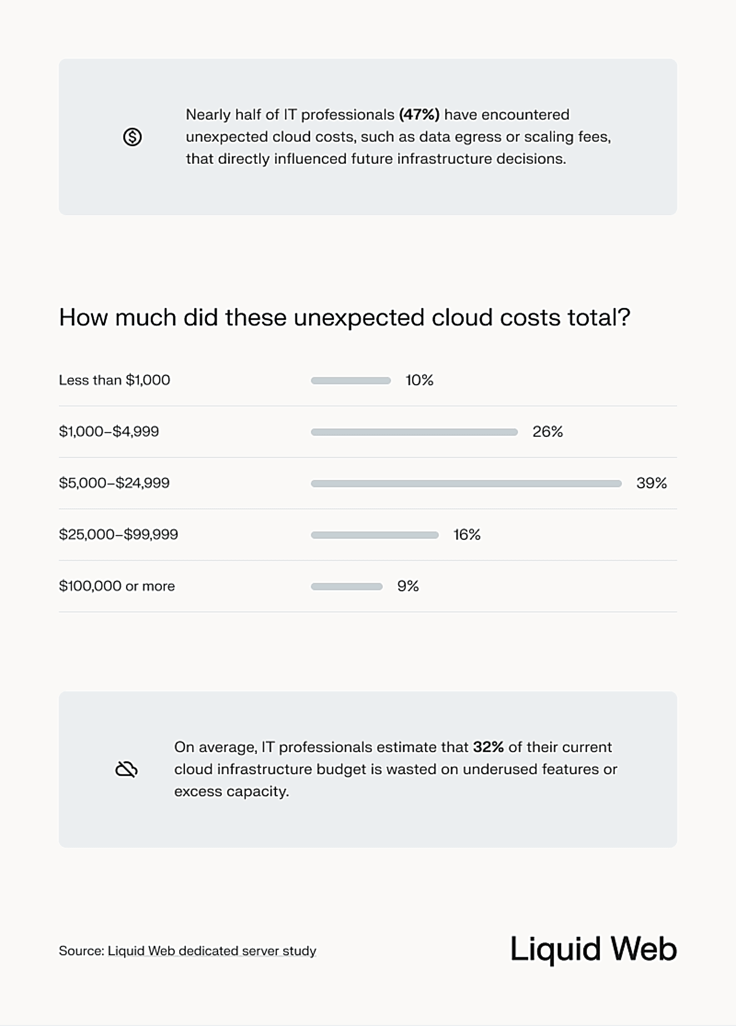
Another 32% said they were concerned about how much wasted resources they were seeing. It may be why one-third of respondents increased their spending on dedicated infrastructure in 2024, which is more than they were doing in 2022 or 2023.
Customization is another major factor.
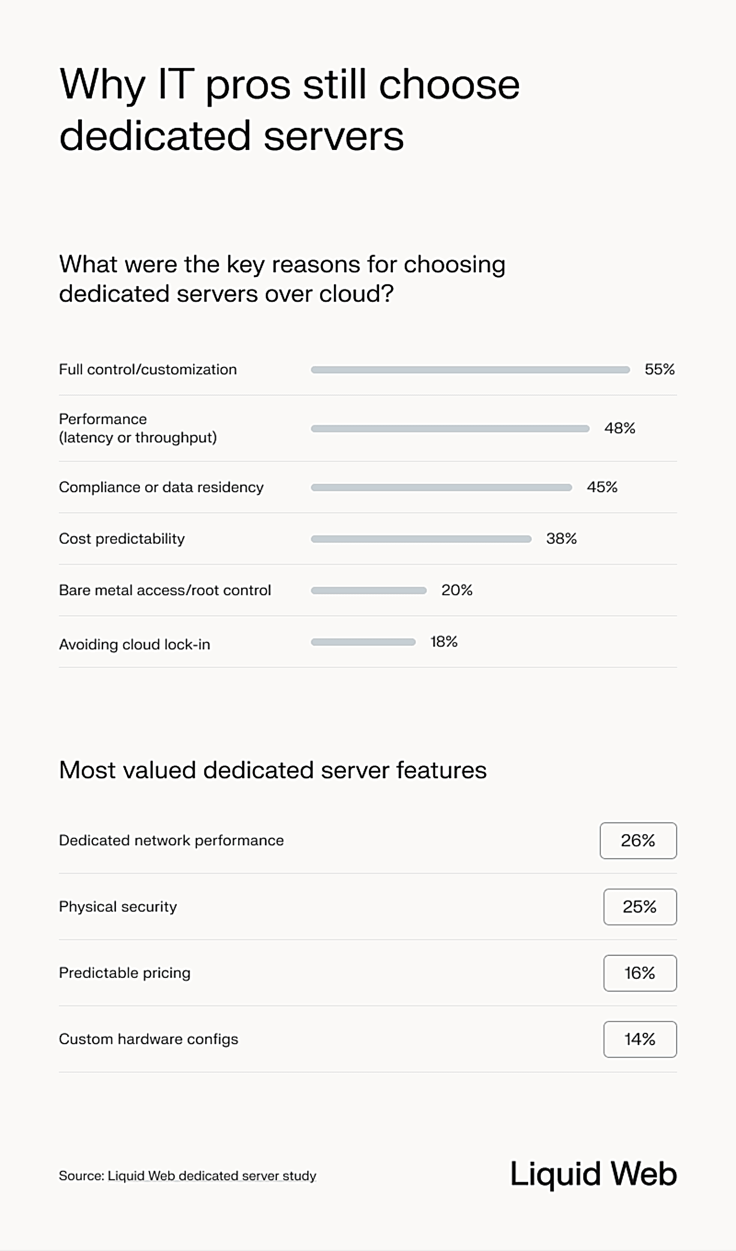
While the cloud is great at scale, it doesn’t have the same kind of flexibility in other ways that dedicated hosting allows. More than half of respondents said that full customization was their top reason for choosing dedicated hosting. Others cited network speed, physical security, and predictable pricing.
The Future is Dedicated
Looking ahead, 45% of respondents believe that dedicated servers will increase in popularity over the next five years.
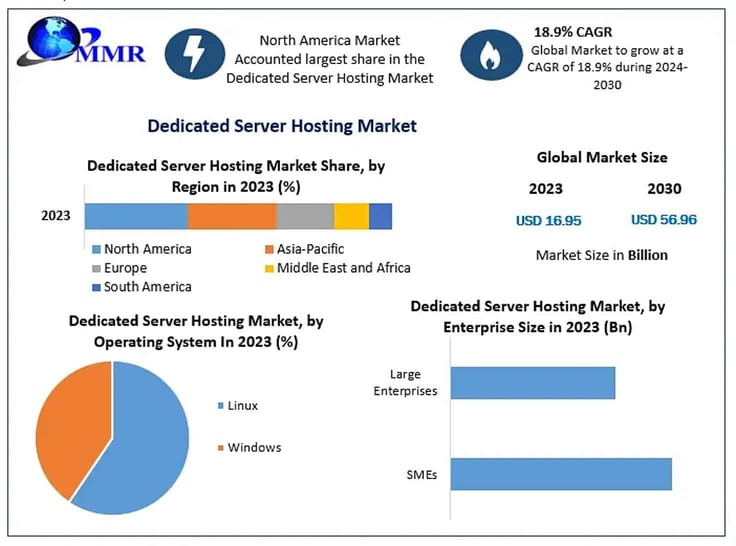
The market seems to agree: In 2023, the dedicated server hosting market was valued at $16.95 billion. Analysts suggest it will reach $57 billion or more by 2030.
Another 36% of respondents believe demand for dedicated servers will stay the same — likely reflecting those who either don’t need dedicated resources or still underestimate their role in modern infrastructure.
This isn’t as uncommon as one may think. As one anonymous respondent put it: “They think everything is in ‘the cloud’ now and don’t realize that cloud often is someone else’s dedicated server. There’s a huge misunderstanding about where data physically lives and who manages the security and uptime.”
This isn’t just that person’s perception; other analysts have noted that non-technical stakeholders or leaders still interpret “the cloud” as a monolithic answer, expecting it to solve all issues.
One Deloitte report found a 14.5% point gap between organizations’ stated cloud priorities and how well they say they’re actually achieving them. Another report by CSO Online found that more than half of security leaders did not understand the security risks tied to moving legacy apps into the cloud.
Nearly half of those surveyed also said they use dedicated servers for web hosting. This is an opportunity for hosting providers to act as a partner that actually wants to understand their clients’ needs. And those needs are loud and clear.
For one, cloud cost fatigue is very real, and clients are tired of not understanding what they’re paying for. It’s a great time to highlight transparent billing, like flat-rate pricing and performance guarantees.
The other huge point of contention is that highly sensitive industries never seem to fully trust the cloud, even if they tried a private or hybrid model. Dedicated servers are obviously the best route for security, privacy, and compliance, and hosts offering those services should triple-check they’re compliant with regulations like SOC 2, HIPAA, and so forth.
Of course, not everyone is the “right” fit for sole dedicated hosting. For example, a client concerned about cost but who likes the flexibility of the cloud could be a great candidate for a dedicated plan with virtualization environments.
Because the job of a host isn’t just to sell server space; it’s to help guide their clients to the right decision. Show them where dedicated makes sense and be honest when it doesn’t.
