


























Choosing the Best VPS Hosting Plan for Your Needs

Laura Bernheim
Contributing Expert
Choosing the right VPS hosting provider can make a real difference in your website’s performance, flexibility, and long-term growth. VPS hosting gives you more power and control than shared hosting without the higher cost of a dedicated server.
Below, we explain how VPS hosting works, how it compares to other hosting types, and how to choose the best VPS plan for your needs.
VPS vs. Shared vs. Dedicated Hosting
VPS hosting sits between shared hosting and dedicated servers, offering a balance of performance, control, and cost.
| Feature | Shared Hosting | VPS Hosting | Dedicated Hosting |
|---|---|---|---|
| Resources | Shared | Allocated virtually | Fully dedicated |
| Performance | Basic | High | Very high |
| Control | Limited | Root access available | Full control |
| Scalability | Limited | Scalable | Limited |
| Cost | Low | Moderate | High |
| Best For | Small websites | Growing websites | Large businesses |
VPS hosting is ideal for users who need more power and flexibility than shared hosting but aren’t ready for the cost of a dedicated server.
1. What Is VPS Hosting?
A virtual private server (VPS) is a web hosting setup that uses virtualization technology to split one physical server into multiple virtual servers, each with its own dedicated resources like CPU, RAM, and storage.
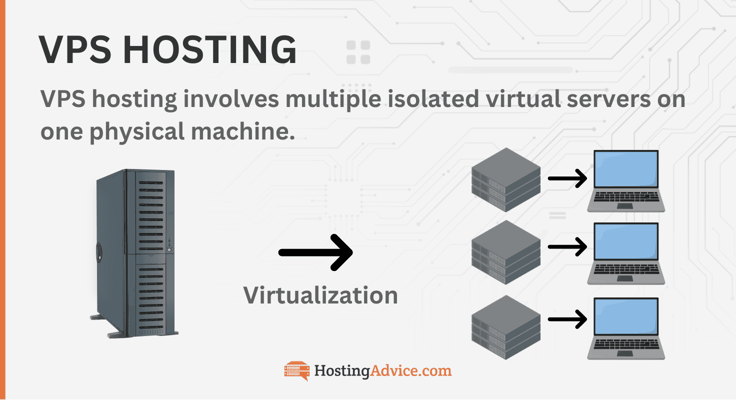
Because each VPS operates independently, users get better performance, control, and reliability than they would with shared hosting. VPS hosting is often a smart middle ground between shared hosting and dedicated servers, making it a popular choice for growing websites, developers, and businesses.
2. What’s the Difference Between VPS Hosting and Cloud Hosting?
VPS hosting and cloud hosting can seem similar, but they work differently.
A VPS uses a virtualized slice of one physical server, while cloud hosting draws resources from a network of connected servers. As a result, cloud hosting offers greater flexibility and redundancy, while VPS hosting usually comes with steadier pricing and easier resource management.
The biggest differences usually come down to:
- Scalability: Cloud hosting is built for on-demand scaling, while VPS hosting typically uses fixed resources that can be upgraded as needed.
- Availability: Cloud hosting offers stronger redundancy because it draws from multiple servers instead of one machine.
- Pricing: VPS hosting usually has fixed monthly pricing, while cloud hosting may use variable usage-based billing.
VPS hosting is often the better fit for users who want stable pricing and dedicated virtual resources, while cloud hosting is ideal for projects that need rapid scaling and higher redundancy.
3. What Is Managed VPS Hosting?
Managed VPS hosting is a service where the hosting provider handles the technical aspects of server management for you.
This often covers operating system updates, security patches, monitoring, backups, and performance tuning. Managed VPS plans usually cost more than unmanaged options, but they can save you time and ease the technical load if you don’t want to manage a server yourself.
Managed VPS hosting is a strong option for businesses, growing websites, and users who want the flexibility of VPS hosting without taking on full server administration.
A newer option, AI-managed VPS hosting, includes an AI assistant that can handle server tasks through natural language chat — from monitoring resources to adjusting security settings — which makes VPS easier to use for people without extensive server administration experience.
4. What are the Advantages of VPS Hosting? Who Uses It?
VPS hosting offers a strong balance of performance, control, and affordability. It gives users dedicated virtual resources without the cost of renting an entire physical server.
Common advantages of VPS hosting include:
- Better performance than shared hosting
- More control over server settings and software
- Greater scalability as your website grows
- Improved reliability and security isolation
- More flexibility for developers and businesses
VPS hosting is often used by growing websites, eCommerce businesses, developers, agencies, and anyone who needs more power than shared hosting can provide.
If your website is outgrowing shared hosting or needs custom configurations, VPS hosting is often the next logical step.
VPS hosting is a strong fit for:
- Growing websites and businesses
- Developers and technical users
- eCommerce stores
- Agencies managing multiple websites
- Users who need custom software or server settings
For many sites, VPS hosting is the upgrade path between beginner-friendly shared hosting and high-cost dedicated infrastructure.
5. How to Choose the Best VPS Hosting Plan for You?
When choosing a VPS hosting plan, focus on performance, scalability, and ease of management.
Key features to look for include:
- Dedicated CPU, RAM, and storage
- SSD or NVMe storage for faster performance
- Root access and operating system flexibility
- Managed or unmanaged options
- Reliable uptime guarantees of 99.9% or higher
- Strong customer support
Linux VPS Hosting
Linux VPS hosting is the most common option and is a strong fit for most websites, applications, and development environments. It offers flexibility, strong compatibility with popular software, lower licensing costs, and is now widely available with fast NVMe SSD storage as standard.
Windows VPS Hosting
Windows VPS hosting makes the most sense if you need Windows-specific applications, Microsoft technologies, or a Windows-based server setup. If you don’t have a clear reason to use Windows, Linux is typically the more practical option.
WordPress and Reseller VPS Hosting
Some VPS plans are optimized for specific use cases. For example, WordPress VPS hosting may include caching, security tools, and managed updates, while reseller VPS hosting often includes white-label tools and client management features.
The best VPS hosting plan for you depends on your website’s traffic, technical needs, and how much control you want over the server environment.
6. How to Find Cheap VPS Hosting?
Finding cheap VPS hosting is about balancing cost with performance, support, and reliability.
Budget VPS plans can be a good fit for developers, students, and smaller projects, but the cheapest option is not always the best value. Entry-level plans often come with tighter resource limits, so it’s smart to compare CPU, RAM, storage, and support before you commit.
Free trials do exist — Kamatera, for example, offers a 30-day free trial with $100 credit — but most come with tradeoffs such as limited performance, weak support, or restrictive terms.
If you’re running a serious website or business, it’s usually worth paying for a VPS plan that offers reliable uptime, solid support, and room to scale as your needs grow.
7. When Should You Upgrade to VPS Hosting?
You should consider upgrading to VPS hosting when shared hosting no longer provides the performance or flexibility your website needs.
Common signs include:
- Slower load times or performance issues
- Growing traffic levels
- Need for custom software or server configurations
- Hosting multiple websites or applications
- Greater security or compliance requirements
If your website is growing and shared hosting feels limiting, VPS hosting can provide the extra resources and control you need without requiring a dedicated server.
Choose a VPS Host That Can Grow With You
VPS hosting gives you more power, flexibility, and control than shared hosting while remaining more affordable than a dedicated server. For many websites and businesses, it’s the ideal next step when performance and scalability start to matter more.
Scroll up to compare the best VPS hosting providers and choose the right plan for your website, application, or business.