




Long before customers can buy anything from your online store, you’ve got to wander through the aisles and peruse the best hosted shopping cart options. The eCommerce software you choose will not just affect a visitor’s experience and checkout process, but also your patience and sanity when it comes to design, implementation, and management.
In 2017, customers abandoned nearly 80% of their shopping carts and left a site without finishing a transaction. While only about 10% of those carts were ditched because of a long or confusing checkout process, merchants have a huge opportunity to increase revenue and engage patrons.
Whether you’re looking for a hosted or self-hosted shopping cart, or even an all-encompassing eCommerce web hosting plan, we’ve reviewed the industry’s top choices and answered some of the space’s most confusing questions. Read on to learn more, or click on a link below to skip ahead.
Best eCommerce Web Hosting With a Shopping Cart
Fully hosted solutions do their best to offer all the easy-to-use tools a new business owner may need to start, grow, and advertise their brand online. However, are you sure you can trust eCommerce specialists to offer the best programs for blogging? Email marketing? SEO? What about the nitty-gritty technical details associated with performance optimization, reliability, security, and networking?
To us, online success starts with the machines storing and serving up your website. We think you should be able to pick and choose which software to use and be able to rely on trustworthy tech support teams that are available at any moment of the day. Page load speed is incredibly important to eCommerce, which is why our recommended path is to sign up with a top-notch hosting provider that can help you do it all.
Even better, this DIY approach to creating your online store is often the cheapest — and we know the cost of building a website can be majorly important to a brand-new business venture operating on a tight budget. eCommerce hosting is surprisingly affordable, and many of the open-source software options (that you can learn about later in this article) are available for free as an easy one-click installation. Take a look at our four favorite eCommerce hosting options below:


- Best for new stores wanting a fully managed WooCommerce setup
- Recommended by WordPress.org, LiteSpeed, NVMe, free CDN
- Kodee AI agent manages products, orders, and updates
- Object cache reduces store response times by up to 3x
- Daily backups, malware scanning, DDoS protection, free SSL
- Get started on Hostinger now.


Sead Fadilpasic


As the shared hosting market has become more saturated, things like unlimited storage, bandwidth, and email accounts have become the norm.Hostinger, however, goes above and beyond the norm by also giving users an unrestricted number of websites, databases,...
Go to full review »| Money Back Guarantee | Disk Space | Domain Name | Setup Time |
| 30 days | 50 GB – 100 GB NVMe | FREE (1 year) | 3 minutes |
2. Shopify.com

- Best for stores prioritizing conversion — checkout beats competitors by up to 36%
- Sidekick AI assistant helps run and grow your store
- Sell on social, marketplaces, POS, and Shop app
- 8,000+ apps in the Shopify App Store
- 3-day free trial, no credit card required
- Get started on Shopify now.


Toby Sembower


The great thing about Shopify is how the feature set centers around ecommerce, a focus of many shared hosting shoppers.Shopify plans are fully hosted, but most of the company's plans are significantly more costly than a majority of the shared hosts we've come...
Go to full review »| Money Back Guarantee | Disk Space | Domain Name | Setup Time |
| 3-Day FREE Trial | Unlimited | FREE Subdomain | 5 minutes |

- Best for budget-conscious stores on enterprise Google Cloud infrastructure
- Save up to 83% — limited time offer
- Google Cloud, multilevel caching & 170+ CDN edge points
- AI bot protection stops 95% of malicious traffic automatically
- Autoupdates for WordPress, WooCommerce, PHP, and MySQL
- Get started on SiteGround now.

Lynn Cadet


The legendary WordPress experts at SiteGround have extended their expertise to online stores delivered through WooCommerce. Enjoy managed updates and industry-leading support with SiteGround’s cloud-driven infrastructure.
Go to full review »| Money Back Guarantee | Disk Space | Domain Name | Setup Time |
| 30 days | 10 GB SSD - 100 GB Google Cloud SSD | FREE (1 Year) | 6 minutes |
4. Bluehost.com

- 16 premium WooCommerce plugins installed, a $1,200+ value
- Recommended by WordPress.org, 99.99% uptime SLA
- AI-powered store builder — go live without coding
- 0% transaction fees, keep every dollar you earn
- DDoS protection, WAF, malware scanning, and daily backups
- Get started on Bluehost now.
Sead Fadilpasic
Trusted by millions, Bluehost is an excellent choice to host your ecommerce-focused website — especially if you’re a fan of WordPress and WooCommerce. The hosting company offers a free domain the first year, with tons of easy installations for shopping...
Go to full review »| Money Back Guarantee | Disk Space | Domain Name | Setup Time |
| 30 days | 10 GB NVMe SSD | FREE (1 year) | 5 minutes |
See other top eCommerce hosts »
Best “Hosted” Shopping Cart Software
If all that hosting setup seems a bit too daunting, a hosted shopping cart or eCommerce software may be the way to go. These types of systems combine everything into one solution, from design templates and inventory tracking to payment processing and online marketing. The benefits of eCommerce platforms can bring peace of mind to tech-averse entrepreneurs who simply want to maximize the time spent on their business and minimize any potential hosting headaches.
Comprehensive services from companies like BigCommerce resonate with some of the biggest brands in the world — but they can be much too complicated for someone just starting out. To help beginners dip a toe into the eCommerce pool, we’ve identified the top five fully hosted shopping carts for small or medium businesses and ranked them below.
5. Wix
Known as a top-tier website builder, you may be surprised to know that the masters of drag-and-drop design are actually quite adept at helping turn your website into a webstore. Wix excels at providing tons of visually impressive and mobile-ready templates, each highly customizable and tailored to an array of specific industries.
Wix’s business tools cover appointment bookings, music and image sales, ticket sales, and event management. For more traditional online stores, the company helps you track orders and manage inventory while beautifully displaying your physical or digital products. We appreciate that Wix enables business owners to accept a wide range of payment methods, set customized tax and shipping rules, and create coupons or discounts.
5. Wix.com

- AI website builder with 900+ ecommerce templates
- Sell tickets, subscriptions, bookings, and digital products
- Dropshipping, print-on-demand & multichannel selling built in
- Buy now, pay later — Afterpay, Klarna, and more
- Built-in CRM, email marketing, and abandoned cart recovery
- Get started on Wix now.
Lynn Cadet
As a leader in drag-and-drop website design, Wix is unsurprisingly near the top of our list when it comes to easily launching vibrant online stores. Wix’s user-friendly interface includes advanced ecommerce services for dropshipping, loyalty programs,...
Go to full review »| Money Back Guarantee | Disk Space | Domain Name | Setup Time |
| 14-day FREE trial | 2 GB - Unlimited | FREE (1 year) | 4 minutes |
6. Shopify
When Shopify’s founders set out to create an online store to sell their snowboarding equipment, they found the slopes a bit challenging. They wanted to build their own brand and have relationships with customers instead of simply listing products on a major marketplace, but that tool didn’t exist. Naturally, they set out to build their own platform and eventually shared it with the world.
Now, Shopify powers more than 800,000 stores and is behind more than $100 billion in sales. The platform helps business owners through every aspect of their venture, from branding and creating an online presence to managing multiple sales channels. You’ll pay a slight premium for Shopify, but we love how the company packs as many features as possible into even its entry-level package.
6. Shopify.com
- Best for stores prioritizing conversion — checkout beats competitors by up to 36%
- Sidekick AI assistant helps run and grow your store
- Sell on social, marketplaces, POS, and Shop app
- 8,000+ apps in the Shopify App Store
- 3-day free trial, no credit card required
- Get started on Shopify now.
Toby Sembower
The great thing about Shopify is how the feature set centers around ecommerce, a focus of many shared hosting shoppers.Shopify plans are fully hosted, but most of the company's plans are significantly more costly than a majority of the shared hosts we've come...
Go to full review »| Money Back Guarantee | Disk Space | Domain Name | Setup Time |
| 3-Day FREE Trial | Unlimited | FREE Subdomain | 5 minutes |
7. Volusion
With two decades of eCommerce experience, Volusion is a user-friendly force to be reckoned with. The streamlined platform is designed for growth, boasting cloud-backed hosting services that scale as your product portfolio and orders increase. Volusion got its start as a web design and development firm, meaning its service is rooted in sound tech principles.
Perhaps most noteworthy, Volusion is one of the few hosted shopping cart solutions to provide support from a real, live person. All too often, website builders and eCommerce systems relegate technical assistance to the organization’s community forums or online knowledge base instead of staffing and training a team to personally respond to your queries. Volusion’s Austin-based eCommerce experts are on standby 24/7 to help with support, web design, marketing, and other aspects of your store.
7. Volusion.com

- Everything you need to grow an online store
- Drag-and-drop store builder and FREE themes
- FREE payment processing, shipping, and inventory
- Marketing with discounts, newsletters, and more
- Unlimited bandwidth and tools for SEO
- Try Volusion FREE for 14 days.

Laura Bernheim


Volusion packs everything you need to build a powerful online store presence into competitive bundles. Start with a drag-and-drop editor and create categories for unlimited products. Enjoy easy-to-use inventory and order management tools, payment processors,...
Go to full review »| Money Back Guarantee | Disk Space | Domain Name | Setup Time |
| 14-Day FREE Trial | Unlimited | New or Transfer | 5 minutes |
8. Weebly & Square
We’re awfully intrigued by the integration of Weebly and Square, which bought the drag-and-drop website builder in mid-2018. Weebly, which is included for free with a handful of web hosting plans (ahem, Bluehost), has long been known for providing one of the easiest visual editing and design experiences around. The company is one of the most attractively priced options for a hosted shopping cart, making Weebly an appealing option for pop-up stores and entrepreneurs just striking off on their own.
Square, already masters of payment processing, entered the fray to combine Weebly’s strong templates with its fast and professional technology. Entrepreneurs won’t be locked into only using Square and can accept payments through Stripe and PayPal, as well. Our only gripe, however, comes with the transaction fees associated with every purchase; most other platforms keep those at bay.
8. Weebly.com

- Quickly create stores via drag-and-drop editor
- Hundreds of ready-made themes available
- Fully integrated shopping cart and secure checkout
- Inventory tracking for you, filtered search for customers
- Get a complete mobile store, too!
- Get started on Weebly now.

Alexandra Anderson


Weebly is one of the internet’s most trusted website builders, included for free in many of the top eCommerce hosting plans. Get started with the robust eCommerce store builder platform and display, sell, and manage digital or physical good and services...
Go to full review »| Money Back Guarantee | Disk Space | Domain Name | Setup Time |
| 30 days | 500 MB - Unlimited | FREE (w/ paid plans) | 3 minutes |
Best “Self-Hosted” Shopping Cart Software
Not finding the design template or exact functionality you had in mind? While hosted shopping carts and eCommerce website builders help small businesses minimize headaches and get online quickly, the one-size-fits-all approach doesn’t work for everyone. Entrepreneurs who opt for eCommerce hosting will need to pair their environment with one of the applications listed below. There may be a little more time involved with the setup process, but these open-source programs (read: FREE!) are typically available as one-click installations that give you the ultimate flexibility to do exactly what you want with your store.
eCommerce experts may notice a few brands missing from our upcoming list. Zen Cart and osCommerce are well-known, highly respected industry veterans that, in our opinion, have started to show their age. The open-source carts still have massive followings and active support communities, but we’re ready to move on to more modern applications with increasingly nimble features and lightweight, secure code. Read on to find out more about our favorite self-hosted shopping cart software programs.
9. WooCommerce
We hate to start off this list with a specialized product that needs to run in a certain environment, but the ubiquity of WordPress and the sheer impressiveness of WooCommerce make the free plugin a go-to option for business owners. WooCommerce seamlessly adds eCommerce functionality to WordPress websites, using the same user-friendly dashboard interface to run your store as you’ve learned to run your website.

Hosting your store with WooCommerce handles the basics for beginners, and more intrepid entrepreneurs can push forward with extensions for marketing, shipping, and other enhancements. Scaling your store and adding advanced functionality may get a little complicated for clueless merchants, but a strong WordPress hosting plan typically comes with the support and resources to make WooCommerce easy to manage.
10. PrestaShop
Originally started as a student project in 2005, PrestaShop has grown rapidly to serve more than 270,000 merchants. The open-source eCommerce system isn’t tied to a particular content management platform or website builder and comes with all you need to succeed and grow your business. Various plugins, extensions, and themes are available, but we don’t think you’ll need them — PrestaShop even comes with analytics and customer service tools, in addition to the typical product management, marketing, and shipping features you’d expect.

First-time store owners will especially enjoy PrestaShop, which is easy to install, configure, launch, and grow. We find its management portal to be beautiful and effortless to operate, and we love that the same attention to design extends to its theme marketplace — users can choose from more than 4,500 stunning templates.
11. Magento
Another big name in the world of eCommerce, Magento is a bit of a love-hate experience. The platform undeniably has the most built-in features and scalability opportunities to offer entrepreneurs, but beginners can get overwhelmed or stuck in the mud in no time. The company made a major splash when it launched publicly in 2008 but has stumbled a bit at times. Now owned by Adobe, Magento seems more focused on large organizations.

However, Magento continues to maintain and support its open-source edition, which is perfect for startups and motivated sellers with big dreams. The platform’s page builder will help you create a professional-looking storefront and product pages, and robust business intelligence and order management tools will provide the oversight to guide your business strategies.
12. X-Cart
Founded in 2000 by a development company that would later go on to work on the Ecwid eCommerce platform, X-Cart was the world’s first PHP-based shopping cart software. Unlike osCommerce and ZenCart, however, the program has aged surprisingly well, thanks to frequent updates and attention to performance.

Because it’s written in PHP, X-Cart is remarkably similar to WooCommerce and even integrates with WordPress. The open-source code gives development-minded business leaders unlimited potential for customization, but we understand that may not appeal to many. That said, we appreciate X-Cart’s comprehensive approach to design, page load speed, conversions, and detail-oriented features.
13. Drupal Commerce
Regularly compared with UberCart in terms of adding shopping cart functionality to the Drupal content management system, Drupal Commerce is a somewhat more modern platform that’s actually written by the author of UberCart. While the former can claim the perks of being the original, we tend to lean toward the more robust features of the latter. UberCart is generally considered easier for beginners to use, but we figure if you’re savvy enough to use Drupal, you probably want to be able to dig into the nitty-gritty details of your online store.

Developers will feel right at home with Drupal Commerce, which features built-in caching and security systems. However, be aware of a steep learning curve and the ability to accidentally customize yourself into owning a resource hog of a store. To combat this, Drupal Commerce needs a top-notch host, potentially even with a VPS or cloud server.
14. CubeCart
Entering the market in 2003 in a bid to simplify the world of self-hosted eCommerce solutions, CubeCart offers a refreshingly simple platform with a surprising number of features. The interface may feel a bit outdated when compared with some of the other shopping carts on this list (stores use skins, not templates), but beginners can breathe a sigh of relief. CubeCart’s code is regularly audited for security vulnerabilities and enables entrepreneurs to host an unlimited number of products, orders, categories, and store administrators.
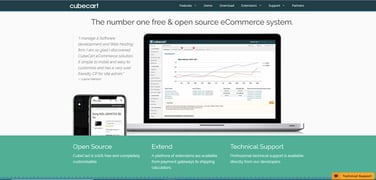
There’s not a true wow factor with CubeCart, but sometimes the best tools are the ones that simply get the job done. Small business owners will enjoy the UK-based shopping cart’s balance between functionality and ease of use. CubeCart supports plugins for those who wish to extend their site, but we found the platform strong enough to stand on its own and help businesses find their niche.
15. OpenCart
OpenCart takes a refreshing approach to shopping cart management, boasting a lightweight and nimble codebase and an extremely easy-to-use dashboard. The roster of available features doesn’t stack up next to Magento, but the system comes with more functionality and less reliance on plugins than WooCommerce. Store owners can still extend their site with modules, but more experienced developers might prefer more customization options.
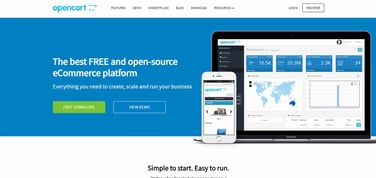
OpenCart’s quick learning curve should appeal to startups, given the platform’s short time-to-launch design. What’s more, the intuitive and sleek interface gives users powerful insight into business operations and opportunities. We tend to prefer PrestaShop for beginners, but OpenCart is a very cost-effective alternative.
What is a Hosted Shopping Cart?
We’ve thrown a lot of shopping cart systems at you, so it’s OK if the options seem a little overwhelming. Let’s take a step back and look at how the programs are organized. The first step is learning where your online store and associated systems will reside. Do you want a hosted or self-hosted solution?
Hosted shopping carts are managed and maintained by the company that creates them. You’ll still have the ability to choose and customize templates and various features, but your options might be somewhat limited when compared with self-hosted tools. Hosted eCommerce platforms remove a lot of the technology hassles but can be more expensive.
Self-hosted shopping carts are programs you need to host and maintain on your own servers. You get total access to your store’s settings and configurations, usually along with the actual source code. These open-source programs are usually free and available via one-click installations through Softaculous, Mojo Marketplace, and other script libraries. The absolute control can come at a price, however: Expert support isn’t a guarantee, and stores can be more complicated to set up.
Either type of platform is powerful and flexible enough to meet most entrepreneurs’ needs, so the choice must be made on a case-by-case basis. How comfortable are you with operating and overseeing a web hosting account? What’s your budget? How much time do you want to spend building your site? How much control do you want over the fine details?
What is the Cheapest eCommerce Platform?
You’d think this would be an easy question to answer. If you’re looking for the cheapest path to launching an online store, you’ll want to find the best cheap web hosting services and install a self-hosted eCommerce solution. Capitalizing on free, open-source software can be a beautiful thing for your budget. For the most affordable eCommerce hosting, we can recommend a bunch of hosts:

- $0.01 first month with coupon code HOSTINGADV
- $2.50/month after. No contracts or increases
- Softaculous one-click installer for WordPress and 450+ apps
- Register or transfer domains for less than $10
- InterShield security suite with AI firewall & Cloudflare CDN
- Get started on InterServer now.
Sead Fadilpasic
It's hard to argue with a shared hosting plan that includes unlimited storage, bandwidth, websites, and email — but shared hosting is a crowded industry that turns on name recognition, reputation, and bargain-basement prices. InterServer outperforms some of our higher-rated hosts, but we understand that many first-time site owners are laser-focused on finding the lowest costs.
Go to full review »| Money Back Guarantee | Disk Space | Domain Name | Setup Time |
| 30 days | Unlimited SSD | New or Transfer | 4 minutes |
- Best overall value: Nothing at this price comes close feature-for-feature.
- AI builds your site in minutes — no technical skills needed
- Up to 3 websites with free SSL
- Weekly backups and managed WordPress
- 2 business mailboxes free for 1 year
- Get started on Hostinger now.
Sead Fadilpasic
As the shared hosting market has become more saturated, things like unlimited storage, bandwidth, and email accounts have become the norm. Hostinger, however, goes above and beyond the norm by also giving users an unrestricted number of websites, databases, FTP users, subdomains, and parked domains for most plans.
Go to full review »| Money Back Guarantee | Disk Space | Domain Name | Setup Time |
| 30 days | 20 GB SSD | FREE (1 year) | 3 minutes |

- Free domain name, SSL certificate, and CDN included
- Unmetered bandwidth — no limits on traffic or storage
- 1-click WordPress install and easy cPanel control panel
- 30-day money-back guarantee, no long-term contracts
- Get 66% OFF by buying 36 months upfront
- Get started on HostGator now.


Lynn Cadet
HostGator is a solid compromise between performance and price. Its shared hosting includes unmetered bandwidth, cPanel, one-click WordPress installs, and support for domain-based email through tiered cPanel email plans, including an unlimited-mailbox option.
Go to full review »| Money Back Guarantee | Disk Space | Domain Name | Setup Time |
| 30 days | 10 GB SSD - 100 GB SSD | FREE (1 year) | 4 minutes |
However, if you’re looking for a hosted eCommerce platform, your sights and wallet will have to be set much higher. Even then, you’ll need to think about how flexible your definition of eCommerce platform is. True hosted eCommerce platforms, like Shopify and Volusion, can cost around $30 per month, while the online business solutions integrated into popular website builders are sometimes much more affordable:
- AI website builder with 900+ ecommerce templates
- Sell tickets, subscriptions, bookings, and digital products
- Dropshipping, print-on-demand & multichannel selling built in
- Buy now, pay later — Afterpay, Klarna, and more
- Built-in CRM, email marketing, and abandoned cart recovery
- Get started on Wix now.
Lynn Cadet
As a leader in drag-and-drop website design, Wix is unsurprisingly near the top of our list when it comes to easily launching vibrant online stores. Wix’s user-friendly interface includes advanced ecommerce services for dropshipping, loyalty programs,...
Go to full review »| Money Back Guarantee | Disk Space | Domain Name | Setup Time |
| 14-day FREE trial | 2 GB - Unlimited | FREE (1 year) | 4 minutes |
- Quickly create stores via drag-and-drop editor
- Hundreds of ready-made themes available
- Fully integrated shopping cart and secure checkout
- Inventory tracking for you, filtered search for customers
- Get a complete mobile store, too!
- Get started on Weebly now.
Alexandra Anderson
Weebly is one of the internet’s most trusted website builders, included for free in many of the top eCommerce hosting plans. Get started with the robust eCommerce store builder platform and display, sell, and manage digital or physical good and services...
Go to full review »| Money Back Guarantee | Disk Space | Domain Name | Setup Time |
| 30 days | 500 MB - Unlimited | FREE (w/ paid plans) | 3 minutes |
Pay Attention to Shopping Cart Reviews When Evaluating Services
Aside from the baseline features you’d expect from a shopping cart program, such as helpful product displays, secure payment processing, and order management, your decision may come down to lesser-known functionalities that either improve your store-owning experience or upgrade the customer checkout process. Here are some of those concepts to keep an eye out for:
- Upselling or cross-selling: Recommending complementary products or suggesting upgraded (read: more expensive) merchandise can add between 10% and 30% more revenue to existing sales.
- Save-for-later carts: Shoppers may not be ready to buy and want to set products aside while they research customer opinions, prices, and other options. Give them the chance to compare and evaluate, then return when the sale is a certainty.
- At-a-glance summaries: Don’t make customers wait until checkout before they can see or edit what they’ve put in the cart. They should be able to see basic information about each item so they can track their pending order while they shop.
- Product reviews: The opinions of strangers really matter in online shopping. Almost 90% of consumers say they trust online reviews as much as personal recommendations, so give your visitors the transparency they’re looking for.
- Coupons and discounts: What better way to woo new customers than by offering them a special deal? Discounts can help you showcase a particular product and compete more favorably with competitors.
- Abandoned cart reminders: Automatically remind shoppers about the products they liked but never ended up purchasing. You can recoup more sales and interact with your consumers without much of a time investment.
Just like enabling product reviews can have a tremendous impact on your site, reviews of the eCommerce platforms themselves can help you choose the best software for your online store. Given the time-consuming and patience-testing setup process associated with building and launching your brand, your shopping cart is a selection you want to make only once.
When you think about it, the positive shopping experiences you want for your customers should be reflected in your eCommerce management software. Be sure to select a shopping cart you can enjoy alongside consumers.
HostingAdvice.com is a free online resource that offers valuable content and comparison services to users. To keep this resource 100% free, we receive compensation from many of the offers listed on the site. Along with key review factors, this compensation may impact how and where products appear across the site (including, for example, the order in which they appear). HostingAdvice.com does not include the entire universe of available offers. Editorial opinions expressed on the site are strictly our own and are not provided, endorsed, or approved by advertisers.
Our site is committed to publishing independent, accurate content guided by strict editorial guidelines. Before articles and reviews are published on our site, they undergo a thorough review process performed by a team of independent editors and subject-matter experts to ensure the content’s accuracy, timeliness, and impartiality. Our editorial team is separate and independent of our site’s advertisers, and the opinions they express on our site are their own. To read more about our team members and their editorial backgrounds, please visit our site’s About page.