


Key Takeaways
On Jan. 21, Wix officially released Wix Harmony, a new hybrid website builder that combines natural language AI generation — vibe coding — with the famous drag-and-drop editing that helped propel the website builder into the mainstream.
It’s the company’s latest solution to a growing customer demand: more simple, flexible, and creative building options.
Wix has never tried to dictate how its users should build a website, but has consistently expanded the ways they can build one by letting users choose the tools that fit their needs the best.
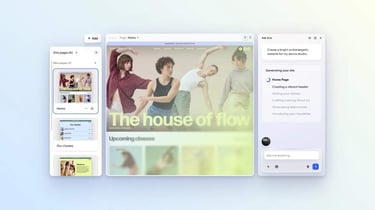
“Users describe what they want to build and then they can tap into Wix’s powerful visual editing capabilities to refine what was created to match their vision,” said Oded Nachshon, VP of Wix Editor & Wix Harmony. “What this means is that users who have no coding experience can tap into the power of complex technology that brings their vision to life.”
Vibe-style creation already exists for users who want to build through natural language processing (NLP) via Wix Vibe, while the Wix Editor and Studio offer basic and advanced hands-on, drag-and-drop control. But rather than forcing users to choose between building via prompts or visually, Wix does what it’s always done, and that’s to offer choice.

Right now, the AI website boom is selling a simple formula: describe a site, get a site, build a business. It’s probably something that will never disappear — only evolve. From a bird’s-eye view of the timeline, many consumers are sitting pretty on vibe coding.
Vibe coding is popular because it allows for NLP, so it’s the easiest way for a novice user or total beginner to build a website. All users have to do is take a few minutes in a chat-style prompt to end up with an almost finished product.
The problem, Nachshon said, is that most vibe-coding tools are optimized for the “moment of generation,” not the long-term functionality of a website. That’s why many AI vibe-coding tools look impressive at first and then show issues within, say, the next six months.
And Wix Harmony’s hybrid aspect is more than convenience, it’s also risk control. Letting its users switch between prompts and drag-and-drop lets AI get creators mostly to a finished product, but still gives them the autonomy to control the working product.
Wix Harmony also runs through Wix’s in-house generative AI agent, Aria.
“It operates inside a mature, production-ready platform that enforces stability, consistency, and performance by design,” Nachshon said. “Each element behaves like a native part of the editor and remains self-contained … That means users can move between prompting and hands-on editing without worrying that a small update will destabilize the site.”
From an infrastructure perspective, integration matters more than it might sound. Many AI builders generate sites that technically live on the same platform, but follow different build paths with their own rules and limitations.
For example, AI-generated sections may look differently in the editor than it does post-publishing. So when users try to adjust layouts or fix SEO, where it could also affect the whole rest of the site.
But Wix Harmony keeps sites on the same Wix architecture, whether built from prompts, templates, or manual design.

“AI is now essential to modern websites, shaping how businesses grow, appear in search, and engage users. With that power comes complexity,” Nachshon said. “Wix Harmony removes that complexity, making it easier to build websites that meet today’s expectations for anyone. And does it right.”
Wix Harmony will start rolling out over the next few weeks, with access expanding gradually across the platform.