


Key Takeaways
It’s been a year since the blockbuster-level unveiling of the Stargate Project, a $500 billion AI data center infrastructure facility backed by OpenAI, Oracle, and SoftBank.
The pitch was grand, promising up to 20 AI-focused data centers with 5 gigawatts of compute capacity that would start in the small manufacturing hub city of Abilene, Texas.
Oracle’s CEO, Larry Ellison, said he could foresee half-million-square-foot buildings multiplying across the country after completed. OpenAI’s Sam Altman called it “the most important project of this era.” SoftBank’s Masayoshi Son said it was the “beginning of the golden age.”
And yet, it looks like no movement has been made. Recent reports seem to confirm that Stargate has failed to secure a data center deal or make any new hires, stemming from disagreements between partners over funding, ownership, and execution strategy.
“Hardware Is Hard”
Although it looks like an unusual slow to the Stargate Project, this may actually be par for the course.
Training models — something OpenAI has the most familiarity with — and actually building that infrastructure is not the same business. It’s why OpenAI leans so heavily on Oracle, which already operates large-scale cloud infrastructure.
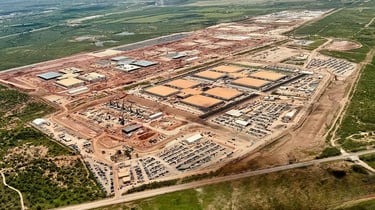
Building and operating entire facilities requires land acquisition, power contracts, grid approvals, and so many more bureaucratic red tape processes. Renting is more like signing a contract and then getting started.
And yet, on social media, critics have been nothing short of vocal. One Threads user wrote that OpenAI “wants Google distribution and money… but they are just an API on other people’s compute.”
Actually, Google’s a great comparison.
Similar to Stargate’s goal, Google built its own data centers, networking hardware, AI chips, cloud platform, and the fun consumer-facing products like YouTube and Search. But Google didn’t openly announce a $500B monumental buildout. It spent decades securing all of the right partnerships and hardware.
Elon Musk weighed in on X: “Hardware is hard.”

He’s not wrong, of course. Stargate would be vertically integrated, meaning that it would own more of its stack than relying on outside partners, like Google. Basically, instead of ordering a pizza from Frank Pepe’s, you’re buying a flour mill, a tomato farm, cows, and an oven.
The opposite is horizontal integration.
This is a common approach in today’s AI age, where companies focus on one layer of their stack and partner for the rest. For years, OpenAI did exactly this. It built models that ran on rented infrastructure from Azure.
Maybe OpenAI’s approach is to become the “next big player.” And what better way to start than building the world’s first mega-sized AI data center facility that’s the size of Central Park?
But now, the question is whether the site will live to see the day of reveal or will fade into history as a case study for the difficulties of vertical integration.