


Key Takeaways
OVHcloud recently launched a brand-new Environmental Impact Tracker that lets users track and measure the full carbon footprint of their infrastructure life cycle, from manufacturing and delivery to end-of-life and refurbishing parts.
The tool is available to those who use OVHcloud’s Bare Metal, Hosted Private Cloud, and Public Cloud Compute services, with Web Hosting and Storage coming soon. U.S.-based customers don’t have access yet, but a broader rollout is also expected.
Grégory Lebourg, Global Environmental Director at OVHcloud, spoke about the July 8 rollout, emphasizing that it reflects the company’s belief that sustainability must be built into every layer of infrastructure.
“[A]ccurately and transparently assessing your environmental footprint is no longer an option — it’s a responsibility,” said Lebourg. “As a committed player, we support our customers in understanding and controlling their impact.”
OVHcloud described the Environmental Impact Tracker as an advanced version of its 2023 carbon calculator tool. Its newer features include:
- A detailed view of carbon emissions across the full life cycle of cloud infrastructure, including manufacturing and how hardware is used
- Inventories Scopes 1, 2, and 3 emissions and breaks down the impact on the components and energy used
- A benchmarking feature that compares OVHcloud’s emissions data to general market averages (which has been independently measured by digital sustainability firm IJO)
- Calculate usage-based emissions in two ways: on national energy averages and on the actual electricity providers OVHcloud partners with
Upcoming additions will go beyond carbon to include water consumption, abiotic resources (such as metals and minerals), and land use impact.
“We support our customers in understanding and controlling their impact. That’s why we’re continually improving our Environmental Impact Tracker, a true market benchmark, recognized for its methodological rigour and completeness,” said Lebourg.
Facing the Sustainability Paradox
A major criticism of today’s infrastructure is its reliance on nonrenewable resources. Data centers alone account for 1-1.5% of global electricity use, much of which is still powered by fossil fuels.
As a result, public pressure on manufacturers and providers to take responsibility for the kind of environmental impact they’re creating has increased.
While some are integrating some level of sustainability into their processes, many aren’t yet prioritizing it. Some researchers warn of “techno-optimism.”
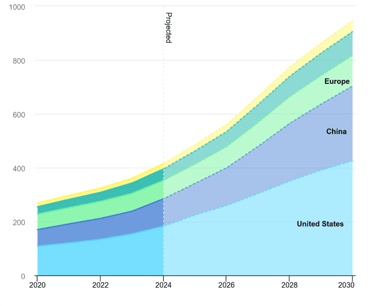
Techno-optimism is the belief that technology can solve problems and improve one’s way of life. Generative AI, for example, is widely promoted as a fix-all solution — promising things like lower costs, higher efficiency, more revenue, and happier customers.
But the overreliance on digital tools is part of the problem, only creating a paradox where the infrastructure needed to support these platforms is still extremely energy-intensive.
Perhaps ironically, those same technologies are now being deployed to mitigate the very damage it creates. AI-driven tools like predictive maintenance, resource allocation, and energy usage optimization are becoming standard across hosting platforms, CMSes, and builder ecosystems.
OVHcloud’s tracker is an example of that change. And instead of treating sustainability only as a value-add tactic, it breaks down where emissions are generated and even provides insight on how to reduce consumption.
Once released, it’ll be a big win for hosting providers, both as a sustainability marketing asset and as support for meeting ESG requirements.
It’s as Lebourg said: “We are determined to pursue our commitments to contribute to a more sustainable and responsible cloud industry.”