


Key Takeaways
- AI investments are showing warning signs: A large percentage of new data centers in China are idle, and only a small number of companies see tangible ROI.
- Have we been here before? The current AI boom risks repeating the dot-com bubble, with speculative investments potentially outpacing actual market demand.
- Make the most of what you have by focusing on optimizing existing infrastructure through strategies like decentralized computing and digital twin technologies.
A report by MIT shows that 80% of newly constructed data centers in China are sitting idle. Meanwhile, only 25% of companies are seeing tangible value in their AI investments.
Different sources, markets, and demographics — sure. But is it a suggestion that the current AI “gold rush” may be outpacing actual demand?
Across the globe, cracks are starting to show, including several major hyperscalers that have slowed down their otherwise aggressive AI data center plans.
Some professionals in the industry believe we’re just witnessing a pause, not necessarily a collapse. Others warn that the industry is moving toward a bust, like the dot-com boom 25 years ago.
Are we flying too close to the sun like Icarus? Maybe. One possible solution is for investors and organizations to stop pouring money into the AI data center space as if they have FOMO.
While AI undoubtedly has long-term potential, early signs suggest we may be headed for a classic cycle of “overbuild and reassess.” Here’s what industry experts — and history — are telling us.
Signs of a Slowdown
In the U.S., hyperscalers are still spending heavily on their AI data center structures, but it appears to be done with whispers of reassessments:
- Microsoft reported $21.4 billion in CapEx for Q1 2025, down from $22.4 billion the previous quarter.
- AWS paused some data center lease deals (though leadership insists long-term demand remains strong).
- Meta mentioned tariff-related uncertainty after reporting a drop in quarterly profits.
- Apple warned that tariffs could cost the company $900 million this quarter.
John Carrafiell, CEO of global real estate investment manager BGO, doesn’t think these are signs of a bust.
“We’re not seeing a retreat from demand but a strategic reallocation,” said Carrafiell. “Rather than a bust, this is a reshuffling of the deck… We aren’t even in the first inning yet.”
It’s a fair point, especially given the recent U.S. tariffs. But while some experts are optimistic, others believe AI’s investment expectations may be moving a bit too far ahead.
Adi Andrei, co-founder of AI/ML company Technosophics, predicts that the genAI bubble may be nearing a burst.
“The influx of money pumped into Gen AI without clear ROI has inflated expectations to unsustainable levels,” Andrei told Forbes.
Similarly, Google’s CEO, Sundar Pichai, warned at the end of last year that AI advancements may feel slower in 2025 since the “low-hanging fruit” has already been picked.
That low-hanging fruit is the early applications everyone flocked to at first — the copilots that could summarize text or help write code. They’re so simple to deploy and, of course, offer instant user value.

But the next wave — the business wave — demands a lot more, suggests Melissa Farney, a 20-year data center leader and marketing veteran.
In her opinion-editorial for Data Center Frontier, she asked: “The societal adoption makes sense, but what about the business application, where there is real money to be made?”
A majority of companies say they’re not seeing tangible value from their AI investments. So what exactly are we building for? Curing cancer? Colonizing Mars? Creating a greener world?
“[T]his technology is only profitable if there are paying customers and revenue growth that follow. Serious startup capital is being spent on applications of this technology that the market may not be ready to support.”
Have We Been Here Before?
It’s tempting to jump on the next passing trend.
And how could you not want to? James Penny, Chief Investment Officer at TAM Asset Management, noted companies that even mention AI in their earnings are seeing boosts in their share price.
But to some, it’s oddly reminiscent of another speculative investment bubble some of us have seen before, as AOL co-founder Steve Case suggests.
“There’s a frenzy to invest early, reminiscent of the dotcom era, as investors don’t want to miss out on what is undoubtedly the next big thing,” Case said.
Penny also warned that it “smells very much like the dot-com era,” adding, “I think the market has got a little bit over its skis. I’d put much larger odds on it coming down from here.”

In 1999, the internet saw its first big hype wave: As the web went mainstream, investors flocked to fund internet startups.
This move made infrastructure companies race to build data centers and extensive networks, solely betting on rumored demand.
When the hype died down, so did the revenue. Stock prices tanked basically overnight, wiping out trillions in market value. Only a few companies, like Amazon and eBay, survived.
Make the Most of What You’ve Got
Having several data center locations is great for optics, but it doesn’t make sense if they’re not being used at full capacity.
The first step any data center operator or hosting provider should take is to optimize their existing resources and infrastructure.
Think of it as the infrastructure equivalent of “We have McDonald’s at home.” You want the drive-thru, but you’ve already got buns and patties in the freezer. The responsible part of you says to use them first.
Right now, most data centers rely on centralized architecture. But with growing pressure to reduce costs and better utilize resources, decentralized models are quickly gaining ground.
One of the most common forms of decentralized infrastructure is edge computing, which is expected to reach a market size of $109.78 billion by 2034.
Tory Green, CEO of io.net, suggests we need to rethink our computing architecture.
“Rather than building entirely new infrastructure, we can tap into reserves of existing computational power,” said Green.
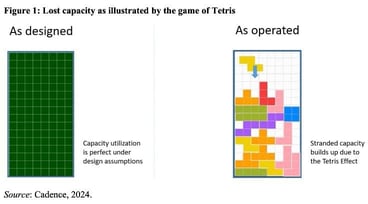
Digital twins play a major role in things like this, which are virtual replicas of data centers that let operators monitor, test, and optimize their facilities in real time.
Their popularity is growing fast, too: The digital twin market is set to explode from $29.06 billion in 2025 to $99.2 billion by 2029 at a CAGR of 35.9%.
They’re especially useful for spotting inefficiencies, like the 30% of “zombie servers” that, according to Koomey Analytics, stay powered on but don’t actually do anything.
According to the report, digital twins could help find and eliminate zombie servers, or “stranded capacity,” if you speak IT.
Somewhere between a lack of market demand and bad inventory management, they exist in the shallows of your very own data center.
“The solution to the stranded capacity problem is the creation of a digital twin, combined with the ability to do predictive modeling to identify and reduce lost capacity,” the report reads.
Here are a couple of case studies to back that up: Five9 uses digital twin visualization to remotely manage its data centers, which led to a 50% reduction in service requests for on-site technicians.
Schneider Electric and Nvidia collaborated to create digital twins for AI workload data centers. Schneider Electric saw a 25% reduction in energy consumption and a 17% decrease in material waste.
Just Taking Off
The AI boom isn’t over, and the bubble hasn’t burst. AI workloads clearly have long-term value. But to some experts, today’s climate feels a little too familiar.
Speculative investments are just history repeating itself. The key to survival, as suggested, is to focus on the big picture and not only chase the next big thing.
But right now, it’s a good time to ask if you’re flying too fast, too soon. Because it’s as Case said: “But as with the Internet, not every AI startup will thrive; indeed, most won’t even survive.”