

Key Takeaways
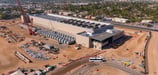
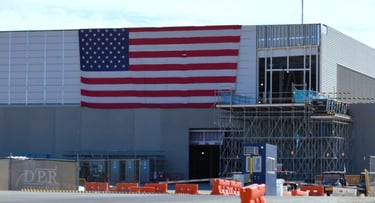
In unsurprisingly timely news, Meta announced it will increase its capital expenditures (CapEx) for its data center investments to $72 billion for 2025, up from a previous estimate of $60 billion to $65 billion.
Meta CFO Susan Li shared the why behind the decision during a recent companywide earnings call.
“The increased data center spend this year as we have made some adjustments to flex our build strategy that will enable us to really stand up capacity more quickly, both in ’25 and ’26,” said Li.
Meta spent $13.7 billion in Q1 already, which is about 22% of its original projected annual CapEx.
Yet the company says it’s still on track to bring 1GW of AI compute online in 2025.
Meta is not the only one making massive capital expenditures. Google has committed to $75 billion on CapEx this year for AI cloud infrastructure, spending $17.2 billion in Q1.
But it, too, may be facing some bottlenecks. Google’s CFO, Anat Ashkenazi, noted that the company is navigating a “tight demand/supply environment.”
Still, neither Google nor AWS — the third member of the cloud Big Three — has officially revised its spending targets so far.
Squeezing Tech Tariffs
Data construction costs could increase by 5% because of U.S. tariffs, according to research by TechRadar.
Although Li avoided the word, she didn’t shy away from pointing to tariffs as a factor impacting Meta’s strategy.
Although Meta hasn’t identified the exact drivers, Li said the higher cost Meta expects to incur “comes from suppliers who source from countries around the world.”

“There’s just a lot of uncertainty around this given the ongoing trade discussions,” she said in the earnings call.
She added: “We’re also working on our end on mitigations by optimizing our supply chain and our outlook is really trying to reflect our best understanding of the potential impact this year across all of that uncertainty.”
Tariffs — particularly those affecting Chinese and Taiwan-made networking and server equipment — are absolutely inflating infrastructure costs.
And while Meta and other hyperscalers are able to weather the storm, other data center operators and hosting providers may not.
Smaller operators are reassessing construction timelines, suggested Forrester Senior Analyst Alvin Nguyen.
“Right now, there’s too much variability. With all of the tariffs, this may be the thing that slows down AI,” said Nguyen.
But that doesn’t mean anyone should make decisions that would be hard to reverse.
“Because of the long-term planning and all of the potential policy changes, I wouldn’t change my data center plans that much,” Nguyen added.
In early April, the Trump administration announced a 90-day pause on country-specific reciprocal tariff rates.
Now, a flat 10% tariff applies to imports from all countries, although imports from China and Hong Kong are subject to a 125% reciprocal tariff.
Suss MicroTec Chief Executive Burkhardt Frick described this as “moving backward” to Capacity.
“Even this 90-day pause is just buying time, while the two big elephants in the room are still provoking each other,” Frick said. “I think nobody will benefit. It’s a zero-sum game.”