


Key Takeaways
Recent market research indicates that VPS hosting is the fastest-growing hosting segment in the U.K., officially outpacing shared, cloud, and dedicated options.
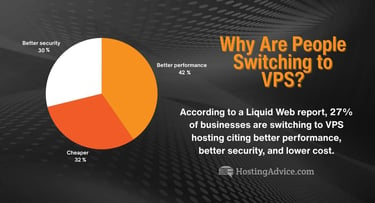
It’s not necessarily because VPS is the answer to their prayers, but it is predictable in terms of cost and compliance. In fact, Liquid Web’s 2025 report found that 27% of non-VPS users plan to migrate within the next year.
Six years post-Brexit, this doesn’t come as a huge surprise.
Experts have noted that GDPR compliance has become more complicated since Brexit since the U.K. adapted EU GDPR into its own UK GDPR and ongoing adaptions, like the Data Use and Access Act of 2025 (DUAA), which could split the difference between the two regimes.
What Brexit Actually Changed for Hosting
The U.K. currently benefits from an EU “adequacy decision,” meaning personal data can move between the U.K. and EU without the typical compliance steps.
(For example: If the EU wants to transfer information with the U.S., which doesn’t benefit from the adequacy decision, there are tons of extra legal safeguards, like legal contracts and transfer risk assessments.)
The U.K.’s permission, of course, could change. As mentioned, the DUAA is a good example of what that could actually look like. It doesn’t replace the UK GDPR or existing privacy laws, but it does introduce some changes.
The changes cover everything from research use to automated decisions and cross-border transfers. And that means a lot of organizations are going to have to recheck policies that were once compliant.
Here’s where we come back to VPS hosting. It’s one of the easier environments to price, explain, and keep above board.
Sure, shared hosting still works, but businesses can’t control where their data lives. Cloud hosting is flexible, but it’s fairly variably costly and spread across multiple jurisdictions. Dedicated hosting is the most ideal for keeping information central, but it’s an expensive investment that some businesses can’t afford.

And that’s exactly where the size of the business matters. Large enterprises can handle regulatory issues because they have their own compliance/legal teams; but many SMEs don’t have dedicated resources like that.
Government data shows that about 99.9% of all private sector businesses are SMEs (up to 249 employees). And yet, two-thirds of those SMEs don’t even know where their data is stored.
It could be why private investment is so up-and-coming right now in the U.K. There’s Google’s £5 billion U.K. data center expansion, which will be hosted in London. Or Oracle’s $5 billion investment in U.K. cloud and sovereign infrastructure, which is set to keep sensitive workloads under regional control.
We’ll see how the U.K. is doing in a couple more years. But in the meantime, choices around hosting infrastructure — like VPS versus shared hosting — seems to come down to one main point: How easy is it to work with from a compliance standpoint?