


Key Takeaways
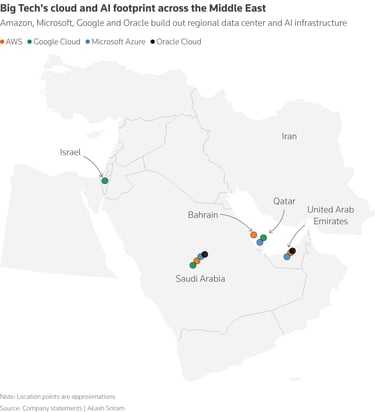
Drone strikes in the UAE damaged multiple AWS data centers over the weekend, forcing the cloud giant to advise customers to backup their data and consider changing their workload environments.
“We strongly recommend that customers with workloads running in the Middle East take action now to migrate those workloads to alternate AWS Regions,” AWS updated its Service Health Dashboard on Wednesday.
Three days earlier, on Sunday morning, AWS reported that “objects” struck one of its Availability Zones in the UAE. A nearby site in Bahrain also saw disruptions after a separate drone strike occurred.
“At around 4:30 AM PST, one of our Availability Zones (mec1-az2) was impacted by objects that struck the data center, creating sparks and fire,” AWS wrote. “Two of our facilities were directly struck, while in Bahrain, a drone strike in close proximity to one of our facilities caused physical impact to our infrastructure.”
The strikes caused downtime well into Monday, affecting EC2 compute instances, S3 storage, and DynamoDB databases.
Business Insider reported that flooding, cooling failures, and power disruptions forced AWS to take server racks offline and evacuate any staff in the building.
Vili Lehdonvirta, a tech geopolitics researcher and professor, told the BBC the incident appears to be the first time cloud infra has been “knocked down by military action.”
And yet, targeting infrastructure during international conflict is not new. We’ve been here before through countless wars and tensions — the difference is that we never quite had the dependent and sprawled infrastructure we do today.
From Oil Fields to Server Farms…
Throughout the 20th century, nations at war would focus on their enemies’ industrial chokepoints to weaken them from the inside out. It’s like choosing just the right Jenga piece.
During World War II, allied bombing campaigns strategy focused on Germany’s industrial districts: factories, fuel plants, and transportation networks. In 2019, drone attacks on Saudi Arabia’s Abqaiq oil processing facility temporarily stopped 5% of the world’s oil supply.
But it’s as Lehdonvirta said: “Data centers have become attractive targets to anyone seeking to disrupt a country.”
Strategists have noticed. Two examples of this include Iranian hackers launching DDoS attacks against U.S. banks in 2012 and 2013 and the SolarWinds supply-chain attack in 2020 that was connected to Russia. Subsea cables have also been cut or sabotaged. Telecom towers have been destroyed in wars in Syria and Ukraine.
For decades, wars focused on those exact logistics — railroads, pipelines, and power plants. But researchers at the Center for Strategic and International Studies (CSIS) say digital infrastructure may now be joining that list.
“In previous conflicts, adversaries targeted pipelines, refineries, and oil fields,” the researchers wrote. “In the compute era, these actors could also target data centers, energy infrastructure supporting compute, and fiber chokepoints.”